Click to get your own widget

Wednesday, June 25, 2014

The "World's Greatest Problems" Solved - Government's "longitude prize"

  This is the government's recent new "Longitude Prize" of £10 million to solve the world's greatest problems. Clearly it is neither a Longitude Prize nor an X-Prize, nor a serious attempt to solve real problems, but a bit of PR spinning by people who know nothing about any of them except that focus groups have said they are popular.

    A real X-Prize, of which the real Longitude prize was an example, is given for a very specific objective technical achievement. Anything else is just government patrimony.

    Still - that focus groups have said that X-Prizes are popular and that is an important and welcome development.

    I have added my solutions in italics:

"The vote takes place between 22 May and 25 June, and will be held by the BBC on its Horizon website and by text. You can also sign up to a newsletter to keep up to date on the latest news. The winner will be announced on 25 June and will become the focus of the £10 million prize fund.
The challenges are as follows:
  • flight: how can we fly without damaging the environment? By airplane - they release CO2 which is beneficial to crop growth without having any downside like the "contributes to catastrophic global warming" totalitarian lie
  • food: how can we ensure everyone has nutritious, sustainable food? Market freedom, Britain quitting the EU and letting us trade with 3rd world food producers; and building the OTEC powered floating islands whose by product is seafood in vast quantities.
  • antibiotics: how can we prevent the rise of resistance to antibiotics? Keep some sorts off the agricultural market and held in reserve.
  • paralysis: how can we restore movement to those with paralysis? Powered exo-skeltons like those used for the ceremonial first kick in the Brazilian World Cup.
  • water: how can we ensure everyone can have access to safe and clean water? Life straws and free markets. Lomberg has repeatedly pointed out that we could supply clean water to the world for a small fraction of the cost of fighting the "catastrophic warming" fraud, so I suppose getting rid of our corrupt, totalitarian Fascist political class pushing the fraud would be a major step.
  • dementia: how can we help people with dementia to live independently for longer? A better question - probably safer housing and interactive computer systems would work. I may come back to this.

The food and water issues are dealt with as parts 11 & 12 here.

Minister for Universities and Science, David Willetts, said:
This prize will challenge scientists to tackle one of today’s greatest scientific problems. What makes this prize so innovative however, is that the public will be given the power to decide which area of science and society will benefit from this funding.
This is everyone’s opportunity to play a part in what could be the next scientific milestone.

  Well I guess I have pretty much solved the "world's greatest problems" - is that worth £10 million or will it go to someone more respectful of the partasitic scum in power? 

Labels: , ,


Friday, June 20, 2014

JK Rowling - Independence Is Not Just For Christmas

     This is JK Rowling's comments on independence. As Mike Haseler pointed out the original was formatted to make it difficult to read, which is a shame because it is about as serious and sensible as anything anybody has said on the subject:

Before you read the following, please be warned that it’s probably of interest only to people who live in Scotland or the UK (and not all of them!)  If you read on regardless, you need to know that there is going to be a referendum on 18th September on whether or not Scotland should leave the United Kingdom.  If you’re only vaguely interested, or pressed for time, there’s a mention of Death Eaters in paragraph 5.

I came to the question of independence with an open mind and an awareness of the seriousness of what we are being asked to decide.  This is not a general election, after which we can curse the result, bide our time and hope to get a better result in four years.  Whatever Scotland decides, we will probably find ourselves justifying our choice to our grandchildren.  I wanted to write this because I always prefer to explain in my own words why I am supporting a cause and it will be made public shortly that I’ve made a substantial donation to the Better Together Campaign, which advocates keeping Scotland part of the United Kingdom.

As everyone living in Scotland will know, we are currently being bombarded with contradictory figures and forecasts/warnings of catastrophe/promises of Utopia as the referendum approaches and I expect we will shortly be enjoying (for want of a better word) wall-to-wall coverage.
In the interests of full disclosure, I should say that I am friendly with individuals involved with both the Better Together Campaign and the Yes Campaign, so I know that there are intelligent, thoughtful people on both sides of this question.  Indeed, I believe that intelligent, thoughtful people predominate.

However, I also know that there is a fringe of nationalists who like to demonise anyone who is not blindly and unquestionably pro-independence and I suspect, notwithstanding the fact that I’ve lived in Scotland for twenty-one years and plan to remain here for the rest of my life, that they might judge me ‘insufficiently Scottish’ to have a valid view.  It is true that I was born in the West Country and grew up on the Welsh border and while I have Scottish blood on my mother’s side, I also have English, French and Flemish ancestry.  However, when people try to make this debate about the purity of your lineage, things start getting a little Death Eaterish for my taste.  By residence, marriage, and out of gratitude for what this country has given me, my allegiance is wholly to Scotland and it is in that spirit that I have been listening to the months of arguments and counter-arguments.

On the one hand, the Yes campaign promises a fairer, greener, richer and more equal society if Scotland leaves the UK, and that sounds highly appealing.  I’m no fan of the current Westminster government and I couldn’t be happier that devolution has protected us from what is being done to health and education south of the border.  I’m also frequently irritated by a London-centric media that can be careless and dismissive in its treatment of Scotland.  On the other hand, I’m mindful of the fact that when RBS needed to be bailed out, membership of the union saved us from economic catastrophe and I worry about whether North Sea oil can, as we are told by the ‘Yes’ campaign, sustain and even improve Scotland’s standard of living.

Some of the most pro-independence people I know think that Scotland need not be afraid of going it alone, because it will excel no matter what.  This romantic outlook strikes a chord with me, because I happen to think that this country is exceptional, too.  Scotland has punched above its weight in just about every field of endeavour you care to mention, pouring out world-class scientists, statesmen, economists, philanthropists, sportsmen, writers, musicians and indeed Westminster Prime Ministers in quantities you would expect from a far larger country.

My hesitance at embracing independence has nothing to do with lack of belief in Scotland’s remarkable people or its achievements.  The simple truth is that Scotland is subject to the same twenty-first century pressures as the rest of the world.  It must compete in the same global markets, defend itself from the same threats and navigate what still feels like a fragile economic recovery.

  The more I listen to the Yes campaign, the more I worry about its minimisation and even denial of risks.  Whenever the big issues are raised – our heavy reliance on oil revenue if we become independent, what currency we’ll use, whether we’ll get back into the EU – reasonable questions are drowned out by accusations of ‘scaremongering.’  Meanwhile, dramatically differing figures and predictions are being slapped in front of us by both campaigns, so that it becomes difficult to know what to believe.

I doubt I’m alone in trying to find as much impartial and non-partisan information as I can, especially regarding the economy.  Of course, some will say that worrying about our economic prospects is poor-spirited, because those people take the view ‘I’ll be skint if I want to and Westminster can’t tell me otherwise’.  I’m afraid that’s a form of ‘patriotism’ that I will never understand.  It places higher importance on ‘sticking it’ to David Cameron, who will be long gone before the full consequences of independence are felt, than to looking after your own.  It prefers the grand ‘up yours’ gesture to considering what you might be doing to the prospects of future generations.

The more I have read from a variety of independent and unbiased sources, the more I have come to the conclusion that while independence might give us opportunities – any change brings opportunities – it also carries serious risks.  The Institute for Fiscal Studies concludes that Alex Salmond has underestimated the long-term impact of our ageing population and the fact that oil and gas reserves are being depleted.  This view is also taken by the independent study ‘Scotland’s Choices: The Referendum and What Happens Afterwards’ by Iain McLean, Jim Gallagher and Guy Lodge, which says that ‘it would be a foolish Scottish government that planned future public expenditure on the basis of current tax receipts from North Sea oil and gas’.

My fears about the economy extend into an area in which I have a very personal interest: Scottish medical research.  Having put a large amount of money into Multiple Sclerosis research here, I was worried to see an open letter from all five of Scotland’s medical schools expressing ‘grave concerns’ that independence could jeopardise what is currently Scotland’s world-class performance in this area.  Fourteen professors put their names to this letter, which says that Alex Salmond’s plans for a common research funding area are ‘fraught with difficulty’ and ‘unlikely to come to fruition’.

According to the professors who signed the letter, ‘it is highly unlikely that the remaining UK would tolerate a situation in which an independent “competitor” country won more money than it contributed.’  In this area, as in many others, I worry that Alex Salmond’s ambition is outstripping his reach.

I’ve heard it said that ‘we’ve got to leave, because they’ll punish us if we don’t’, but my guess is that if we vote to stay, we will be in the heady position of the spouse who looked like walking out, but decided to give things one last go.  All the major political parties are currently wooing us with offers of extra powers, keen to keep Scotland happy so that it does not hold an independence referendum every ten years and cause uncertainty and turmoil all over again.  I doubt whether we will ever have been more popular, or in a better position to dictate terms, than if we vote to stay.

If we leave, though, there will be no going back.  This separation will not be quick and clean: it will take microsurgery to disentangle three centuries of close interdependence, after which we will have to deal with three bitter neighbours.  I doubt that an independent Scotland will be able to bank on its ex-partners’ fond memories of the old relationship once we’ve left.  The rest of the UK will have had no say in the biggest change to the Union in centuries, but will suffer the economic consequences. 

When Alex Salmond tells us that we can keep whatever we’re particularly attached to – be it EU membership, the pound or the Queen, or insists that his preferred arrangements for monetary union or defence will be rubber-stamped by our ex-partners – he is talking about issues that Scotland will need, in every case, to negotiate.  In the words of ‘Scotland’s Choices’ ‘Scotland will be very much the smaller partner seeking arrangements from the UK to meet its own needs, and may not be in a very powerful negotiating position.’

If the majority of people in Scotland want independence I truly hope that it is a resounding success. While a few of our fiercer nationalists might like to drive me forcibly over the border after reading this, I’d prefer to stay and contribute to a country that has given me more than I can easily express.  It is because I love this country that I want it to thrive.  Whatever the outcome of the referendum on 18th September, it will be a historic moment for Scotland.  I just hope with all my heart that we never have cause to look back and feel that we made a historically bad mistake.

Labels: , ,


Thursday, June 19, 2014

Going Beyond Maurice Saatchi's Cutting Corporation Tax Idea

    Maurice Saatchi has produced for the Centre For Policy Studies (and implicitly for the Tory Party) a proposal to abolish Corporation Tax for all but the 10% of largest companies and also abolish Capital Gains Tax for the same people. Saying

"The Policy outlined in this document will:
 abolish Corporation Tax for 90% of UK companies
 reduce the deficit faster than predicted by the OBR 
 expand employment faster than predicted by the OBR
 increase competition and challenge Cartel Capitalism
 let millions of people grow tall. 
These millions of individuals will enjoy:
 the opportunity to say “I am the captain of my ship”
 more money
 more freedom
 the first step on The Road from Serfdom.
The nation as a whole will benefit from:
 a change in culture as big as “Own your own Home” in the 1980s
 greater economic growth and lower unemployment than forecast by the OBR
 more competitive market places
 more freedom and independence from Big Government and Big Companies."
 

   I have been pushing for CT cuts since before I started this blog in 2004. Basically following the example of Ireland where they cut CT, in a series of steps to 12.5%, and reduced regulation, particularly on housebuilding and achieved a 7% average growth rate.

    So what do I think of Saatchi's slightly different proposal? It is an improvement. His is costed at £10.5 bn. Mine of cutting all CT by slightly more than half would cost just over a billion more. Not much difference. However by concentrating it all on smaller companies he gets some advantages - smaller companies provide more employment growth; smaller companies tend to be more innovative, until they grow into bigger companies; smaller companies have more difficulty borrowing so profits are more important for expansion.

    He also has the advantage of being able to run it through an economic model. Lets take advantage of that.

    The conclusion is that this £10.5 bn cut would increase growth by about 0.8%, though not in the first year because the investment has to work through. That means that by the end of a 5 year Parliament that growth would have replaced all that tax cut. Saatchi says that this 0.8% estimate is "conservative" and I agree. Indeed that is 1 of 3 reasons I believe the position is much better than he offers:

1 - Irish growth was 7% - 4.5% better than ours. Even if we assume more than half was due  to the regulatory cuts (not the common feeling but probably true) and that, because Ireland is so much smaller than us, having lower taxes opened them up to proportionately more investment than us we still come out with the growth potential being around twice the 0.8% given. Also Irish growth did not take a year to take off and this is reasonable if investors see an improved investment opportunity - they will not wait, but start investing immediately, if they can.

2 - Increased national debt is only a problem in relation to the size of the economy. If we have growth of an extra 0.8% in the economy, debt can increase the same without making payment more difficult. Indeed if the size of government is unaltered there is actually proportionately more uncommitted money in the economy, though this is only a marginal effect.

Our current national debt is £1.4 trillion so 0.8% is £11.2 bn, just slightly above initial and maximum borrowing.

3 - If you have a growing economy you need to increase the money supply to keep prices stable. Money in UK circulation is rather larger than 1 year's gdp. In fact it was £2,200 bn in 2010 - presumably about £2,400 bn now. So an extra unexpected 0.8% growth means we can and should print £19 billion extra.
--------------------
   This is not estimating conservatively but it is the realistic best estimate and if we don't do it there is no reason to believe reality will be conservative either.

    So clearly we should go with this asap.

   I would go further - promise that the take on CT and other business taxes will not be allowed to rise - if the economy grows, as it will, increasing the tax take, we will raise the level at which CT comes in (and when it is fully abolished, business rated and other such taxes). This means investors can look forward to a stable profitable investment, which is all they need.
--------------------

    But I would like to see this as merely the start.

    The formula for economic growth is:     Economic Freedom + Cheap Energy

    Low business tax is only part, the smaller part, of economic freedom. The greater part is not having parasitic state regulation. At least tax money goes back into the economy, albeit in less efficient ways and excluding the cost of government taxing and returning it. Wealth destroyed by regulation, for example 98% of the cost of electricity, is gone forever.

   So we should should cut regulations wherever possible. As a minor effect that also cuts government spending a bit - it costs government all of 1/20th, to regulate, of what it costs the productive economy to be regulated.

75% of housing cost is regulatory - 34% X 75% = 25.5%
(I assume this includes heating it)

The EU regulations come to another 5%
(assuming the cost is equally borne by the people as by the government sector which is an optimistic assumption)

Remaining portion of income that goes to the value of what we actually choose
100% - 25.5% - 5% =69.5%

That 69.5% is, in turn reduced proportionately by all the other factors. Take off commercial building costs (est 2.5%), electricity charges through the rest of the economy (est 2%),accountancy (7.5%), child care (est 2.5%), assorted other (est 10%)
Total 24.5%

Therefore percentage of income we nominally get to spend which we actually get in our pockets & spent on the product not the surrounding regulation
69.5% X (100% - 24.5% = 52.5%
  
     But if the regulatory part of economic freedom costs us more than the tax part the other side of the equation, cheap energy has even more potential. Roger Helmer has written of the advantages of letting decisions on electricity be made on economic not ideological grounds.

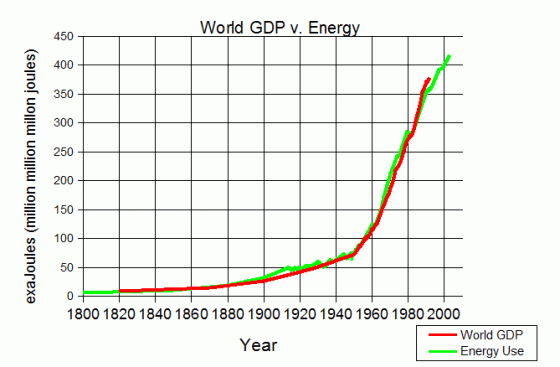
    The correlation between growth in energy use and in gdp is undisputable.

Enerconics1_html_m68263661
        It has been calculated and indeed is undisputed that app 98% of the cost of producing electricity here is governmental parasitism. 

       Nuclear is currently 40% of the average cost of our power basket.
China is building at 0.27 our costs.

Because China is building in three years and us in ten we have seven years foregone income while paying interest – assuming the normal 10% return that is 1.10^7 = 1.95
Assume China is not entirely without state parasitism – say 10% 
VAT and carbon levies 20%
How much could cost be reduced if it was allowed to mass produce reactors - three fold seems a conservative estimate.

60% X 0.27 X 1/1.95 X 90% X 1/1.20% X 1/3 = 0.0208 or 2.08% of current costs.
97.92% parasitism.
       Major reductions, not quite as major, could be done by allowing the market to produce shale gas. Any reduction on electricity costs, not just one as major as this, if the laws of supply and  demand work, would produce a many fold increase in energy use and therefore a many fold increase in gdp.

       Indeed I have previously proposed a 24 point programme to the world's fastest growth, which includes my original CT cutting proposal, and it would work. Theoretically we might expect most of the proposals to increase growth by about an average of 2% a year, Some more, some less.

       In practice we might be limited to a bit above the 20% growth Guandong province in China managed for years. Certainly the theoretical maximum, if we make growth our "Number one priority" (Scottish labour leader Jack McConnell promising at 2 elections - he knew what people want even if he lied about giving it) cannot be lower than the actually achieved maximum.

=================================
      Saatchi's proposal is a very good one, well thought out and verified. It is a small fraction of our potential.


Labels: , , ,


Saturday, June 14, 2014

FPTP V PR

    A few days ago I was, as one is, involved in a pub discussion over Proportional Representation V the First Past the Post (FPTP) electoral system.

So this is a list of the arguments for PR, most of which I never thought of at the time:

1 - Its democratic. We get the results we actually voted for.

2 - PR is far more stable than FPTP since a small change in % voting doesn't mean an utterly opposed party gets a majority.

3 - In economics one of the few things almost all economists agree on is that free competition is better than monopoly for customers and in particular for encouraging innovation. And in turn that maintaining a monopoly requires barriers to entry to the industry. FPTP is a very high barrier
 since, at least in theory UKIP, to take 1 example, could get 25% of the national vote and 0% of representatives (ie 0 MPs).

4 - FPTP artificially enhances differences between different geographical regions. In Scotland FPTP gives us an overwhelming Labour majority on under 40% of the vote. In the south of England there is an overwhelming Tory majority, again on about 42% of the vote. In fact neither are remotely as "leftist" or "rightist" with the majority voting against the ruling "consensus". This has led Scots to actually believe the guff we are told of how we have different political values - leading to the current referendum.

5 - Where a particularist party (ie one which deliberately appeals to an ethnic group or "working class") gets a hold and its supporters live together (thus no feminist party can use this) it will get representation far greater than similar non-particularist parties. Particularism means people not caring for society as a whole which is a bad very thing for society.

6 - MPs in marginal constituencies get changed but those in safe seats have a job for life. In safe ones the only electorate the MP need fear is the tiny number of people in their constituency selection committee.

7 - Where there are several parties, as now, the majority of people in the large majority of constituencies are going to be represented by somebody they didn't want. How "represented" that makes them feel must be questionable.

8 - Thus under FPTP people, correctly, feel their own vote doesn't count.

9 - Indeed parties' political analysts often say the election turns on about 50,000 floating voters in marginal constituencies.

10 - In some areas you get 1 entirely immovable party that has held complete power for generations, which encourages corruption and contempt for the electors (yes I do mean Glasgow Labour).

11 - The US civil war is an example of the breakdown of trust that FPTP can produce. The South's secession was as brought about by Lincoln winning an overwhelming majority of electoral places on 39.7% of the vote. Had there been a run off he would probably have lost.

12 - Because FPTP tends to dragoon politics into a 2 party system it means the nuances of dissent aren't shown.

13 - Theoretically FPTP should produce a 1 party system because a party that gets 60% of vthe vote in every constituency will get 100% of MPs. Normally this doesn't happen because ruling parties turn out uniformly to be so bad that opposition coalesces into an 2nd party - hence 2 party system. The only exception to this is Singapore where 1 party has won since independence, but Singapore has actually had remarkable competent government.

14 - Gerrymandering (setting constituency boundaries in such a way as to ensure voters for those in charge are spread evenly enough for them to win a small majority in some areas while all opposition voters are in one constituency where they get only 1 member) is a constant problem, sometimes more blatantly than others.

15 - Feedback. The great advantage of democracy, or any sort of parliamentary government, over other systems is that when something isn't working society sends a sign. This is known as negative feedback and is a requirement in any complex machinery (the centrifugal governor made the steam age).  The glandular system does the same for the body. I believe such feedback is equally vital to governmental systems. FPTP does allow some feedback but it takes much greater effort and usually limits the signal that can be sent to the official opposition party's.

16 - Because power is in the hands of big parties, the individual MP's fate is very much in the hands of whoever is party leader. When MPs stand in their own name they are almost always squeezed out. Compare this with both Margo MacDonald and Dennis Canavan both of whom refused to accept being fired by their parties.

For PR

1 - It maintains the constituency link - everybody can find out who their representative as (though as #7 shows) the odds are they will not represent their views.

2 - It provides united government able to take action. Thus when Mussolini took power he introduced an FPTP rule applying to the total Parliament - that the largest single party must automatically get 60% of the seats. This system is in some ways better than our sort of PR in that the barrier to entry is only at the government level not at the getting into Parliament level so parties with new ideas are not so wholly excluded. Decisive united government is a bonus, if you are sure it will be decisive in the right direction.

Labels: , ,


Monday, June 09, 2014

Precis Of Eco-Parasitism

 
Most of this lobbying is harmless or slightly beneficial. Cutting business taxes on sector X would create growth because cutting taxes always does (as long as you don’t put them up in another sector). Where it is genuinely harmful is when the lobbyists are demanding subsidy, or rather, more subsidy (the ecofascist and arts lobbies do this) because that money must, by definition, come from the productive economy.

For example it has been proven that every “Green” job created costs 3.7 jobs in the real economy so every time some politician promises to create X-hundred thousand jobs in “renewables” they are actually saying they intend, quite deliberately, to destroy 2.7X-hundred thousand jobs.


Even worse is when the lobbyist isn’t even an honestish industry lobby but a government funded sockpuppet created by government to lobby itself and propagandise (see much of the arts and all of the ecofascists). This is far worse because it creates a positive feedback system of sgtate parasitism and both positive feedback and parasitism are obviously always destructive, often catastrophically so.
------------------------------------------
     This is a response I put up on Freethinking Economist in reply to an attack he was making on industry lobby groups who lobby politicians for aid to their particular industry.

    FE is probably the most intelligent of the LibDem bloggers (& as such got a good job as soon as they got into power - which he has now left for reasons we can only speculate on.

    He usually makes good points but without being willing to go far enough to reach obvious conclusion.

    So I do, usually showing that, as in this case, among the worst offenders against economic sanity are his own party. No reply so I assume this précis of exactly how much the politically approved subsidy junkies damage the country is indisputable.


Labels: , ,


Friday, June 06, 2014

Newark Result

                            2010                             %                                   Now                        %
Conservative       27,590                         53.9                               17,431                     45
UKIP                    1,954                           3.8                                10.028                     25.9
Labour                11,438                         22.3                                 6,842                      17.7
Bagley/Hospital                                                                              1,891                        4.9
Green                                                                                              1,057                        2.7
LibDem               10,246                         20.0                                1,004                        2.6
Ors combined                                                                                    454                        1.2

==============================================

      I find this a very interesting result. I wish I knew how the polling by stations had gone because then I would be making more than an educated guess which votes went from whom to whom (but then if I did I would probably have to keep it quiet out of party loyalty).

The LibDem vote collapsed losing 90% by numbers or 7/8ths by proportion (proportion is the more important - there is nothing unusual about by elections having lower turnouts because the national media isn't hammering home that there is an election today). This is way below any fall to the party's "minimum core vote" (usually assumed about half of it). The LibDem fall closely parallels UKIP's rise but I think it would be unwise to assume we picked up more than a minority of their votes. Probably most of the Green and hospital campaign votes were ex-LDs but that still means more than half went elsewhere. This article on Conservative Home suggests that a lot of them went Tory to keep us out, as did a lot of Labour ones. The BBC Radio 5 reporter also said "I met a number of Labour voters who said they are voting Tory to keep UKIP out" which is quite remarkable.

       Nonetheless, however they went this is a catastrophic result for the LDs. After a couple of weeks of "4 party politics" we may be back to a 3 party system without the LDs. Any result remotely of this order would put ALL the LDs out of Parliament. I suspect the lost LD votes split 4 ways to Tories, Labour, UKIP & the others.

A disaster  for Labour too. A 4.6% fall in their proportion is not going to get Miliband the PMship. He must expect, as the party not in government, to be polling better, during any by election, where people feel free to protest, than he will at the general election. This happens to every party. Labour won this seat in 1997 and have placed 2nd at other times. To be knocked into 3rd place is about as bad as it could be. I suspect Labour's missing 4.6% (if, say, 1/4 of the LDs went to them they would have picked up about 4.3% and thus lost 8.9%). That some of their members voted for Tory to keep out UKIP and others UKIP to beat the Tories does not suggest any enthusiasm whatsoever for his party.

       UKIP. Well we didn't take it but overthrowing a 16,000 majority when your previous vote was 2,000 isn't as easy as it sounds ;-)  We didn't come as close as we expected and that is important. We mainly lost because the Tory vote held up. Had 4,000 more of them (only 1/7th of their previous vote) voted UKIP we would have won.

       Roger Helmer had written of the enthusiasm he found on the doorstep - sometimes people are polite when they haven't yet made up their minds. The other thing is that there was a decent turnout for 2 independents (though not for the last 5). That means that though the contempt for the traditional parties is overwhelming, UKIP has not yet sealed the deal.

     I suspect, in particular, that the smear campaigns by the government media has hurt us. But it is a problem. If a significant number of actual LabConDem voters agree that "there is no difference between them" and decide they like that, we could have a problem. For that I believe we have to have a positive policy platform that will make the large majority of all parties make us their preferred alternative. We are likely to be the contender in most constituencies across the country (as the LDs used to be) and if we can persuade 3rd and 4th placing parties that we are much better than the probable winner we can sweep the country. If they unite to keep the previous winner in we won't - and British politics will lose all semblance of pluralistic democracy.


     But you can't complain about a 22.1% swing to you.

The Tories have reason for satisfaction. They won and not just by scraping in. Nonetheless an 8.9% swing against is hardly something to celebrate. This won't get Cameron his majority. This was the 44th safest tory seat so to have lost it would have been beyond catastrophic. Beyond that it looks very much like they did lose far more Tory votes than appears and filled them up with 4.3% from the LDs and 4.4% (half of 8.9%) from Labour. 8.7% of their votes are on loan and without them - that's 3.700. That didn't actually keep them in but it does explain why Nigel Farage expected it to be closer. And losing those votes (or actually not having them because they never did) would ensure electoral defeat.

    Another point here is that, at least according to Conservative Home, the Tories pulled out all the stops and ran a very heavy campaign. 150 MPs visiting. Cameron visiting 4 times - absolutely unprecedented for a sitting PM. And it worked. And Labour and the LDs, who both historically have reputations for being able to put feet on the ground, didn't come close to matching them. The old parties have hollowed themselves out because members have no actual influence on the party. I suspect this applies to the Tories too but they just pulled out every card they had. The article itself makes a point of the importance of members on the ground and I agree.

UPDATE
Nigel Farage discusses the result and points out that the Tories cannot put anything remotely like this level of effort into an constituency during the general election http://www.express.co.uk/news/uk/480656/FARAGE-ON-FRIDAY-Ukip-boss-says-next-target-is-2015-general-election-Commons-breakthrough

Labels: , ,


Saturday, May 31, 2014

The Liberal Party - In Memorium

   Dan Hannan reads the obituary for the Liberals on his blog today (though he uses it to punt the Tories, not UKIP, as its heir:

"The Lib Dems are finished – a squalid end for the heirs of the greatest party in history

What a miserable, tawdry end for a party with such noble antecedents. The Whig-Liberal movement was responsible for the finest developments in our history. It gave us parliamentary supremacy and religious toleration, meritocracy and a wider franchise, the equality of all citizens before the law and the supremacy of that law over monarch or minister. Not only did Whig principles elevate Britain above the run of nations; they created the United States of America.

Has this sublime tradition, the tradition of Edward Coke and John Hampden, of James Harrington and Algernon Sidney, of John Milton and John Locke, of Pitt the Elder and Edmund Burke, of Earl Grey and Viscount Palmerston, of Richard Cobden and John Bright – and, yes, of Benjamin Franklin and Thomas Jefferson – truly found its quietus in the person of Nick Clegg? The thought is almost unbearable.

But the truth is that the Lib Dems had long since abandoned classical liberalism. Though the Homeric figures I have just cited would be astonished to see it, Whig-Liberal principles survive best in a goodly part of the Conservative Party.

The takeover happened slowly, through successive transfusions. The first occurred in the late nineteenth century, when traditional Palmerstonian Whigs, alarmed by the Liberal Party’s drift towards social democracy, sidled up to the Conservatives, formally amalgamating in 1912 (the “and Unionist” bit of my party’s official name dates from that merger). There was a second transfusion with the assimilation of some of the “coupon” Liberals following the First World War, and then a third with the absorption of the National Liberals during the 1950s and 1960s.

These transfusions left the surviving Liberals weak and anaemic, but still recognisably the heirs to Gladstone. Indeed, as their electoral prospects became poorer, they attracted unusually high-minded supporters: men and women who cared more about principle than office.

When did things go wrong? In 1988, when the Liberals merged with the Social Democratic Party. People sometimes think that the SDP was founded on some issue of principle: opposition to nationalisation, or to unilateral nuclear disarmament or some such. In fact, it was created because the Labour Party wanted to make incumbent MPs subject to reselection by party members. To be sure, there were some honourable Labour moderates, including David Owen himself, who had long agonised about his support for his party. But the mass of his followers were actuated by grubbier considerations: they didn’t want to lose their seats.

Suddenly, the high-minded Liberals were overwhelmed by a horde of petty, calculating careerists....

Pure liberalism will always struggle to secure an electoral majority. While some of its positions are popular – tax-cuts, welfare reform, Euroscepticism – others are not. I always tell libertarian students to focus on the big issues, such as the economy and education, rather than fighting losing battles on relatively minor questions such as drugs and pornography. As part of a wider conservative alliance, as under Thatcher or Reagan, classical liberalism can enjoy meaningful triumphs. On its own, it will only ever be a fringe movement.

As for the Lib Dems, they have long since ceased to be liberal in any meaningful sense. In recent years, they weren’t really anything at all. And, as King Lear observes, nothing will come of nothing. Thursday was the beginning of the end. Nothingness – annihilation – is coming."

   I put this comment:

I used to be a LibDem. Some years ago I was told that the party Executive had voted, unanimously, to expel me. That I was to be allowed to make a written defence (not a verbal one) to the charges but not to know what they were beyond having written things that were "illiberal and incompatible with party membership".

After a vigorous public campaign I was allowed to know that it was about having had letters published in newspapers supporting classic free market economic liberalism and saying we needed nuclear power. Years later I was told that a hidden reason was that I opposed the criminal war to put the obscene genocidal organlegging drug lords and sex slavers of the KLA in charge of Kosovo.
It would be wrong & presumptious to say my expulsion was when the LibDems abandoned the founding principles of liberalism, but certainly, that did make it formally undeniable that being liberal was officially "incompatible with party membership".

My defence ended:

"To accuse me of being "illiberal" is totally untruthful. I dispute that supporting freedom, seeking to end poverty, seeking to prevent the unnecessary killing of 24,000 pensioners a year from fuel poverty or opposing genocide can be described as "illiberal" by anybody with a trace of honesty. I believe that it would be in the interests of the party, as well as the country, to commit itself to traditional liberal policies & particularly to achieving economic success - time after time it is shown that the electorate want wealth, whereas Ludditism, bicycling, windmills & banning things are not popular Even if it is decided that such matters are "incompatible with membership of the party" this would only prove that liberalism & membership of the Lib Dems are incompatible. I must leave that decision in your hands & those of the Appeals Tribunal.

I have said that nuclear power is more cost effective & reliable than windmills, that strong economic growth is preferable to the UK's current comparative decline & Scotland's steep decline & that illegal war, ethnic cleansing, genocide & child sex slavery are wrong. If the "Lib Dems" decide that these opinions are "incompatible with party membership" then you are neither honest, competent or liberal.

Neil Craig"

I am proud to say I am now a UKIP candidate - that party being the true heirs of the original Liberal party.

It is possible that, if the party had kept Kennedy as leader, whose position on war was at least classically liberal, he would have prevented Cameron's bombing of Libya and he, rather than Tory backbenchers, led the fight against war on Syria. As such the party would have retained at least a fig leaf of principle, without which no party can long survive.

Dan, in your list of dates when the party lost its soul I would include when it first decided to support EEC membership. At the time it looked like and possibly was a progressive movement for free trade, so the decision was reasonable. However over time it became a party shibboleth, even as the EEC/EU become less of a trade area and more of a rickety Empire. This attracted illiberals into the party and drove out liberals, which is why, under Ashdown, the party was the most enthusiastic supporter of war & genocide in Kosovo and elsewhere."

Anybody not sufficiently bored with my history here can see my full defence here - My Expulsion - Defence statement I, II, III, IV

Labels: , ,


Wednesday, May 14, 2014

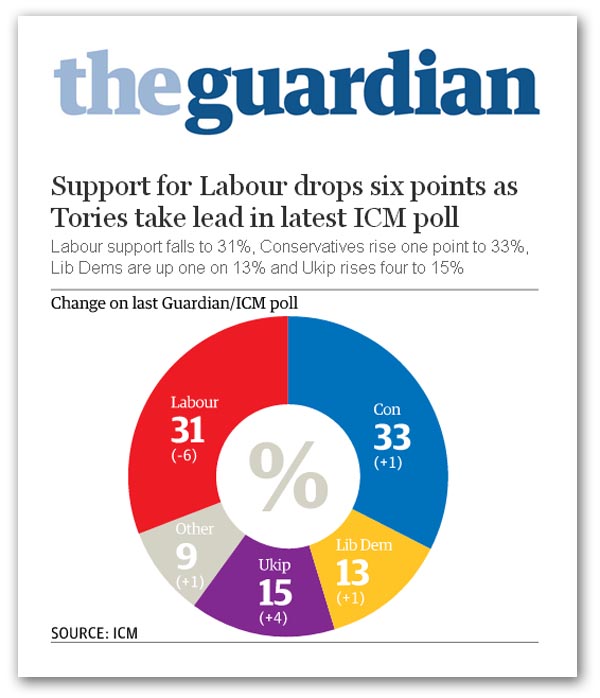
Labour 31%, UKIP 15% - Labour losing, UKIP winning


      Other polls have similar though not quite as bad for Labour, result.
YouGov/Sun – CON 35%, LAB 36%, LDEM 9%, UKIP 14%
Populus – CON 35%, LAB 36%, LDEM 8%, UKIP 13%
Ashcroft – CON 34%, LAB 32%, LDEM 9%, UKIP 15%
ICM/Guardian – CON 33%, LAB 31%, LDEM 13%, UKIP 15%


       One might think, looking at UKIP's 15% that should be worrying but I am very pleased with this.

       Labour's vote is falling. As the economy "recovers" (still only half world average growth despite it being fuelled by an artificial house cost boom) and equally, as we get nearer the fateful moment of an election, where being against the government really could put the other rascals in, we can only expect the Labour vote to fall.

      At 31% Labour cannot reasonably be expected to produce a majority.  Their policy seems to have been to hope for 35% and thus over 50% of seats but at 31% almost any parlay of votes leaves them in a minority.

       Because of our corrupt electoral system the Tories won't either. Indeed on the shares in the chart Labour will be the larger party - Tories 284, Labour 307, LDs 31, UKIP nil according to Electoral Calculus

      On the face of it that looks bad for UKIP. But -

    It spikes the Tories greatest, argument against us. Indeed the only one they have been using. The "if you vote UKIP you will put in Labour" one. Labour aren't going to be in. The people, including their core voters, have recognised how crap they are.

    For my lifetime  few people have voted Labour because they want Labour but because they fear getting the Tories. Equally, probably more than equally, few vote Tory because they like their policies but because the fear Labour's.

    Now the Tories don't have to fear Labour - and I am quite certain that even most Tory party activists would rather have UKIP's policies than their own party's (mass immigration, EU membership & gay marriage).

   And Labour voters are also free - to vote against a party who have nothing but contempt for their voters, and secretly promoted mass immigration to replace them.

    We are very close to a tipping point. Suppose UKIP picked up 6% from each of these parties.

    We get Tories 200, Labour 223, LibDems 12 UKIP 186 MPs

    Now this takes no account for targeting of winnable seats which UKIP is doing for the first time so almost certainly understates the UKIP and LibDim votes but you get the picture.

     Another regular factor in elections has been a swing to the LDs during the campaign because they got little TV coverage at other times, but they could not be denied coverage during actual election campaigns. This, obviously, applies in spades to UKIP.

    History also shows that Tory voters have less tribal loyalty to their party than Labour which is why elections against a Tory government have generally been more successful for the LDs than ones against Labour. Disaffected Labour just stayed home.

    And the EU elections

    So a 6% reduction for each of these parties - to UKIP seems not merely possible but quite likely.

    Lets have a bit of fun and try 7% on 36% of the vote: Conservative 127, Labour 172, LD 7, UKIP 316 MPs - 10 short of a technical majority but easily able to negotiate one with Ulster if nobody else.
 

Labels: , ,


Friday, May 09, 2014

Greatest Military Victory In The History Of The British Isles - Arthur at Solsbury Hill

      Some time ago I did an article about King Arthur, concluding that he was a real person, though a war leader (Dux Bellorum) rather than king, and a Roman officer from the Etruscan area of northern Italy (Artorius is an Etruscan name rather than pure Roman).

       I also accepted the site of his most important battle, Mount Badon as being near Bath, probably Solsbury Hill (Bath and Badon were probably pronounced similarly at the time and there is reference to it being near volcanic springs, which  exist there alone in Britain).

       The Battle of Badon Hill is considered a great victory and looking at the map today we can see why. If the Saxons had been able to advance only a little further, to the Severn where Bristol is, they would have cut the Briton stronghold of Wales off from the Briton stronghold of Cornwall. Technically an army could have moved between the 2 by boat but this would mean no cavalry and much less convenient movement.

      Obviously, standing alone, neither area could have hoped to drive back the Saxons. England would have become a wholly Anglo-Saxon nation rather than the mixture our culture and blood groups show. Reaching the Severn at Bristol, 11 miles away, would have been a literally pivotal moment in our history.

       But actually Bath, not Bristol was the pivot.

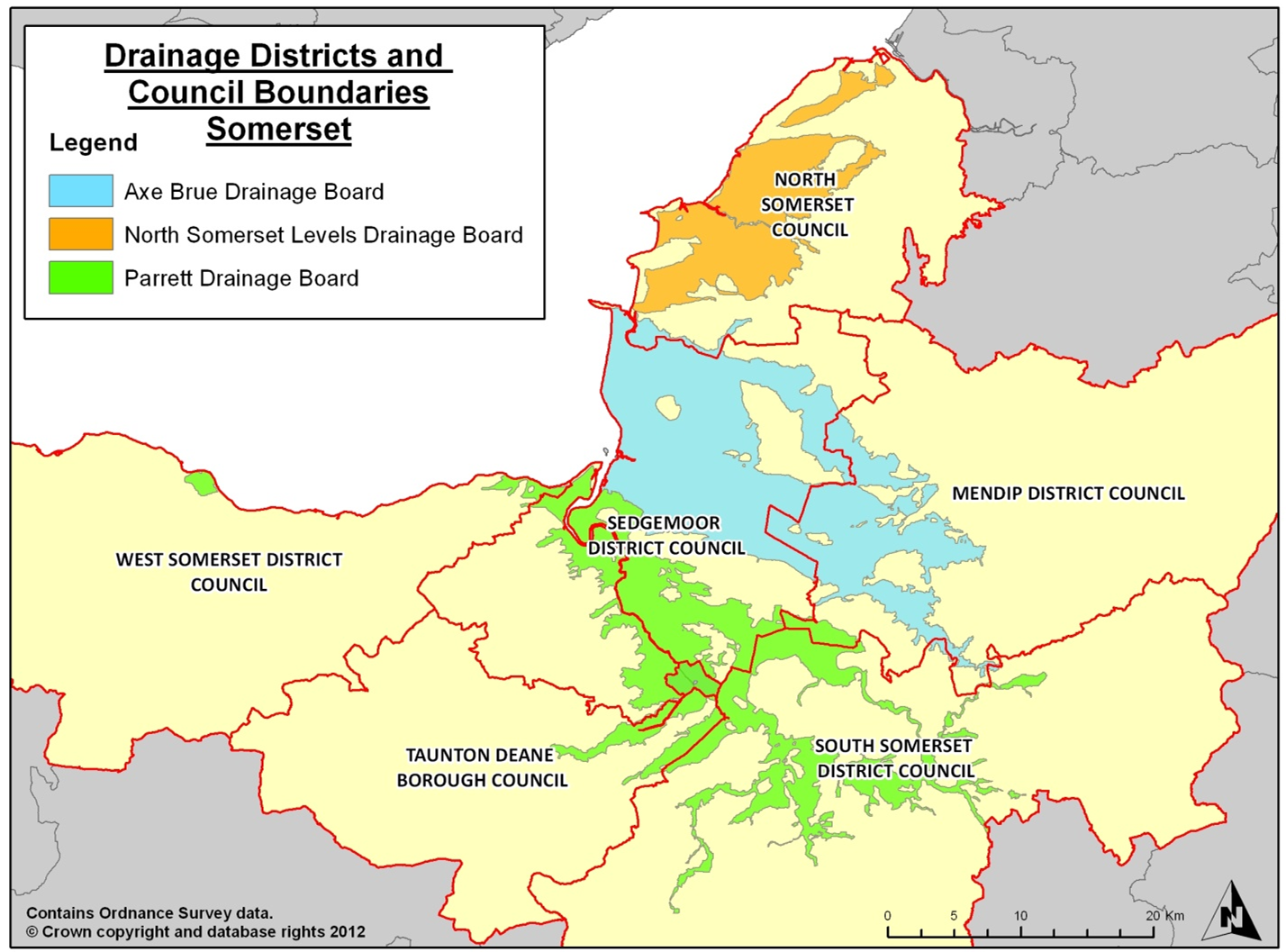
      This winter (& next unless our politicians' promises mean anything) we have seen flooding of the Somerset Levels. This is not because of global warming, whatever the ecofascists say, but because these same ecofascists, assisted by the parasitic EU bureaucracy are, quite deliberately, destroying the drainage system established in the 18th century (which takes some effort because a system established in the horse and shovel age would not take many bulldozers to maintain).

       However it has made it obvious what the land used to be like before such drainage.


      So basically Badon/Bath is the high point covering the entire coast as it was then. The sea, then. came in to almost directly south of  Bath as well as being directly to its east. No enemy army could march along the coast, as it then was, without exposing its flank, all the way, to an enemy working on its own interior lines.

      Almost certainly the Saxons had not been held at Badon as I previously thought, but had advanced all the way to the sea, at one of any of the points close to Badon and decided that the Badon Hill fort was the natural, indeed inevitable central control point.

       And Arthur, in one last throw of the dice, got both Welsh and Cornish to combine on an attack there.

       And won what increasingly looks like it really was the most important land victory in the British Isles (mores than Hastings which mainly changed the aristocracy)

Labels: ,


Sunday, May 04, 2014

Max Clifford Clearly Innocent

     There is a good article on this on Spiked here from barrister Barbara Hewson about the injustice of the Clifford sentencing - specifically described as in her private capacity.

     In particular it draws attention to the ECHR requirement that "‘No one shall be held guilty of any criminal offence on account of any act or omission which did not constitute a criminal offence under national or international law at the time when it was committed. Nor shall a heavier penalty be imposed than the one that was applicable at the time the criminal offence was committed.

    He has had the maximum sentence - 2 years each - but the use of consecutive terms rather than concurrent - ie 8 years in total rather than 2 - is completely against all practice at the time.

    A commenter points out that
Ian B
I was also surprised that the judge in his sentencing (point 21) openly states that he is taking into account the offences of which Clifford was acquitted, as if he had been convicted of them. Is a judge even allowed to do that?

     I don't think it can be legal for a judge to "take into account" something the defendant has been found innocent of either. Indeed I cannot conceive of any just legal system where being innocent would be grounds for increased punishment.
###########################################

     The thing that astonishes me is that I put up a there on Spiked yesterday specifically saying that I believe he is innocent and that we are seeing a "shameful" witch hunt. Yet it is not on there.

      I will see if it appears again. And if so past it here too.

      Or I may rewrite it from memory.

      However if even Spiked, which prides itself on publishing what others fear to, feels it cannot allow a rigorous defence of an octogenarian of whom there is good reason to believe he is being falsely imprisoned then that alone confirms the extent of the witch hunt we are seeing. 

Labels: , ,


Saturday, May 03, 2014

Government Now Looking For British Spaceport

Rockets could take off from a spaceport in Britain within five years after ministers launched a search for a suitable site.

The UK Space Agency has been tasked with opening a site by 2018, with the first flights having lift-off within a year.

A remote site, away from homes and businesses, will be required in the plan to better prepare the UK to deal with threats from space – and offer trips to space tourists.
The government has launched a search for a site for a spaceport to become the UK's answer to Cape Canaveral
Mr Willetts said: ‘We want an area where there is not much civil airspace, where it is not very busy,” said Mr Willetts.

‘It might be smaller airports, it might be underused or disused RAF airfields.
‘We’re starting to look at relatively remote parts of the country,’ he told the Telegraph.

http://www.dailymail.co.uk/news/article-2617763/Rockets-lift-UK-five-years-government-remote-spaceport.html#ixzz30f5dfico
==============================================

7 years ago I made a rather more ambitious proposal for a British and indeed world spaceport which could have been running by now. Even the commenting environmentalist (& several "environmentalists") who objected had no doubt it would work. Ah well.

I have written this to David Willets and we will see:

Dear David Willets,
                                  I am very pleased to see that you are now actively promoting the development of a British spaceport. I would like to repeat a suggestion I made to the previous government and to our space agency (& I believe also to you when appointed).

       It is ancillary to your current proposals, which I very much hope will result in a British spaceport being set up at Lossiemouth or similar in Scotland. I am informed that the reason Virgin went originally to Sweden was because nobody in the Holyrood government was remotely interested in helping them get through the Luddite regulatory morass that affects so much here (& makes even Westminster look efficient by comparison). Indeed an announcement on that basis before the referendum might be opportune.

        However with space industry growing at 10% annually in Britain and the potential for much more we will need as much spaceport capacity as possible.

         My option requires some spending on port facilities, possibly a launch site (though there is an airport already) and limited road and power infrastructure but these could easily be paid for out of a bond issue, redeemable from their use. It would be more likely to augment a UK mainland spaceport, being able to handle larger, including non man-rated cargos.

         It would also have the potential to be the chief spaceport of the western hemisphere. I am assuming Singapore, which has no more potential than this, will be the eastern one.

         This is the proposal I made:


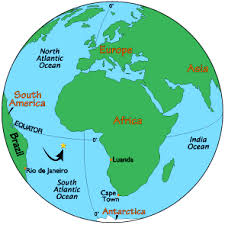
Ascension Island is an unimpressive 35 square mile rock extruded from the Mid-Atlantic Ridge though fortunately not currently tectonically active. It is one of a number of small left overs from the British Empire situated just 7.5 degrees south of the equator. Currently its main importance is that it has a substantial Anglo-American airbase big enough to handle regular Hercules flights to the Falkland Islands. Current British government practice is to discourage migration, tourism & development, presumably to prevent the locals being able to object to the base. "In order to gain an entry to Ascension Island, people need the written permission of the Administrator. It is nearly impossible to take up permanent residence. Employment is a requirement to stay on the island. The UK government has asserted that no inhabitant of Ascension Island has a "right to abode".

The values I am concerned about are, in order, that it is near the equator, that it is under British legal authority & that it is an island far from the nearest shore. The UK rule & isolation mean that it & any business activities on it are secure. The position on the equator & being surrounded by sea make it one of the best places in the world for 1 particular business.

Developed properly it could be Earth's prime spaceport.

The Earth rotates & the equator rotates at 1000mph, which is 10% of the speed needed to reach orbit. From the equator costs to orbit are therefore much more than 10% less than they can be elsewhere. This is why Cape Canaveral & Baikonur are located in the southernmost parts of their respective countries. Moreover the automatic position reached in orbit from the equator is an equatorial orbit which is easier to match to than orbits starting at some other point & would allow communication satellites to hold a relatively stable position in the sky.

Developing the island conventionally would not be hard, which is why our government have had to actively prevent it. 3 of the world's richest territories are places with few natural resources which have become wealthy as British colonies. This is because our law ensures contracts are worth the paper they are written on & because being part of the Empire keeps them safe from predatory neighbours & even more importantly from police chiefs & political leaders, not necessarily more irresponsible than those of Springfield but who should not be trusted with the power of absolute sovereignty. The 3 are
Bermuda, the Cayman Islands & Hong Kong (Hong Kong may not be British anymore but it got rich that way - in 1948 it got 2 million Chinese refugees, without the "aid" provided to the much less numerous Palestinians to keep them refugees). The success of these places, now richer than Britain, supports the libertarian view that beyond upholding the law most of the rest of government is parasitic & the old fashioned imperialist view that the natives generally benefited from our Empire.

Thus much of what is needed is merely to do nothing. No bans on immigration & development, allow commercial & tourist flights, don't charge corporation & most other taxes (the place is hardly a source of revenue currently). To develop it into a space port we would first need the UK government to have
set up an X-Prize Foundation as I have previously suggested. Beyond that a little infrastructure - a good harbour & an Ocean Thermal Energy Converter (OTEC) able to produce enough power to hydrolyse as much hydrogen & liquid oxygen as might be needed or indeed to run a laser launching system. An extra effect of an OTEC is that by bringing nutrient rich deep ocean water to the surface it can facilitate algae & fish industries. Marshall Savage's book The Millennial Project details how & I have borrowed extensively from him for this idea, which is considerably less ambitious than his floating islands proposal. The US would have to be squared but if Pearl Harbour does not have to be isolated I don't see this base as presenting insuperable security problems, indeed good harbour facilities should make it a more useful base.

I am envisaging a spaceport in perhaps 10 years, launching a fleet of shuttles developed from "3 operational spacecraft which have achieved low earth orbit, returned to earth, and flown to orbit again three times in a period of three weeks" (as Dr Pournelle's X-Prize proposal suggests) relatively accessible from the North Atlantic shores of Britain, the USA & Europe. It may sound very Dan Dare but I see no reason why a forward looking self confident nation couldn't create it. I would welcome criticisms & refinements. Isn't the island's name a magnificent example of serendipity.


    As I say I would welcome any criticism. All the discussion on the subject has confirmed that it would work - even those who don't want it to.

    Because I have had no reply to this from various government sources when suggested over the last 7 years; because a previous enquiry showed that the government had simply binned, without consideration, a 2009 proposal for an X-Prize Foundation which would probably have made us leader in space industry by now if that had been desired; and because, on another occasion, I was informed by the Scottish executive that they would never, under any circumstances, give any consideration to any concept that did not come directly from the brow of the leadership I am forced to make a formal request.

      Under the Freedom of Information Act I request all documentation relating to the Ministry's/Agency's consideration of this, or of the decision to bin it without consideration, specifically including all reasons for doing it, or for deciding not to bother.

       I trust this is not an insuperable inconvenience - perhaps it will even give you the leverage to get the civil service to give you an honest answer on feasibility.

Neil Craig
map of ascension island,


Labels: , , ,


Wednesday, April 30, 2014

Ordered Not To Prevent Genocide In Kosovo

    This is from Roger Helmer's blog. He had highlighted a Labour MP reusing the "UKIP racist" smear. I said that when there are no arguments of fact against us, such smears become the only option so we must expect more. Also the tactics we should use - don't just defend our record, counterattack:

The Labour Party, with the assistance of Tories & LibDems & the BBC propagandists, were responsible for, quite deliberately, imposing NATO “police” in Kosovo who engaged in genocide, ethnic cleansing and the dissection of thousands of living human beings to steal their body organs – all selected on racial grounds.

UKIP has never been involved in any racist obscenity 1,000th as evil as what the MPs of these parties and so unless Mr Gapes can produce irrefutable evidence, he cannot, unless he is as dishonest as he is a murdering racist pro-Nazi, ever make the claim he has about UKIP being in any slightest way remotely as racist as the approved parties.

Of course he is precisely that dishonest, and since he remains a Labour MP, that party is proven to be so too.

When they make such claims we should not simply deny it – when you are stuck denying something in politics you have half way lost, this is not fair but it is tactics – we should counter attack demanding that the speaker either produces evidence of anything remotely matching the racist atrocities they have been responsible for or apologise.

   This is in line with what I have, for many years, been saying about their Yugoslav atrocities.

   It produced a response from somebody who seems to be working fulltime as a troll on this site - never engaging in any sort of factual debate and simply using insults and assertions to support the LabConDem position (this is becoming common & I assume such people are government paid hacks). He denied that the ethnic cleansing of 350,000; the massacres; the sexual enslavement of children; or the dissections of living people had ever taken place. I, correctly if ungently, decribed this as the statement of a wholly corrupt, Nazi whore being pimped by the racist LabConDem parties who knew perfectly well that he was lying in the Nazi cause - that if he wasn't he wouyld be able to produce at least some evidence that these atrocities never happened.

   Naturally he didn't.

   However the thing worth putting this here is a statement from a completely unrelated commenter, Brian Jenkins, replying to Brian and confirming our government's atrocities. I think it is worth highlighting:

  "Brin Jenkins says:

Actually it is not nonsense. A pal was a major in our army, out in Kosova. He was ordered not to assist a Christian group being murdered by Islamists. This upset him greatly and broke him, he turned to drink, lost his wife and died of a heart attack some years ago. He had some harrowing tales that I had no reason to doubt."

      Events like this confirm that atrocities have effects beyond the victims. It also confirms that while those in the army were, generally, left with no option other than mutiny, the guilt for these atrocities lies overwhelmingly with the racist and genocidal politicians of the LabConDem government and BBC whores.

       It is an anti-climax to point out that it is impossible for anybody in, or funded by, any of these organisations to honestly criticise anybody in UKIP on such lines.

UPDATE
An update from Brin

I spoke with a retired Army Major before he died, he categorically stated that he was ordered to stand down, and not assist Christians being killed!
 
He was very disturbed by the experience.
 
He resigned his commission over the situation.
 
He died of a heart attack at a very young age so it can no longer be verified.
 
It’s a conflict we should never have been involved with when General Tito’ s multicultural experiment failed.
 
Now this is a matter I feel very uncomfortable with, but it happened, and we were never told the reason for our involvement or the true reasons for the conflict.


Labels: , ,


Monday, April 28, 2014

Lib Dems Refuse To Debate Their Claim The EU Is Beneficial - Lets See If They Believe In ANY Of Their Policies

  OK my apologies for being offline for the last few weeks.

  I can confirm that I have received no response, not only from Willie Rennie, the Scottish Lib Dem leader, but from ANY representative of the party to defend his claim, at the "Glasgow Skeptics" censored "debate" on separatism, that EU membership is economically beneficial.

  This empty chair seems appropriate.

 
   However, when an opponent runs from the field one may reasonably claim victory.
 
  I had originally planned to run this debate over a full week but because I was offline taking it up again seems inappropriate. I have sent this
 
Dear Mr Rennie and Lib Dem Party,
                                                           I note you & your party's refusal to debate, openly online or elsewhere, your claim that EU membership is beneficial to our economy.
 
     I trust you will not object to the obvious conclusion that you know this claim cannot successfully be sustained in open debate (as Mr Clegg has also shown).
 
     However I do not think it can either be disputed that open debate of issues is a necessary requirement of democracy or indeed liberalism and I put it to you that your refusal to debate is thus also proof that you and your party are neither liberal nor democratic. Let me know if you dispute either assumption or conclusion.
 
      In that light I would be willing to debate, in the same form, with you, or any approved "LD" spokesman on ANY subject where the UKIP position differs from yours.
 
      I assume that if you can find even 1 policy promoted by your party which is better than that of UKIP you will be more than happy to debate it.
 
     I look forward to finding if there is any such.
 
    Sincerely
    Neil Craig

Labels: , ,


Thursday, March 27, 2014

Liberal Societies and Technocracies and Where We Stand

      I get a bit annoyed when people on the good guy's side sloppily adopt the EU's description of their own bureaucratic method of ruling us - "Technocracy"
 
    "The concept of a technocracy remains mostly hypothetical, though some nations have been considered as such in the sense of being governed primarily by technical experts in various fields of governmental decision making. A technocrat has come to mean either 'a member of a powerful technical elite', or 'someone who advocates the supremacy of technical experts'.[1][2][3] Scientists, engineers, and technologists examples include these technologists who have knowledge, expertise, or skills, would compose the governing body, instead of politicians, businesspeople, and economists.[4] In a technocracy, decision makers would be selected based upon how knowledgeable and skillful they are in their field."                            (definition from Wikipedia)

      Now to call either Kinnock, Baroso, Mandelson, or any of the rest of them a "technologist" with "knowledge, expertise or skill" beyond the skills required of windbags and fraudsters is clearly nonsense. I doubt if any of them can handle machinery much more complicated than a knife and fork.

     China and Singapore probably can be correctly classified as technocracies. China's leaders almost all have engineering &/or accountancy credentials. Singapore's ruling party goes to considerable lengths to ensure anybody carrying their rosette has technocratic ability & the results and people's votes suggest this works (China's is more debatable - the people are probably fairly happy with the government but we don't know because they aren't asked).

     There is a good case for genuine technocratic government. Democracy does have the problem that those elected are fairly representative of the electorate, almost 50% of whom are of below average intelligence. On the other hand rule by elites has the problem that they have their own interests and beliefs rather than all of societies as their prime interest. Also that after a generation or 2 they may be much less elite.

   But what we have running the EU (and to an ever increasing extent at home too) has none of the benefits of either democracy or technocracy while keeping the dis-benefits of both.

   People of no exceptional intelligence running things without considering us, just as if they were an elite.

   A few days ago I mentioned the SNP's childcare policy being an invented PR lie masquerading as a carefully costed policy. Well in a follow up to that the SNP have, typically, refused to answer an FoI on the matter for this amazing reason:


"Disclosing this advice and evidence while the childcare policy is still under discussion and development may undermine or constrain the Government's ability to develop that policy effectively."

    Which is simply a boast that the SNP think that, under no circumstances, should the mere public have any knowledge of the formation of new polices, and thus by definition no influence. It should, ideally, emerge like Aphrodite, from the furrowed brow of Sturgeon, Salmond or the rest of these intellectual pigmies. It doesn't really matter whether this reason is the genuine one or just something thought up as an excuse to hide the lack of anything behind the curtain to support the policy. If they believe it or if they believe it is a sensible excuse, they must believe it.


   It is not just the SNP, of course, who believe no idea should be considered ever, under any circumstances, be willing to look at any new ideas that don't come from party leaders, which obviously is a tight limit.

    So here is the alternative - Dan Hannan on why a free society with the rule of law applied equally and lightly, to all, which often but not automatically means a democracy & definitely something that EU "technocrats" don't even understand.

 "Most Brits do indeed believe in British exceptionalism. But here's the thing: They define it in almost exactly the same way that Americans do. British exceptionalism, like its American cousin, has traditionally been held to reside in a series of values and institutions: personal liberty, free contract, jury trials, uncensored newspapers, regular elections, habeas corpus, open competition, secure property, religious pluralism.

The conceit of our era is to assume that these ideals are somehow the natural condition of an advanced society—that all nations will get around to them once they become rich enough and educated enough. In fact, these ideals were developed overwhelmingly in the language in which you are reading these words. You don't have to go back very far to find a time when freedom under the law was more or less confined to the Anglosphere: the community of English-speaking democracies.                                        
                                                                                  
                    .... The spread of "Western" values was, in truth, a series of military victories by the Anglosphere.
 
I realize that all this might seem strange to American readers. Am I not diluting the uniqueness of the U.S., the world's only propositional state, by lumping it in with the rest of the Anglosphere? Wasn't the republic founded in a violent rejection of the British Empire? Didn't Paul Revere rouse a nation with his cry of "the British are coming"?
 
Actually, no. That would have been a remarkably odd thing to yell at a Massachusetts population that had never considered itself anything other than British (what the plucky Boston silversmith actually shouted was "The regulars are coming out!"). The American Founders were arguing not for the rejection but for the assertion of what they took to be their birthright as Englishmen.....
 
What made the Anglosphere different? Foreign visitors through the centuries remarked on a number of peculiar characteristics: the profusion of nonstate organizations, clubs, charities and foundations; the cheerful materialism of the population; the strong county institutions, including locally chosen law officers and judges; the easy coexistence of different denominations (religious toleration wasn't unique to the Anglosphere, but religious equality—that is, freedom for every sect to proselytize—was almost unknown in the rest of the world). They were struck by the weakness, in both law and custom, of the extended family, and by the converse emphasis on individualism. They wondered at the stubborn elevation of private property over raison d'état, of personal freedom over collective need.
Many of them, including Tocqueville and Montesquieu, connected the liberty that English-speakers took for granted to geography. Outside North America, most of the Anglosphere is an extended archipelago: Great Britain, Ireland, Australia, New Zealand, Hong Kong, Singapore, the more democratic Caribbean states. North America, although not literally isolated, was geopolitically more remote than any of them, "kindly separated by nature and a wide ocean," as Jefferson put it in his 1801 inaugural address, "from the exterminating havoc [of Europe]."
Isolation meant that there was no need for a standing army in peacetime, which in turn meant that the government had no mechanism for internal repression. When rulers wanted something, usually revenue, they had to ask nicely, by summoning people's representatives in an assembly. It is no coincidence that the world's oldest parliaments—England, Iceland, the Faroes, the Isle of Man—are on islands.
Above all, liberty was tied up with something that foreign observers could only marvel at: the miracle of the common law. Laws weren't written down in the abstract and then applied to particular disputes; they built up, like a coral reef, case by case. They came not from the state but from the people. The common law wasn't a tool of government but an ally of liberty: It placed itself across the path of the Stuarts and George III; it ruled that the bonds of slavery disappeared the moment a man set foot on English soil.
There was a fashion for florid prose in the 18th century, but the second American president, John Adams, wasn't exaggerating when he identified the Anglosphere's beautiful, anomalous legal system—which today covers most English-speaking countries plus Israel, almost an honorary member of the club, alongside the Netherlands and the Nordic countries—as the ultimate guarantor of freedom: "The liberty, the unalienable, indefeasible rights of men, the honor and dignity of human nature... and the universal happiness of individuals, were never so skillfully and successfully consulted as in that most excellent monument of human art, the common law of England."
Freedom under the law is a portable commodity, passed on through intellectual exchange rather than gene flow. Anyone can benefit from constitutional liberty simply by adopting the right institutions and the cultural assumptions that go with them. The Anglosphere is why Bermuda is not Haiti, why Singapore is not Indonesia, why Hong Kong is not China—and, for that matter, not Macau. As the distinguished Indian writer Madhav Das Nalapat, holder of the Unesco Peace Chair, puts it, the Anglosphere is defined not by racial affinity but "by the blood of the mind."
At a time when most countries defined citizenship by ancestry, Britain was unusual in developing a civil rather than an ethnic nationality. The U.S., as so often, distilled and intensified a tendency that had been present in Great Britain, explicitly defining itself as a creedal polity: Anyone can become American simply by signing up to the values inherent in the Constitution.
There is, of course, a flip-side. If the U.S. abandons its political structures, it will lose its identity more thoroughly than states that define nationality by blood or territory. Power is shifting from the 50 states to Washington, D.C., from elected representatives to federal bureaucrats, from citizens to the government. As the U.S. moves toward European-style health care, day care, college education, carbon taxes, foreign policy and spending levels, so it becomes less prosperous, less confident and less free.
We sometimes talk of the English-speaking nations as having a culture of independence. But culture does not exist, numinously, alongside institutions; it is a product of institutions. People respond to incentives. Make enough people dependent on the state, and it won't be long before Americans start behaving and voting like…well, like Greeks.
Which brings us back to Mr. Obama's curiously qualified defense of American exceptionalism. Outside the Anglosphere, people have traditionally expected—indeed, demanded—far more state intervention. They look to the government to solve their problems, and when the government fails, they become petulant.
That is the point that much of Europe has reached now. Greeks, like many Europeans, spent decades increasing their consumption without increasing their production. They voted for politicians who promised to keep the good times going and rejected those who argued for fiscal restraint. Even now, as the calamity overwhelms them, they refuse to take responsibility for their own affairs by leaving the euro and running their own economy. It's what happens when an electorate is systematically infantilized.
The owl of Minerva, wrote Hegel, spreads its wings only with the gathering of the dusk. Since the middle of the 18th century, the hegemony of the English-speaking peoples has drawn many other nations into a uniquely free, democratic and wealthy world order. The Anglo-American imperium is, by most measures, reaching its twilight. But the values of the Anglosphere, particularly the unique emphasis on individualism, ought to be perfectly suited to the Internet age. And such values can take root anywhere.
Perhaps the most important geopolitical question of the 21st century is this: Will India define itself primarily as a member of the Anglosphere or as an Asian power? In the decades after independence, India did what all former colonies do, adopting policies aimed at underlining its differences from the former occupier. Successive governments promoted autarky, the Hindi language and equidistance between the Western and Soviet blocs.
Franklin Delano Roosevelt and Winston Churchill on board the HMS Prince of Wales, August 1941 Hulton Archive/Getty Images
But India has long since passed its moment of maximum orbital distance from the other Anglophone democracies. The traits that continue to set it apart from most of its neighbors are, for want of a better shorthand, Anglosphere characteristics.
In India, governments come and go as the result of elections, without anyone being exiled or shot. The armed forces stay out of politics. English is the language of government and of most universities and businesses. Property rights and free contract are secured by a common-law system, which remains open to individuals seeking redress. Shared values lead to shared habits. When, in the aftermath of the tsunami 10 years ago, the U.S., Australian and Indian navies coordinated the relief effort, they found an interoperability that goes beyond even that found among NATO allies.
If India were to take its place at the heart of a loose Anglosphere network, based on free trade and military alliance, the future would suddenly look a great deal brighter. Of course, to join such a free trade area, the U.K. and Ireland would have to leave the EU. But that's another story"

Labels: , ,


This page is powered by Blogger. Isn't yours?

British Blogs.