
Thursday, August 22, 2013
14/15ths of Cable Cost Goes Walkabout - Letter West Highland Free Press
He had also been a little surprised that nobody from the Holyrood parties had tried to reply, to a letter of which he was remarkably flattering. I was less surprised since experience has shown me that when they are caught (as, immodestly, is almost always the case with my letters) they take refuge in silence.
That it had hit the nail on the head sufficiently well to be unanswerable is also confirmed by the fact that the WHFP is extremely politically correct and right on and would certainly have published any reply.
We had a long natter about the state of the world. He is a real environmentalist but is therefore open to believing some of ecofascists may be honest, but he was rational and our views were close enough, but also far enough apart, to make discussion interesting.
I was gratified that an intelligent individual, so many months after the event, had kept the letter and taken the time out to talk about it. Also grateful to know it had been published in the WHFP.
In a period when I have been a bit short of published letters particularly in the Scotsman which has had relatively few from the Letter Writer's Guild lately I am pleased to have confirmation that it is not any lack of quality. I am now approaching 1,000 letters (well about 20 sent out to 50 papers) on the BBC's 28 gate fraud, not one of which has been published. When I first started writing letters many years ago I would be disappointed at a less than 50% hit rate.
Clearly if it is not because I am less capable now it must be because I am hitting uncomfortable targets with precision. Which in turn says a lot about our free media.
"I am no fan of windmills - they are 10 times the cost of conventional power, intermittent, unreliable and tend to destabilise the smooth voltage on which the grid and modern technology depend - however I have sympathy with windmiller's dismay over the price increase, to £775 million, of a cable between the western Isles and the mainland.
The Aberdeen bypass, at £23.3 million a mile is 8 times more expensive than new roads across the EU & US are. The same applies to the Forth tunnel which is 8 times more expensive, after adjusting for inflation, than the previous Forth bridge.
By comparison, a few years ago, Norway signed a contract with Nexans to lay a much longer cable (292km) at a cost of $98 million (then about £50 mill) in the North Sea. This seems to be the normal cost in the rest of the world.
Thus in this case we are greatly exceeding the normal situation of Scottish public projects costing 8 times what they do elsewhere. In this case it looks like well above 15 times.
Before the Forth crossing contract was signed I e-mailed every MSP asking why so much of the money goes walkabout but got only one, not entirely coherent, reply.
Can none of our elected leaders tell us why everything they do costs us so many times more than it would elsewhere in the world and where the money they take from us goes?"
Labels: Forth crossing, Government parasitism, letters


Thursday, July 04, 2013
Edinburgh Trams - Not Quite As Popular And Financially Viable As Promised
The £776m project is due to begin running in July next year.
A report to councillors said the trams would need an initial start-up loan of up to £3m.
The council expects to receive £51m in payments and dividends over 15 years. However, it will pay out £85m in maintenance and refurbishment costs.
Lothian Buses is expected to generate a £33m dividend for the council over the same period.
However, when the costs of the tram scheme are included, the profit drops to £5m......
Professor Richard Kerley, Queen Margaret University's local government finance expert, said: "I am slightly surprised that the projected figures for cash transfers and dividends are so firm when you don't have tram lines up and running yet."
It was originally intended that the trams would run from Edinburgh Airport to Newhaven in the north, at a cost of £545m.
They will now terminate in York Place in the city centre, with the project costing £776m.
Note sleight of hand comparing £51m takings with £85m "maintenance and refurbishment" but that ignores the actual cost of day to day running, ticket collection etc. Also the "initial start up loan of £3 million" - what do you call a loan that nobody expects will ever be repaid?
Officially the building cost has not been upped for the last couple of years and is still £776 million but that excludes interest payments which are agreed to bring it over the billion.
And of course, as Professor Kerley points out this figure is subject to "unforeseen" extra expenses when the system is actually up. With the building cost well over £1bn for half the original track (originally promised at £300 million it is clear that we are still a long way from knowing where the bottom of this money hole lies.
And Edinburgh city centre is still gridlocked because major roads are endlessly closed to put in/take out/move/repair rails.
And Edinburgh has gone from being the second favourite tourist city in Britain to not being in the top ten.
If you can't quit when you are ahead quitting when you are merely £1 billion behind still makes sense. All Holyrood parties (admittedly the SNP less than the others) share the blame. In the spirit of learning from ones mistakes so that one can repeat them perfectly, all of the old parties are in favour of spending
Labels: Forth crossing, Government parasitism, Scottish politics
Monday, November 05, 2012
"comforting to know that we can still be world-beaters"
When an American tourist told Basil Fawlty that he owned the “crummiest, shoddiest, worst-run hotel in the whole of western Europe”, Major Gowen, the gin-soaked retired resident, sprang to his landlord’s defence, exclaiming: “No! No, I won’t have that! There’s a place in Eastbourne.”
At the risk of sounding like the major, I would take issue with Neil Craig (Letters, 31 October) that the 28-mile Aberdeen bypass costs are world-beaters. In fact, they are as nothing to the scale of costs of the recently completed M74 extension.
Using Transport Scotland’s distance of five miles (8km) for that project and Audit Scotland’s total cost for the extension of £692 million, this works out at a world record cost of £138.4m per mile!
This must have come as a shock to Dr Stephen Ladyman, who as roads minister in 2006 stated in answer to a House of Commons question: “The average cost for constructing a mile of motorway is £29.9m.”
It is comforting to know that we can still be world-beaters; the M74 extension, the new Forth bridge, the Scottish Parliament, and last, but not least, the Edinburgh trams, confirm the old adage: “Wha’s like us?”
Tom Minogue
Neil Craig is absolutely right about the excessive costs of the likes of the Aberdeen bypass and the new Forth crossing.
The Millau viaduct in France, the highest, longest, cable-stayed bridge anywhere, co-designed by Norman Foster and built by the French in only three years from 2001 to 2004, cost only €394 million. Just watch the video on YouTube.
We spend a substantial fraction of that simply in legal costs to get things started.
Where are you, Alex?
Peter Kent
Tom Minogue previously wrote a guest post here, proving that not only is the new bridge grossly overpriced but that the old one can be maintained and have a 5th lane, tidal with the to/from work traffic, for a tens of millions at most.
I like Fawlty Towers & can imagine both Holyrood and Westminster claiming the other as the equivalent of Eastborne.
I have also had this response from a friend:
You make a good point. In my view, it costs more because they sign the wrong type of contract, where the over-runs and errors are for the clients account, as opposed to the contractors account.
Then there are too many hands on the tiller while the job is being done. Each hand not really knowing what the other hand is doing. Two classics are of course the Parliament and the Trams.
A lot of the money goes in dispute and litigation that we don’t even hear about as well. Not for nothing are some Edinburgh law firm partners enjoying £500k salaries. They have a ramp going, where they move the poor dumb client around their closed shop associated firms for “specialist” advice.
Sliceability as it is known in the legal and accounting professions..
Politicians and Civil Servants are just plain naïve. By definition they have to be, or they would have proper jobs.
Regards : Malcolm Parkin
Labels: Forth crossing, Government parasitism, Scottish politics
Wednesday, October 31, 2012
Scottish Public Projects Cost 8 Times What They Should - Scotsman Letter
We are told that the reason the price of the Aberdeen bypass has gone up to £653 million over 9 years from £347m is inflation. If so inflation has been 7% annually. I don't think so.
Worse is that this is a cost of £23.3 million a mile. According to a previous newspaper article, critical of high Russian roadbuilding costs caused by "post-Soviet bureaucracy and chaotic planning" their roads cost a whole £6.8 million per mile, far more than the EU average of £2.7 million or China's £840 thousand.
I hope our "chaotic bureaucracy" which makes Scottish and British public projects normally at least 8 times more expensive than they should be, comes under as critical an eye from the British media as foreigners do. However since there has been no media outcry over the new Forth crossing costing £2,300m when the inflation adjusted price of the old one was £320m this is more a hope than an expectation.
Neil Craig
ref http://a-place-to-stand.blogspot.co.uk/2012/10/is-soviet-style-bureaicracy-choatic.html
As usual the numbers and the most severe criticism of the reporting double standards of the British media, has been excised, however they did keep in the "more hope than expectation" line.
Online comments are supportive.
There is also a good letter from Dr John Cameron about the radiation scare at Dalgety Bay. He reuses a classic insult of Gordon Brown from a previous letter of his..
UPDATE FRIDAY
The Herald have published this letter too, edited in a different way.
We are told that the reason the price of the Aberdeen bypass has gone up to £653 million over 9 years from £347 is inflation.
If so inflation has been 7% annually. I don't think so. Worse is that this is a cost of £23.3 million a mile. According to a previous newspaper article, critical of high Russian roadbuilding costs caused by "post-Soviet bureaucracy and chaotic planning" their roads cost a whole £6.8 million per mile, far more than the EU average of £2.7 million or China's £840 thousand.I hope our "chaotic bureaucracy" which makes Scottish and British public projects normally at least 8 times more expensive than they should be, comes under as critical an eye from the British media as foreigners do. However since there has been no media outcry over the new Forth crossing costing £2.300m when the inflation adjusted price of the old one was £320m this is more a hope than an expectation.
Neil Craig
Normally I prefer the Scotsman's editing and I think their technical placement of paragraph stops is better. However the Herald has left in most of the international figures, excising only China's. By editing out that comparison and the "post Soviet chaotic planning" remark the Scotsman left my reference to Scotland's chaotic planning unsupported. On the other hand the Herald left out all mention of £2 billion of the Forth crossing going walkabout. On previous occasions I have said where editing has improved my letters. In this case I think neither editing matches the original. Neither paper gives the impression of being willing to hold this country's government to account, for incompetence or theft, which is said to be the mark of a free press.
Labels: Forth crossing, letters, Scottish politics
Monday, December 12, 2011
Trams "Fixed Price Contract" Promise Is Just What We Expect from Our Political Classes
20 May 2008
City of Edinburgh council and tram project promoter Transport Initiatives Edinburgh announced on May 14 that contracts worth £512m had been placed for the 18·5 km tram network being developed in the Scottish capital.
The BBS consortium of Bilfinger Berger and Siemens has a €350m (£299m) fixed-price construction contract, under which consortium leader Bilfinger Berger will be responsible for civil works valued at €190m ((£162m) while electrical and mechanical equipment will be supplied by Siemens.
Spanish rolling stock manufacturer CAF was formally awarded the €170m (£145m) contract to supply and maintain 27 trams.
The first tracks are expected to be laid by September, and opening of the line from the airport through the city centre to Newhaven is planned for mid-2011, with Transdev as operator.
And then
2 September 2011
Councillors in Edinburgh have voted to rescue plans to build a tram line into the city, which could eventually cost £1bn.
Eight days after residents were told the council had voted to stop the trams two miles short of the city centre, it agreed by a majority to reinstate the longer route at an emergency meeting on Friday....
Bungled decisions and setbacks have increased the project's official costs from £520m in 2008 to the latest figure of £776m. The new line to St Andrew's Square in the New Town will cost the city about £86m per mile, but that figure too is expected to rise.
Although officials hope to strike a more competitive deal with the contractors or get more government funding, the city will have to borrow up to £231m to build the extra section of line.
The costs of that loan over the next 30 years would push the total figure beyond £1bn.There has been little public discus ion of the officially annou8nced "fixed price2 nature of the contract. Was it always a total and deliberate lie ot did TIE deliberately vitiate that contract by adding to it. I suspect the latter. Either way some group of civil servants, possibly also councillors and MSPs, engaged in deliberate financial fraud on a a massive scale ripping us off for hundreds of millions of pounds.
That money will be spent on building a line that will still end eight stops short of the destination agreed in 2008
Yet so corrupt is Scotland's political class that not only is there no prospect of any of the thieves going to jail; not only is there no prospect of any of the thieves even being fired; but there is no prospect of any Scottish "journalist" reporting what happened.
Labels: Forth crossing, Government parasitism, Scottish politics
Thursday, October 27, 2011
Glasgow Airport Link Easy If the Politicians Weren't Stopping It

The Glasgow airport rail link (GARL) is a long story of the incompetence,at best, of all 3 ruling parties in Scotland's political class
The Scottish Parliament on 29 November 2006 passed the GARL bill by 118 votes to 8, thus allowing the construction of the route to begin. Construction was to be in phases with the re-location of football pitches in the route's path at Paisley St James scheduled for 2007, before route clearing and track work in 2007 and 2008. The cost of the route was estimated at £170m, with inflation increasing the cost to a potential £210m....
In 2008, control of the GARL project passed from SPT to Transport Scotland who would have overseen the building of the route. Overhead catenary work and a re-modelling of Shields Junction over the past year have already taken place in connection with GARL. In December 2008, Transport Scotland announced that the tender competition will begin in spring 2009, meaning GARL would have been operational in early 2013...
On 11 July 2008, Transport Scotland announced that 38 Class 380 trains have been ordered for use on Ayrshire and Inverclyde services and also the Glasgow Airport Rail Link....
17 September 2009, the Scottish Government scrapped the airport branch component of the Glasgow Airport Rail Link amid concerns over the need for public spending cuts
The cancellation of a project then at about £300 million, cost £41 million. So we got nowt and it only cost us £41 million.
Labour, who started this, are still making political mileage out of the SNP's subsequent decision to cancel a project which even Labour's initial report acknowledged didn't even come close to making economic success. Labour fairly openly admit that they care more about the ability to funnel money at Glasgow developers (at least some of whom are Labour donors) than about the economics of the case.
What both parties studiously avoid mentioning is that there was, on the table, an offer to build a link for around £20 million. All 3 parties were aware of this and rejected it purely because it had not been invented by them.
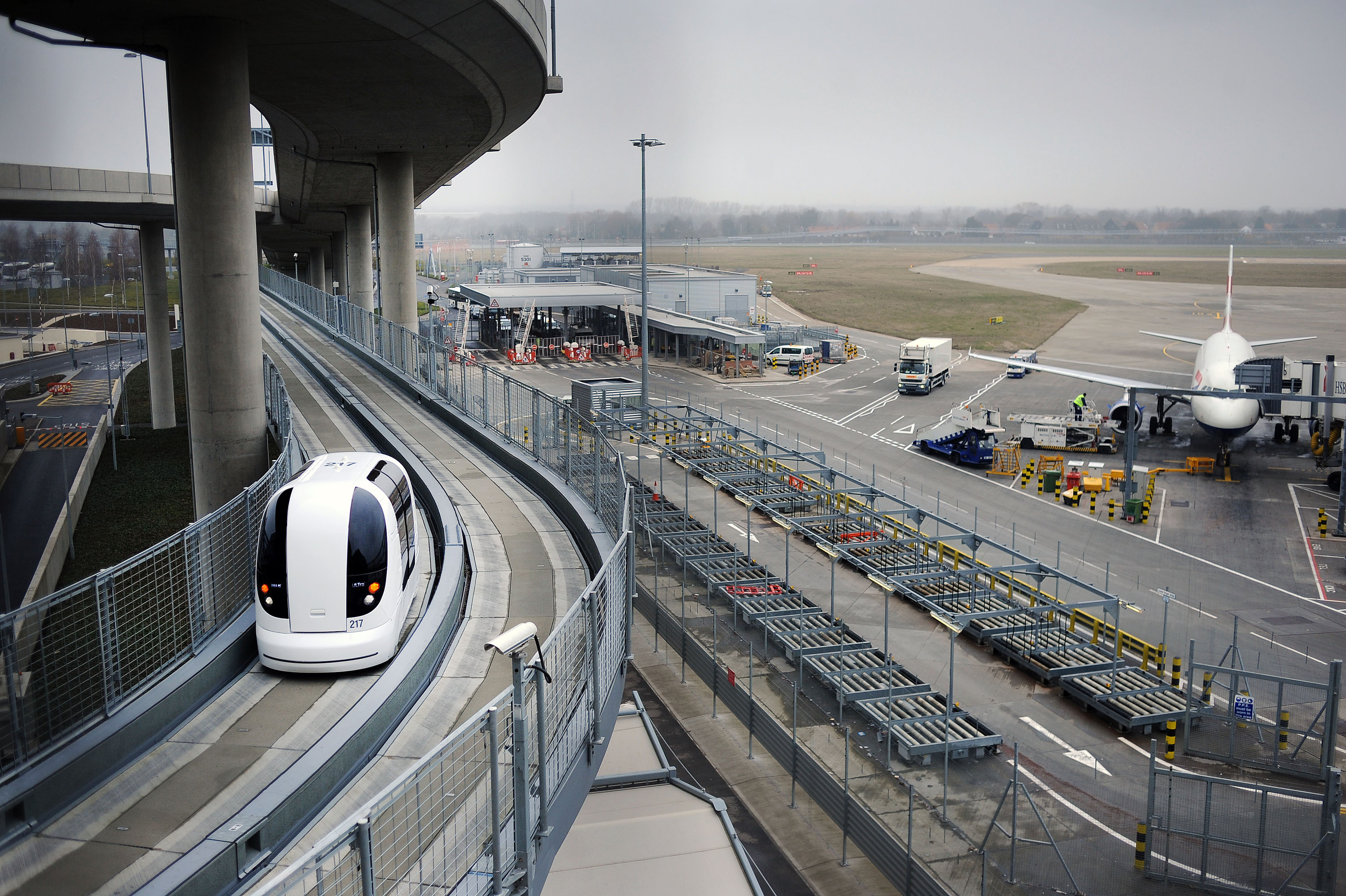
I say this with certainty because I was the person who came up with the proposal. I suggested an overhead monorail link to Paisley Station which has trains every few minutes into Glasgow and almost equally valuable - similar rail links to the airport at Prestwick so that together they could serve as a regional hub.
"some years ago I wrote to you, while you (Nicol Stephen, subsequently "LibDem" leader) were the Scottish transport Minister ...suggesting that a better option would be an automated monorail. You will recall that the in initial reply you had sent was that this option would be considered but only if I could find some company will to tender for the job. When I did indeed find such a company, ULTra, who were doing a similar job at Heathrow & who expressed their willingness to tender for a price around £20 million, you will recall that I received a 2nd letter advising that the statement that you would be willing to consider this if I found somebody should not have been taken to mean that you would consider this if I found somebody. Instead I was told that the government would only ever, under any circumstances, be willing to look at any new ideas if they had been brought up by the leaders of the parties in government.
That certainly provides full inoculation against any form of innovation."
The SNP were somewhat more polite about it but rejected even looking seriously at it on the grounds that until they had looked seriously at it they could not say for certain that it would be "so clearly superior to GARL" as to justify them looking seriously at it (I particularly like the "so clearly superior" which acknowledges that, even without looking at it, they can see it is somewhat superior).
Since the cancellation all 3 parties simply refuse to comment on the matter.
.JPG)
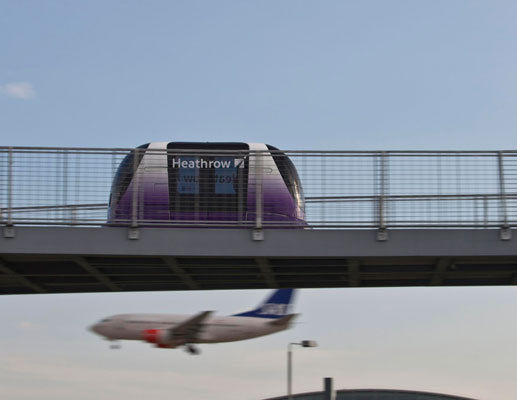
This is the ULTra system currently in use at Heathrow airport.
We could have had that in place by now for half what our politicians have already spent. Obviously less money in it for donors than a £300 million project would make but the people paying would have got something useful out of it.
We still can.
John Swinney has said that Scotland's budget for infrastructure projects will go up substantially to offset our recession. This would be a good thing if the money were actually to be spent doing the work efficiently. Unfortunately we know that the SNP's idea of running infrastructure projects is that, when done at their best such projects cost 8 times the engineering costs (an example of not the best being trams) - the rest being blown a mixture of political parasitism and theft.
The main parties are happy with this cosy arrangement and only a refusal by the public to be stolen from, again, will make them change.
Labels: Forth crossing, Scottish politics, scottish progress
Saturday, October 22, 2011
Whatever Happened to the Iconic Bridge?
Money wasted on iconic footbridge
THE powers that be in Glasgow have decided to spend £40 million of our money on a footbridge at Broomielaw. Mind you, it will be an "iconic" footbridge. I think that means it will not be built on the old-fashioned engineering principle of doing the best job for the best price but on the new public works architectural principle of adding as many bells and whistles as somebody spending other people's money can be talked into.
This is one-tenth of the cost of a parliament building or the full price offered for building a parliament on Leith waterfront. It is 20 times the cost of a monorail from Glasgow Airport to Paisley Gilmour Street or from Central to Queen Street. It is enough fully to automate our Underground, thus substantially increasing capacity, and to run it free to the public for 10 years (which would obviously do far more than a bridge to give southsiders the benefit of visiting the west end the ostensible purpose of the bridge). It would pay for fixing five litter bins to every lampost, which I grant would be overkill. It would pay for building an arcology (a posh name for single building not only housing a lot of people but providing shops, pubs, restaurants, etc, to create a community unlike the traditional filing cabinets in the sky) providing homes for 1000 families, though this would make a profit for the ratepayers when sold. It could give a home computer to every Glasgow family with a kid under 15. It could provide a £10,000 rates holiday to 4000 new business start-ups. It could even, heavens forfend, produce a cut in the rates equal to £70 for every man, woman, and child.
We are now within the very short window between the project being only a feasibility study, so the public should not know about it, and the stage where the public should not be asked because it is to late to stop. Now is the time to decide if £40m for a footbridge a few hundred yards from the George V and Bell's bridges is a good idea. This, of course, assumes that the promised £40m will be kept to. Scottish Labour does not exactly have a good record in this area.
Neil CraigThis is the bridge design they had decided would be sufficiently Iconioc to convince the world of the architectural sophictication of Glasgow Council.

At the time, still a LibDem I suggested this is exactly the sort of thing we could properly and successfully campaign against. Everybody I asked agreed that it was a ridiculous waste of £40 million. However I got shot down when the LD's councillor (there may have been 2) emailed me, annoyed because he was a strong supporter of this attempt to put Glasgow on the architectural map, footbridgewise.
So what happened. Well just because a bridge design wins a contract doesn't mean it gets built.
We did get a footbridge of a more pedestrian design (sorry).
The Tradeston Bridge is a pedestrian bridge across the River Clyde in Glasgow which opened on 14 May 2009. It links the districts of Anderston (on the north bank) to Tradeston (on the south bank) - the aim of the bridge being to aid the regeneration of Tradeston by giving it a direct link to the city's financial district on the western side of the city centre.
It cost £7million to construct and is used by pedestrians and cyclists with no motorised traffic

It still makes no traffic sense It is still a waste of money but now only of £7 million of our money rather than £40 million. If it is a choice between completely climbing down and wasting £7 million of other people's money what mainstream Scottish politician would have any doubt?
Did I make any difference - I have never been told by anybody involved that I did, or that I didn't. But then they wouldn't would they. The original silly scheme didn't get built. £33 million was saved (assuming it would have stayed on budget). I certainly did no harm to getting something somewhat more closely approaching common sense prevailing.
It may just have been that having built the "iconic" Squinty Bridge (which immediately broke due to the prefered bidders using inferior steel and the "iconic" tram museum (a tin shed designed by an Iranian architect) they were just iconicized out.
Labels: Forth crossing, Government parasitism, Scottish politics
Tuesday, September 06, 2011
Cancel the Tram - Scotsman letter
With the refusal of Edinburgh councillors to stump up for the most expensive tram option and the Lib Dems insisting that what is left is the worst of all possible options, is it not time for them all to admit that the whole tram scheme never made any economic sense in the first place and just cancel the whole thing?
If you can't stop when you are ahead, perhaps it would be best to stop when you are only £600 million behind.To show the influence of myself and common sense on the Scottish political scene they immediately, under pressure from the SNP government which will come back to haunt them, voted to reinstate the full (well the full scheme after cutting it down to ending in St Andre's Square). They will thus spend at least £1 bn building 2/3rds of a project that could have been completed in full by now for £110 million, in the rest of the world, and wouldn't have made economic sense even then.
There was also a rather good letter yesterday explaining the technical term "sunk costs" and why it is always vital to ignore them when making a decision. This is one of the differences between government and real life and why government is inherently less competent. In government it is better to spend a billion of other people's money and hope the chickens don't come home to roost before you retire, than admit failure now.
THE Edinburgh Tram Fiasco (ETF), its history and the biographies of all those involved. will provide as much material as is required to demonstrate the fallacy of Honouring Sunk Cost (HSC).
This fallacy is well known to every professional manager, accountant and auditor, but apparently is something of which politicians are comfortably oblivious.
Sunk cost is past expenditure that has no present value. "Honouring" sunk cost consists in having faith that if only more money was spent, somehow past expenditure would regain its value. Herein lies the fallacy.
The fact that money has been wasted in the past should not feature in any argument that proposes to waste it in the future. Sunk cost should be ignored and the benefit of future expenditure, if any, evaluated on its own merit.
The pathetic fact is that HSC and the enthusiasm for the further escalation of expenditure on what is an obviously failed project, is more directed to the creation and preservation of myths to pass on to future generations about the wisdom, foresight and acumen of the decision- makers than about achieving any viable outcome. This is especially true when the money involved is extracted by force from helpless taxpayers.
Labels: Forth crossing, Government parasitism, Scottish politics
Wednesday, July 06, 2011
Edinburgh Tram Rip Off - Herald Letter (but they leave out the bit about it being the civil servants & politicians fault
Back in 2007 we were told that the Edinburgh tram project was a "fixed price contract". Subsequently legal action by the contractors led to a decision that 90% of the cost overruns on the elements in question were because of changes made by the officials at TIE. It appears that TIE have not decided to face any further legal action.
In May this year we were told that £411 million had already been spent and the next day that it was £440. Now we are told that cancelling it will cost £750 million and continuing £700 million.
It may indeed be true that TIE's meddling is responsible for at least 90% of the cost overruns but even then I fail to see how stopping the fixed price contract can involve the contractors in more legitimate expense than actually completing the work will. I would welcome some assurances but only from somebody who has not previously assured us of the success of the project/
In any case nobody involved should ever have a job in the public sector which gives them responsibility for 1 penny of public money and that includes the politicians.
When Muir-Russell took the fall for allegedly keeping from Ministers the fact that the Scottish Parliament building costs were also out of control (something evident to everybody else) he was given numerous well paid public jobs by these same politicians. Ultimately he was asked to chair the enquiry into the Climategate leaks & the hiding of the decline in global temperature where he duly found that nobody in charge was guilty of any serious wrongdoing and that the politicians had certainly not known. I would like to think that this will not be repeated.
-------------------------------
Ref - "fixed price" and the rest http://www.arcom.ac.uk/publications/procs/ar2010-1289-1298_Lowe.pdf
- costs given in May http://news.scotsman.com/edinburgh/Tram-spend-so-far-hits.6767568.jp
Bits in bold were edited out. The reference to TIE being found in court 90% responsible for the overrun comes from this Herald report so it is perhaps surprising that the Herald felt uncomfortable about repeating it.
I can understand the deletion of the stuff about Muir-Russell as it is not immediately part of the tram project. However it is directly relevant to the pattern of a political culture where covering up incompetence or fraud (there was certainly fraud in the Parliament scandal since Dewar made a specific promise it would cost only £490 million which was clearly dishonest).
After all it is the job of the media to support those in power by playing down their incompetencies, frauds and thefts isn't it?
Labels: Forth crossing, letters, Scottish politics
Thursday, June 23, 2011
Norwegian Tunnels

None of this explains why our government insists it is impossible to bore the Forth tunnel of a bit over 2 km for under £6,600. If there is an explanation that doesn't involve incompetence, bureaucratic parasitism and fraud I would certainly be interested to hear it but it is not a subject any of our main party politicians are willing to discuss.
But lets look at some of Norway's tunnels, via Wikipedia where they are linked.
There are over 900 road tunnels in Norway with total length exceeding 750 km. [1]
The longest road tunnels (>7 km, with opening year and length) & cost where given
Lærdalstunnelen, 2000, 24505 m, world's longest road tunnel £119 million [4.8m/km]
Gudvangatunnel, 1991, 11428 m
Folgefonntunnel, 2001, 11150 m
Korgfjelltunnelen, 2005, 8530 m £49.5 million [ £5.8 m/lm ]
Steigentunnelen, 1991, 8079 m
Bømlafjordtunnel, 2000, 7888 m, see also below
Eiksundtunnelen, 2008, 7765 m, see also below £55 million [ £7 million ]
Svartisentunnelen, 1986, 7615 m
Høyangertunnelen, 1982, 7543 m
Vallaviktunnelen, 1985, 7510 m
Åkrafjordtunnelen, 2000, 7400 m
The longest subsea road tunnels (see also List of subsea tunnels in Norway)
Bømlafjordtunnel, 2000, 260 m below sea level, 7888 m,
Eiksundtunnelen, 2008, 287 m below sea level, 7765 m, world's deepest undersea tunnel
Oslofjordtunnel, 2000, 134 m below sea level, 7230 m
Nordkapptunnelen, 1999, 212 m below sea level, 6871 m,
Byfjordtunnelen, 1992, 223 m below sea level, 5875 m
Hitratunnelen, 1994, 264 m below sea level, 5645 m
The longest railway tunnels
Romeriksporten, 1999, 14 580 m
Lieråsen tunnel, 1973, 10 723 m
Finsetunnelen, 1993, 10 600 m
Kvinesheitunnelen, 1943, 9 065 m
Hægebostadtunnelen, 1943, 8 474 m
Trollkona tunnel, 1987, 8 043 m
Ulrikentunnelen, 1964, 7 670 m
Majorstuen-Hasle (Fellestunnelen, and more for line 5), Oslo Metro, 1966–1987, 7 060 m
The Norwegians are world champion tunnelers. They build road tunnels longer and cheaper than anyone else, mostly with a system of investor owned toll tunnel concessions, sometimes with government subsidies...
But the most extraordinary feat of the Norwegians is their low tunnel costs. The Laerdal will cost $130m, just $2.5m/lane-km ($4m/lane-mi.) Other tunnels are regularly built in Norway for $3m to $4m/lane-km. ctd
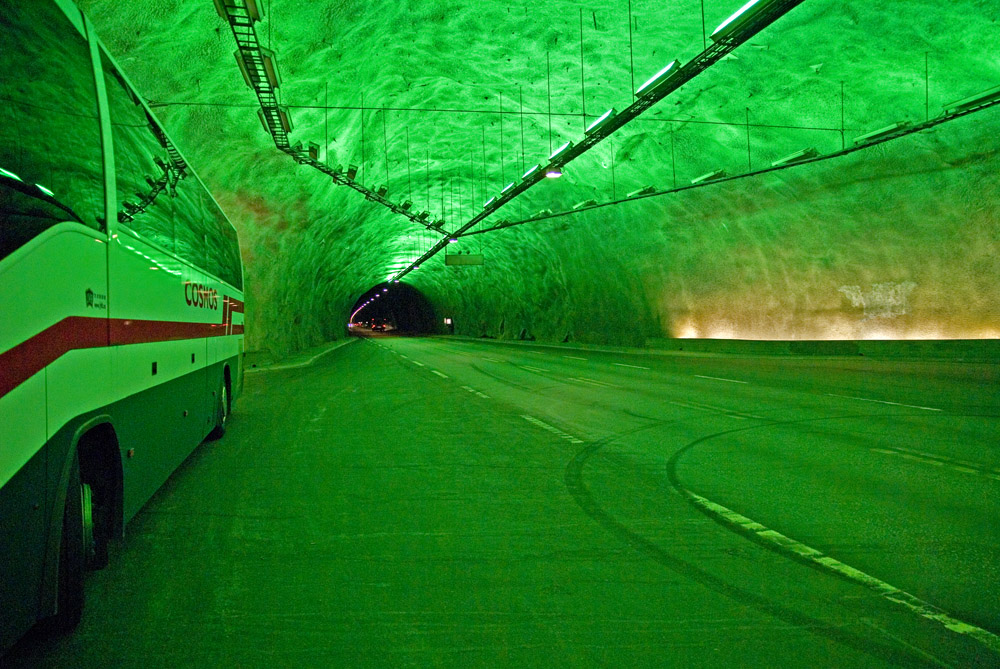
So lets enjoy some pictures:
Lærdalstunnelen,
.jpg)
Bømlafjordtunnel,

Åkrafjordtunnelen,

Jossingfjord_tunnel.

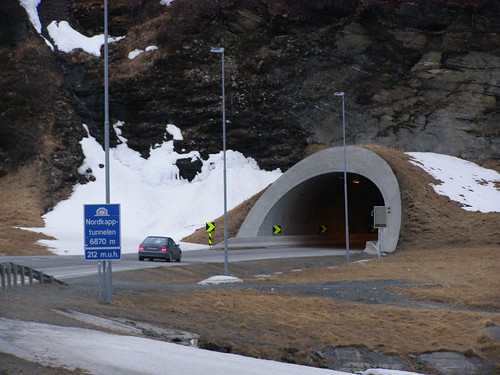 Nordkapp
Intersection of tunnels - Trondheim
Trondheim has a population of 173,000 and it has multiple tunnels. Think how transport in Scotland, particularly but not exclusively in the Highlands and islands could be revolutionised if we had a similar standard of transport systems. We are told that the M74 extension, a few miles of conventional motorway which only slightly speeds up transport isalready on line to produce 700 jobs. Good transport and perhaps also good education are the main things government can do to improve national wealth.
Norwegian Tunnel website here.
Labels: Forth crossing, Science/technology, scottish progress
Thursday, June 16, 2011
M74 Extension - Claimed "Under Budget" at 4 Times the Original Budget
Look at the coverage for the new 5 mile M74 extension bypassing the city centre.
Major public project ahead of schedule and under budgetOnly at the end of the article is it mentioned that
SCOTLAND'S most expensive new road is expected to cost £20 million less than expected when it opens in two weeks, the Scottish Government has said.
Infrastructure and capital investment secretary Alex Neil said the saving on the five-mile M74 extension in Glasgow was "clear evidence of our robust and effective management of major projects".
The £15m-£20m saving on the £445m construction contract amounts to some 4.5 per cent of the total, although the total cost of the project is £692m, which includes buying land.
Mr Neil said building work was running eight months ahead of schedule, although the overall project is running years late...
Mr Neil said: "The M74 completion is the largest infrastructure project on the ground in Scotland and it's opening eight months early and between £15m and £20m under budget.
"This will mean significant savings for Scottish taxpayers and drivers will be able to enjoy the benefits of this crucial piece of infrastructure several months ahead of schedule.
"This is clear evidence of our robust and effective management of major projects such as this. Our record of investment in transport infrastructure over the past four years has provided a much needed boost for the construction sector and supported tens of thousands of jobs."
"A month after Holyrood opened in 1999, Labour were saying this road could be built for a fraction of the current cost, but in reality it has cost almost £3,000 per centimetre of Tarmac laid, and opened 12 years after that optimistic spin.In fact the original promised cost was £177 million.They paid out far more than that (£247 million) for the land alone.
So how does this compare with other motorways?
request under the Freedom of Information Act for "the average cost of building one km of motorway (in lowlands) in Great Britain".So even with inflation £138 million per mile looks a little high, in fact 10 times what it should be. Despite the Green's objecting to it on cost terms I suspect a substantial part of that cost overrun is due, not to real building costs, but to placating the Greens with "Inquiries" and hold ups.
I can confirm that the current costs were published in Hansard in March 2007, and the information is as follows:
2005/2006 Cost per lane (km) in real terms for motorways: £6.8m
2005/2006 Cost per lane (km) in real terms for a dual carriageway: £4.6m
Some time ago when I proposed the Scottish Tunnels Project one possiblity was
Glasgow Motorway Extention - The present above ground proposal is costed at £500 million (then) apparrently relocting costs & because some of the ground is said to be polluted by chrome. Obviously a tunnel with bypass outlets would be far cheaper & would not cause the pollution problems opponents claim to be motivated by.No reason was ever given for rejecting this but if we compare the cost per km of the Norwegian tunnel system which averages around £4 million per 2 lane tunnel km the equivalent for 2 lanes of 4 lane motorway,covering 8 km would have been £128 million. This is half of what the Scottish government paid for the land alone (which would not have been needed if it was a tunnel).
If projects of this nature have already been done (and they have cut over 750 km of tunnels in Norway over the last 20 years) then it cannot be denied that it is possible to do it. Norway has less of an engineering tradition than us but if all that is necessary is to hire them to do such things then lets hire them. Actually I suspect the problems are more political than engineering, so lets sell them our politicians instead.
Would it not be better to come in marginally over budget, with a budget of £128 million, than to boast of being marginallt under a budget of £692 million.
Labels: Forth crossing, Scottish politics, Tunnels
Monday, May 23, 2011
SKYE BRIDGE COST - COMPARINGFREE MARKET, GOVERNMENT PROJECTS AND THE MIX WE HAVE
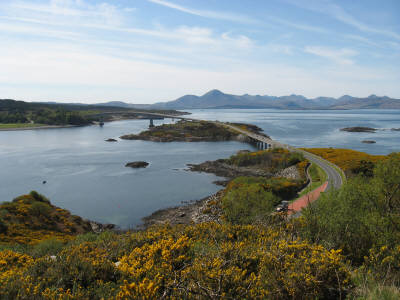
The Skye Bridge is regarded in Scotland as an example of what is wrong with the Public Finance Initiative (PFI) which involves government not running public projects but contracting with the private sector to pay for them and then leasing the properties back from them and being granted ownership after something like 20 years. In fact the Skye Bridge was not like that - the contractor was merely given the right to build the bridge and collect tolls from travellers. I also wish to argue that the debacle was entirely the fault of government.
In 1989 Conservative junior minister James Douglas-Hamilton announced a bidding round, requested tenders to construct a toll bridge..... The PFI plan was accepted, and received support from local MP Charles Kennedy and the local council in the full knowledge that it would be on a high-toll basis for a limited period. Although the bridge itself was built with PFI, the approach roads were the responsibility of the Scottish Office, which paid £15 million for the roads and associated improvements, and to cover the costs associated with decommissioning the ferry. .... When the Bridge contract was first awarded, the partnership estimated it would cost around £15 million, although delays and design changes added significantly to the cost (to around £25 millionAfter the bridge had been completed there began a long political campaign against these tolls, though this had never been an issue when the alternative was not having a bridge.
The bridge, and the toll protest, became a continuing political issue. Following the 1997 General Election, the Labour-run Scottish Office introduced a scheme whereby tolls for locals were subsidised (the scheme cost a total of £7 million). Following the creation of the Scottish Parliament, the Scottish Labour Party joined in coalition with the Scottish Liberal Democrats, who had made the Skye Bridge toll abolition one of their priorities. With responsibility for Scotland's road network transferred from Westminster to the Scottish Executive, increased political pressure was placed on the toll's future. On 3 June 2004, Jim Wallace, the Enterprise Minister in the Scottish Executive announced that he hoped the bridge would be bought out, and tolls abolished, by the end of 2004. In line with this, on 21 December 2004, Scottish Transport Minister Nicol Stephen announced that the bridge had been purchased for approximately £27 million, and toll collection immediately ceased. During the preceding decade £33.3 million in tolls had been collected. Figures obtained by the BBC under freedom of information laws showed the consortium's operating costs on the bridge during this period had been only £3.5 million.
Thereby proving how wicked the capitalist bridge builders had been in ripping off both travellers and the government. Getting, according to some calculators £15m from the government initially + £33.3m in tolls + £27 m selling it back to them for building costs originally promised as £15m + £3.5m operating cost - a difference of £56.8m.
The alternative way of looking at it is that the government's £15m contribution was nothing to do with the contractor. It didn't go to the contractor but to government building of roads and a government bail out of a government owned ferry (Caledonian MacBrayne's) for not keeping their monopoly position. That the increase in the contractor's building costs from £15m to £25m for "
An alternative is looking at what the free enterprise or pure governmental costs could have been. Assuming the " delays and design changes" were entirely the fault of government, an assumptio0n that those living in Scotland will not find improbable, it could indeed have been done for £15 million. On the other hand had government done it a decent rule of thumb would be that cost would have diminished with the square of distance covered by the longest span so comparing it to the new Forth Crossing (250 m compared to 1006 m) we should have expected it to cost {£2,300m X (250/1006)^2] about £142 million. So even with all the political stramash, involving a total reversal of their policy, for reasons unconnected to economic reality, the bridge cost roughly half what it would if the whole project had been run by government, or at least Scottish government.. That is, of course, assuming they hadn't simply blown the money and left us with nothing.
This is not to say it couldn't have been done far better simply by giving the contractors £25 million to build the bridge and road approaches, with"enterprise zone" rights to ignore government's ability to impose "delay and design changes" (see #45 here). That is what a competent non-parasitic government would have done
Or they could have spent £20 million hiring Norwegian companies to cut a tunnel. I will admit that with this bridge being relatively short that would not have been so obviously and overwhelmingly a better course.
##################################
And regarding more competent government. John Swinney said we should build a new Forth Bridge because the option of a tunnel could cost £6.6bn. (#78 here) whereas as this unpublished letter of mine, sent to most Scottish papers, says
I think congratulations are due to the builders of the Hindhead tunnel in Surrey which, on 15th May, had its first walk through by members of the public. At 1.1 km this dual carriageway under the "Devil's Punchbowl" site of special scientific interest it is only about half the length that a Forth tunnel would be. It is also much more expensive than Norwegian tunnels are since they cost about £5 million per km. On the other hand this completed British tunnel costing £371 million seems to be considerably better managed than our government manage considering that Holyrood was told that a forth tunnel could not possibly be built for under £6.6 billion.
Labels: Forth crossing, Scottish politics, Unpublished letters
Saturday, May 14, 2011
COST OF EDINBURGH's TRAMS AND OTHER PUBLIC PROJECTS - SCOTSMAN LETTERS
The question of whether we should spend another £100 million, assuming that is sufficient, to produce a very shortened tramline or to quit when we are £440 million down is becoming urgent.
Some time ago (letter 24th November 2009) you published a letter of mine pointing out that, if prices of our public projects were similar to those in the rest of the world (making a particular comparison with Australian projects) the full original scheme should have cost no more that £105 million. So spending more than that extra to get, if everything goes without hitch, a truncated version is poor value.
Perhaps the best use of the time of politicians and contractors would be spent by them explaining why our government projects cost up to 13 times what they do in the rest of the world, something they sadly did not do after the Parliament building fiasco or in relation to the Forth crossing, when the previous one cost only £320 million in today's money.
If, as I suspect, it is mainly due to government bureaucracy they could then even try reducing it.
I have never heard a reasonable explanation of why trams, which are inherently less flexible than buses and in the case of double deck buses, seat fewer people per square foot, are better at reducing congestion.
You don't have to dig up roads for buses.Previous letter also in the EEN http://news.scotsman.com/opinion/Letters-City-waiting-while-tram.5009013.jp mentioned by me here. Editing slightly toned it down and removed the reference to the Forth Bridge cost which I regret.

Labels: Forth crossing, Government parasitism, scottish progress
Saturday, March 26, 2011
NUCLEAR - SCOTSMAN LETTER
John Connor (Letters, 25 March) suggests that people living near nuclear power plants be trained in taking iodine tablets as part of being "educated in the potential dangers".
I am all in favour of education in the facts about nuclear power. For example, the amount of radiation released by nuclear reactors is, per kwh produced, 4,025 times less than that released by coal burning ones.
Even the release of radioactivity at Three Mile Island, very similar to that in Japan, has recently been acknowledged by no less than George Monbiot, the high priest of eco-scaremongering, as insufficient to harm an asthmatic ant with some heavy shopping, albeit it took him 32 years to say it.
By any objective test nuclear is certainly hundreds and arguably thousands of times safer than any practical alternative and the dishonest scaremongering of Luddites has cost the human race four decades of inexpensive power.

Also the Dundee Courier has published my response to Tom Minogue, previously published by the Herald, and there is an intelligent response to it in the Herald today which Tom intends to respond to.
Labels: Forth crossing, letters, nuclear
Thursday, March 24, 2011
FORTH CROSSING COST - HERALD LETTER
Tom Minogue compares the alleged £6.6 billion cost of a dual-carriageway tunnel under the Forth as being half as much as the rebuilding of the entire Panama Canal (“A lesson from Panama Canal”, Letters, March 23).I have previously had a guest post from Tom here in which he pointed out that the entire project is a useless boondoggle and that the bridge can easily be recabled and a 5th tidal lane added which would increase its capacity by 50% for around £20 million. This is his letter which I am answering.
Readers may also be interested to compare it with the Norwegian proposal to cut a slightly shorter tunnel under a mountainous peninsula, expected to cost £210 million.
This is the Stad Skipstunnel, which is Norwegian for ship tunnel since it is designed to transport liners.
An example closer to home is that the previous Forth Bridge cost £19.5 m, equal to £320m today.
Nobody in Hollyrood seems willing to say why this new crossing has to cost £2,300m. Nobody seems even willing to try to explain it.
Travelling the world as a merchant seaman I saw many wonders but none impressed me more than the Panama Canal, the world’s greatest civil engineering project.======================
The existing canal has two lanes with sets of locks 1050ft long by 100ft wide at the Pacific and Atlantic sides. A new expansion contract is adding a third lane with locks 1400ft long by 180ft wide. These locks will connect to the existing channel system through miles of new navigation lanes almost doubling the size of vessels and volume of shipping using use the canal.
Excavation of the new channels for larger ships is a massive task and will necessitate raising the level of the vast Gatun Lake to supply the additional 137 million gallons of water a day the new system requires to raise and lower the ships. The cost of this project, due for completion in 2015, is between £9.3 and £15.5 billion. This price for a 48-mile, nine-hour transit between the Atlantic and the Pacific is not a great deal more than the £6.6bn quoted by John Swinney for tunnelling under the mile-wide Forth, which would take 10-minutes to navigate.
Transport Scotland’s estimates for tunnelling, given by Mr Swinney at Holyrood, would not be out of place in a Hollywood fantasy movie. How can we have confidence in the similarly extortionate new bridge estimates he has given to the Scottish Parliament?
Tom Minogue,
It is now clear the Herald is not going to publish my reply to Elizabeth Marshall's counter-factual attack on my previous letter. Oh well, this is how British journalism works. Here it is.
The figure of 56 dead at Chernobyl is, as Elizabeth Marshall suggested (letter today), from the UN Chernobyl Forum report. Her dispute of that figure does not involve her producing any alternate but merely muddying the waters and saying she can't see. The figure is robust and it took some courage for UN engineers to stick to it since they were obviously under significant political pressure to muddy the waters themselves. Indeed the report concluded that the major cause of ill health and death was the despair brought to millions by such fear stories, as well as 50,000 unnecessary European abortions, but no cancers. It can thus be stated with certainty that in the world's worst ever nuclear accident over 1,000 times more deaths occurred because of false hysteria induced by the antinuclear movement than by the accident itself.Refs - UN reports 56 dead http://www.cbc.ca/news/world/story/2005/09/05/UN_Chernobyl20050905.html
Compare also with the Ufa train disaster, also in the dying days of the USSR and equally the fault of that country's abysmal lack of concern for safety. That killed over 500 people but received virtually no media coverage here because trains, unlike nuclear engineering are not treated by the Luddites (so many of them dominating the media) as black magic.
Her assertion that nuclear costs "at least 20 times the cost of gas fired power" seems eccentric and would have benefited from something in the way of evidence. The Royal Academy of Engineering figures show nuclear significantly cheaper and the fact that French electricity costs 1/4 of ours suggests it is not more expensive. I have publicly said that I believe a nuclear economy can be run at 10th the present electricity price and had no fact based dispute. That would be a debate for another letter if any Green realistically disputed it.
Ms Marshall does not dispute the antinuclear prediction of a million extra cancers and half a million deaths, nor that there has, in fact, been zero actual measurable increase. This came from John Gofman, the man who invented the theory that low level radiation is harmful no matter how low and did so without any scientific evidence whatsoever. That his prediction, based on his theory, proved to be 100% wrong is part of the massive body of evidence for the opposite theory, known as radiation hormesis, that low level radiation is actually beneficial to health. As Stalin proved with Lysenkoism and our current politicians are proving with their continued claim that we are experiencing catastrophic global warming, politically approved theories can long survive the inconvenience of the evidence showing them wrong.
Once again such hysteria means the death of 10,000 in the Japanese tsunami is receiving much less western news coverage than an accident in which not one person has been killed or even measurably injured.
John Gofman invents LNT theory http://en.wikipedia.org/wiki/John_Gofman
50,000 European abortions http://www.fas.org/rlg/ljan99.html
Hormesis evidence http://www.fas.org/rlg/ljan99.html
UPDATE - The Dundee Courier has published my reply to Tim Minogue as well
Labels: Forth crossing, nuclear, Scottish politics
Monday, February 21, 2011
FORTH BRIDGE £2.3 BILLION BUDGET PROMISE/THREAT ALREADY BROKEN

TAXPAYERS could face an extra £100 million bill for the new Forth road bridge if it affects an underground pipeline, ministers have admitted.
Finance Secretary John Swinney will this week tell MSPs that because the southern approach to the £2 billion bridge crosses the BP Forties system, the Government must indemnify the oil giant against any losses caused by roadworks or accidents.
The alternative would be to re-route the approach at a cost of £200 million, or re-route the pipeline, which would cost more than the whole bridge...
Mr Swinney will brief MSPs on Holyrood’s finance committee about the “contingent liability” in a special closed session tomorrow.
He is expected to stress any compensation in the event of an “incident” would be capped at £100m, and that the risk is theoretical, not probable...
However Mr Swinney’s request for the committee to approve the liability is bound to raise questions about the final cost of what is already the most expensive capital project in Scottish history.
In 2009, ministers needed parliament’s approval for another contingent liability on the bridge, to repay £10m incurred by construction consortia who made losing bids for the project.
The latest jump will also raise questions about why the pipeline liability wasn’t highlighted during the passage of the Forth Crossing Bill, which was approved by MSPs in December, or in this month’s budget process...
Green MSP Patrick Harvie, who supports repairing the current bridge instead of building a new one, said: “It’s breath-taking that the Government have only now come clean about an additional possible cost of £100m.
“Parliament should have been informed before signing off the project.”
-------------------------------------------
Indeed. To be fair it is only a contingent liability i.e. if there is no interruption in the oil pipe it will not be called on. I was astonished to see the remark that rerouting the pipeline would cost more than £2.3 billion since it would only involve rerouting a short distance and I don't remember any news about the entire pipe costing hundreds of billions. Perhaps this is simply a sign that just as the new bridge costs 8 times, in real terms, what the previous one cost it is simply symptomatic of how, under our insane government regulatory system everything costs far more than it need do.
I could find no costing of the original pipeline online but there was this
BP's Forties Pipeline will be completely shut by 6am on Sunday as a two-day strike by workers at the Grangemouth oil refinery begins.
The pipeline, which brings in 700,000 barrels of oil a day from the North Sea, is powered from the Grangemouth site...
The move – which could cost an estimated £50 million a day in lost production
So allowance is being made for only a 2 day closure, or possibly 1 day and repairs completed within it.
The government have already spent 10s of millions, at least, on inquiries etc on this bridge & if remotely competent could not possibly have been unaware of this. Just as TIE, the government overseers of the Edinburgh tram project could not possibly, if remotely competent, have been unaware of pipes running under Edinburgh streets but say they were. It looks like the costs of this "world class" project are out of control before a shovel has been raised.
Looking at a list of the world's most expensive structures our new bridge currently places 25th at $3.75 but the target to make it truly "world class" will be to make it more expensive that the only bridge currently ahead of it - the Akashi-Kaikyō Bridge which is is £3.8 bn as well as being nearly twice as long, 6 lines wide; much higher allow ocean liners to pass and designed to withstand hurricanes and earthquakes.
I have to say I think our numptocracy are up to the task
Labels: Forth crossing, Government parasitism, Scottish politics
Tuesday, December 21, 2010
FORTH CROSSING - criminal's vanity always makes them make one tiny but fatal mistake. Theirs was to have their entire conspiracy printed and published
Charlie Gordon (Glasgow Cathcart) (Lab): The first cut of the design for the crossing perhaps contained an element of overdesign, which can be an occupational hazard for engineers, and Stewart Stevenson played a particularly beneficial role in stripping away some of the less essential aspects of the project...the opportunity cost per day of lane closures on the existing bridge is in the region of £700 million
Patrick Harvie (Glasgow) (Green): If—I acknowledge that this is an if—Charlie Gordon comes in a year or a year and a half to see dehumidification reports that suggest that either repair or closure of the existing bridge would not have been necessary for another five or 10 years, what would be his regret about the opportunity cost of committing to the extra bridge?
Charlie Gordon: In that hypothetical situation I would say that hindsight is 20:20 vision
Jackson Carlaw (West of Scotland) (Con): I, too, welcome Keith Brown to his new ministerial post. Although I am leading for the Conservatives ....On completion of the bridge, Scotland will have a new Forth crossing and will have three adjacent bridges from three centuries. That will be an extraordinary and physically visible testament to our nation's engineering and construction heritage...How we pay for it is now for the Government to determine
Hugh O'Donnell (Central Scotland) (LD): I am pleased to open on behalf of the Liberal Democrats in this debate. We will support the bill at decision time....I suspect that I now know more about the technicalities of bridge building and the geological structures and wildlife around the Forth estuary than any person would ever need to know, but it has been interesting and a steep learning curve...the cost of the bridge is tagged at £543 million. We know that some of the criticism has been about a £2 billion bridge. It is important to be clear that the difference between the two sums is because of the cost of the project and the cost of the bridge, but what has stuck in people's minds is the £2 billion figure. In some ways, it is a moot point because, at current estimates, £2 billion is probably what we will have to spend, but there needs to be at least an attempt at some education to make people understand what we are getting for that level of expenditure ...Replacing the cables would mean closing the bridge to allow the work to be done, which is simply not an option
David Stewart (Highlands and Islands) (Lab): The original contract was priced when VAT was at 17.5 per cent. When he winds up, perhaps the minister could confirm whether the new VAT rate will mean a higher range of costs ...
The issue of cost overruns was raised during committee evidence sessions. As we all know from the history of many—but not all—large public sector projects, not least the one that involved the construction of the Parliament building, it is extremely difficult to keep costs within budget, particularly in transport. Nonetheless he supported it
Ted Brocklebank (Mid Scotland and Fife) (Con): a reinspection of the cables of the current bridge will not take place until the summer of 2012. Obviously, that could be brought forward and we could find out that, as in the scenario that was outlined by Patrick Harvie, the corrosion has been arrested. However, I absolutely believe that any delay would be folly
Margaret Smith (Edinburgh West) (LD): When every single objection that is brought forward by an objector, including my own, is dismissed by the assessor, I believe that I am right to question the process as much as the policy....the clamour will grow for the existing bridge, which will be the most expensive bus lane in the world, to be open to all road traffic.
Patrick Harvie (Glasgow) (Green): Before I begin my well-rehearsed discordant note... It is advisable to find out the state of the existing bridge, whether it might have to be closed to HGVs—not to commuter traffic; I have seen no reliable projection of that—and, if so, when... I cannot countenance the idea of a £2 billion press release for the current Administration. We are not talking about just a £2 billion press release. If history gives us any lessons, we know that such projects often go well over budget.
Gavin Brown (Lothians) (Con): The debate has, quite rightly, been consensual. It is right that it is consensual because of the size, scale and cost of the project
Charlie Gordon: This has been a good debate ... There is general consensus on the bill albeit, sadly, with one or two notable exceptions. I thank Parliament greatly for its interest .../This is the day when Scotland commits to a world-class structure across the Forth
Harper, Robin (Lothians) (Green)
Harvie, Patrick (Glasgow) (Green)
Smith, Margaret (Edinburgh West) (LD)

Actually this is only $2 billion. £ s would be bigger.
I have omitted most of the self congratulation so what you have just read is the very best bits of a "good debate" among Holyrood politicians.
No attempt to explain why the last Forth Bridge cost £320 mil;lion in today's money just a general downplaying of this fraud to costing £2 billion rather than £2.3 bn & a general covering of arses over the obvious expectation that this cost too may prove a lie. No mention of why a tunnel cannot be built for £40 million as elsewhere in the world. No mention that this will be more expensive than much larger bridges elsewhere in the world except the implication that if this bridge is more expensive than them it must, despite appearances, be more "world class". No attempt to explain why the current bridge cannot be given a 5th, tidal, lane increasing capacity by 50% - indeed the case put depends on the deliberate lie that the current bridge will have to be closed if recabling probes necessary.
Just agreement that stealing £2,290 million & counting (£20 million per MSP) should be done by "consensus" among the thieves.
I note Robert Brown, who said here that he was against it voted for this theft.
Not one of these thieves can claim not to know of these questions (I am not alone in having made sure of that). Not one of them has any answer for them either when I emailed them or here. Not one of them, has any scruples about participating in this theft anyway.
Labels: Forth crossing, Government parasitism, Scottish politics
Wednesday, November 24, 2010
KABUKI THEATRE ON THE FORTH BRIDGE

Kabuki is the highly stylized classical Japanese dance-drama. Kabuki theatre is known for the stylization of its drama and for the elaborate make-up worn by some of its performers.The description has been used to describe the American airport security system in which since racial profiling is forbidden blonde Swedish girls are as likely to be examined as aggressive looking bearded Arabic men (probably moreso, its a more fun job). Stylized, elaborate, dramatic without doing anything.
The phrase seems equally apt when describing the show of "public consultation" going on over the Forth crossing & indeed other sizable public projects. We all know perfectly well that the great & powerful Alex has decreed that we spend £2.3 bn (& counting) on a pointless new bridge though a new lane (max cost £10 mill) would do at least equally well. Nobody expects that complaints by the people of Queensferry will be allowed to stop that under any circumstances (nor should they if it were of real national interest). Nonetheless our civil service go through the theatre of holding a pointless "Inquiry".
This is from the Scotsman
RESIDENTS who spent months putting together evidence on their concerns about the new Forth Road Bridge are calling for a rethink of the system for handling major projects after the Scottish Parliament committee considering the plans threw out all their objections...But lets look at the cost. It probably takes at least a couple of hours of somebody's time to write a page of "rebuttal" & another hour of somebody's time to check it & another supervisor to keep an eye on these two intellectuals [2.48 July11] & then a lawyer to check it out. Total civil service costs seem to be a bit over £100,000 per employee which means £50 per hour. 5 hours per page for a 300 page "rebuttal" is £75,000. Bear in mind that this is not their opening or closing document it is just a small part. There is also the costs of their lawyers all over the shop. Beyond that is the cost of Holyrood running it. Yet this is only 1 small complaint led by the community council of Queensferry village. The serious criticism is technical. So all in all the total cost of public inquiry "theater" is likely to be at least 100 times that - £7.5 million.
"We had two weeks to prepare witness statements on why we were still objecting - that was not a particular problem.
Then we had a rebuttal from Transport Scotland, which was 300 pages. We had 14 days to read that, interpret it and draft our own rebuttal.
"It was a ludicrous timetable. These are people who work full-time, people who have children and other family members to look after. We are not full-time paid administrators.
"Transport Scotland had tight deadlines too, but they have full-time staff and people who were brought in especially to deal with this evidence."
But this is before anybody has even looked seriously at turning a spade. Every part of the building will require similar time by chairwarmers going over everything in the same useless way. On another occasion Steuart pointed out to me that the government's report on licencing new reactor design http://www.hse.gov.uk/newreactors/reports/gda-q1-10.pdf many of the figures are given in Imperial units (foot, pound etc). For those who don't get the significance engineers, always & everywhere use the SI system (metre, kilometer, gram,kilogram) because it is the only sane one to calculate in, so the government committee on licencing nuclear engineering is being run by civil servants who know no engineering (top civil servants all did classics) & who can thus have nothing useful to say on the subject - the licencing examination is just theatre. Damned expensive theatre since it adds years to the time when workers can start building, hopefully before the lights fail, but nothing more than theatre.
If £7.5 million minimum is being spent on stuff wholly untelated to even looking at building something I think we can assume that is only about 1% of what will ne spent on overseeing things actually being done. This fits well with Richard Rogers complaint that of the £670 million spent building the Millenium Dome, only $46 million was spent on actually building it, the rest being paper shuffling theatre.
So that would be £750 million on Kabuki Theatre for the bridge. Minimum estimate. So far.
Small wonder it is budgeted at £2,300 million when the last one cost an inflation adjusted £320 million.
Or we could just spend £10 million on a new tidal central lane & increase the capacity of the current bridge by 50%. Though no Kabuki theatre jobs in that.
Labels: Forth crossing, Government parasitism, Scottish politics
Friday, November 05, 2010
EDINBURGH TRAMGATE - SCOTSMAN LETTER
Graham McLeod suggests (letter Thurs) that the contractors probably underbid to get the tram contract. When Melbourne can build 3 km of tramline for £13.5 million I doubt that.Ref Australian tram costs http://a-place-to-stand.blogspot.com/2009/02/trams-another-case-of-our-costs-being.html
The problem is that British public work projects routinely cost 13 times what they do elsewhere in the world & no politician is willing to say a word in opposition or even explanation.
Although the contractor has come in for public criticism, to which they are unable to reply because TIE wrote a gagging clause into the contract it is a matter of record that under mandatory mediation TIE was found to be responsible for 90% of the cost overruns.
I agree with Mr Inglis' (letter same day) admirable listing of conditions to be satisfied before undertaking expensive projects but would like to see a thorough regulatory stable cleaning to allow them to be done at the same sort of costs the rest of the world manages.
13 fold costs http://a-place-to-stand.blogspot.com/2010/10/1213ths-of-forth-bridge-price-is.html
I am pleased to say there was virtually no editing.
Both the previous letters I refer to are here.
The matter of record of mediation going 90% against TIE comes, via wikipedia, from the Herald
It is feared the ruling, which has seen BSC awarded 90% of the costs it originally claimed for, will have a knock-on effect for the hundreds of points of dispute between Tie and the consortium, estimated to be worth up to £80m.Perhaps we will soon see some politicians at least saying a word in opposition to this rip off even if they cannot say a word in explanation.
I wonder how much of the £540 million, which may all have already been spent on this project, actually reached the bank account of the contracting company, or indeed of the people on the ground & how much stays with TIE, the civil service, or the various consultants & minor contractors however I suspect this is all "commercially sensitive" information not available under the FoI. I have written previously of how Richard Rogers said & nobody in the media reported that of the £670 million the Dome cost to build only £46 million went to the builders.

I have yet to see anybody explain exactly what trams can do, apart from using politically correct electricity rather than diesel, that buses can't. This entire project has been a boondoggle & on the principle that if you can't stop when you are ahead you should stop when you are £540 million behind it should be immediately scrapped.
Labels: Forth crossing, letters, Scottish politics
Monday, November 01, 2010
WHEN THE VICTORIANS BUILT A FORTH BRIDGE

There are 2 Forth bridges at Queensferry. The original one is the iconic railway bridge.
Sir John Fowler and Benjamin Baker designed a cantilever bridge in steel, with three diamond-shaped towers.Having previously pointed out that the current road bridge cost £320 million in today's money (£19 million in the sixties) while the proposed new one is costed at £2.3 billion (previously four & a half billion) I think a further comparisonof the original in today's costs is in order.
The bridge was built by Sir William Arrol. Constructed started in 1883. The bridge was opened in 1890 at a cost of £2.5m. It is still in use today, carrying the railways to the north from Edinburgh. more here
£204,000.00 using the retail price index
£261,000.00 using the GDP deflator
£1,230,000.00 using the average earnings
£1,470,000.00 using the per capita GDP
£2,420,000.00 using the share of GDP
The one that matters is the retail price index. So it comes in at 2/3rds the cost of the original road bridge. Since the rail bridge was naturally built on the shortest & easiest crossing, using natural rocks as tower foundations & provides 2 rail tracks rather than 4 road carriageways that looks like £320m for the road bridge is better value for money, though not enormously better, than £204m for the rail one. This is what one would expect since inflation at the cutting edge of technology is usually less because that cutting edge moves forward over time. However it makes a further nonsense of the government's claim that their prices cannot be compared with the rest of the world's bridge costs because of the "unique geography" of the Firth of Forth.
I note, however, that the cost of the original bridge is very close to the proposed new one as a share of GDP & thus a proportionately equivalent drain on society. This is, at the very least, strongly compatible with government having made an assessment of how much public blood is available for draining & with us so much richer now coming up with a proportionately similar amount to the 1890s figure & deciding that is the figure they can get away with.
Oh and the Victorian bridge hasn't fallen down either. It being, nominally, this fear which requires us to replace the road bridge.
Labels: Forth crossing, Science/technology, Scottish politics
