
Monday, June 16, 2014
Big Engineering 68 Constitution On Computer
In 2009 I wrote a Big Engineering article on offering a prize for an open source computer programme able to function as a judge on matters of international law - a relatively simple field because there isn't much of it.
Big Engineering 40 World Peace By Prize
With Moore's Law (computer capacity doubles every 18 months) it has now increased some million times since 1980 & 250 times since 1997 (now 10 million or 2,500 times). Time for something bigger. The golden aim of such computer science is something that can pass the Turing Test - be able to carry out a conversation indistinguishable from that of a human (& more technical way of saying a computer with human level intelligence). I will aim for something lower - or higher.
I propose a series of prizes should be put up for a process culminating in the establishment of an open source computer programme which could determine the legality of national actions under international law.
The prizes should start with something capable of rendering a simulated decision in a war game atmosphere which both sides agreed was satisfactory. Then a larger prize for something used in a real situation & ultimately for one which
successfully acts as a judge on the International Court of Justice, or if that option is refused, is able, on its own to render judgement in a years worth of different cases with judgements not agreed by a worldwide panel, to be inferior to the ICJ rulings. It is obviously necessary that, though the copyright remains in the designer's hands, the programme be open source so that it can be checked & run by anybody who needs to be able to trust it.Also here
Law is a very computer like system with either/or decisions, set rules, logic & great importance laid on previous examples. As such it would be much easier for a computer programme to impersonate a superior judge than an ordinary human being.
It is overstating to say this would provide peace on Earth but it would provide a framework for it. Conflict usually occurs when both sides have convinced themselves they are in the right. Even where it isn't it is usually important for bystanders to be able to make a decision on that order.
The fact that a third of the judges believed in the reality of the boy – this is a very significant figure. Under the terms of the test, developed in 1950 by the legendary scientist Alan Turing, it can be considered for the program passed if at least 30 per cent of judges are confident in communicating with the person."
Of course those who don't want to accept it say that 30% approval is to low a bar and so on, and they may have a point, but it doesn't matter. Moore's law is continuing and progress is going to continue.
Ray Kurwzeil here call it a premature announcement; that he thinks the test somewhat fixed and he "has seen better". This is probably true however being a 13 year old boy, on all subjects, is clearly a much more complicated task than being a Supreme Court judge discussing only the subject of the logical processes of the law. Whether a true Turing test or not it is clearly enough for a judge programme.
There can now be no reasonable dispute that that proposal is currently practical. And not much, that we can go further.
Which is why I am now proposing that the same process be applied to interpretation of constitutions. The whole point of a constitution is to say what government can, cannot & possibly must do and government itself is obviously an unsuitable entity to interpret this. Which is why we have "separation of powers" and judges, nominally independent of government deciding - except that, being human appointees there can be no certainty of them being independent.
But an open source computer programme has to be because it can be tested by anybody (well anybody who knows how) and while many will dislike some decisions, because they will dislike the constitutional assumptions (republicans in Britain, gun opponents in the US) they will have to be consistent, whoever is making the case - that's what impartial justice means.
We should design a programme to act as a Supreme Court for interpreting constitutional law. In turn new laws, or indeed a new Scottish constitutional settlement can be tested before it is enshrined. making laws mean what we want them to mean is most of constitutional law. With this programme that can be done quickly and easily. For example we have little idea how the redefinition of marriage will affect other laws, and currently we have no way of definitively knowing until after, perhaps decades after, passing it.
Big Engineering 40 World Peace By Prize
With Moore's Law (computer capacity doubles every 18 months) it has now increased some million times since 1980 & 250 times since 1997 (now 10 million or 2,500 times). Time for something bigger. The golden aim of such computer science is something that can pass the Turing Test - be able to carry out a conversation indistinguishable from that of a human (& more technical way of saying a computer with human level intelligence). I will aim for something lower - or higher.
I propose a series of prizes should be put up for a process culminating in the establishment of an open source computer programme which could determine the legality of national actions under international law.
The prizes should start with something capable of rendering a simulated decision in a war game atmosphere which both sides agreed was satisfactory. Then a larger prize for something used in a real situation & ultimately for one which
successfully acts as a judge on the International Court of Justice, or if that option is refused, is able, on its own to render judgement in a years worth of different cases with judgements not agreed by a worldwide panel, to be inferior to the ICJ rulings. It is obviously necessary that, though the copyright remains in the designer's hands, the programme be open source so that it can be checked & run by anybody who needs to be able to trust it.Also here
Law is a very computer like system with either/or decisions, set rules, logic & great importance laid on previous examples. As such it would be much easier for a computer programme to impersonate a superior judge than an ordinary human being.
It is overstating to say this would provide peace on Earth but it would provide a framework for it. Conflict usually occurs when both sides have convinced themselves they are in the right. Even where it isn't it is usually important for bystanders to be able to make a decision on that order.
I think this is possibly the most important of my proposals over the years (& I have a high opinion of the value of many).
There is a common feeling that "Peace on Earth" is highly desirable.
Most of our problems are, by a broad definition, political - caused by human argumentativeness. However the rest of the world has yet to agree.
I was diffident about this because, at the time, not being a computer specialist, I didn't know how technologically practical it was.
That changed when the Turing Test, mentioned above, was passed a few days ago:
"Eugene Gustman like an ordinary 13-year-old boy – so third of the judges decided the event Turing Test in 2014, which was held on June 8. Gustman said that he loves hamburgers and candy, and his father works as a gynecologist. But in fact, such a person does not exist – in fact, a program developed by a team of computer engineers led by English Vladimir Veselov and uraintsa Eugene Demchenko.
The fact that a third of the judges believed in the reality of the boy – this is a very significant figure. Under the terms of the test, developed in 1950 by the legendary scientist Alan Turing, it can be considered for the program passed if at least 30 per cent of judges are confident in communicating with the person."
Of course those who don't want to accept it say that 30% approval is to low a bar and so on, and they may have a point, but it doesn't matter. Moore's law is continuing and progress is going to continue.
Ray Kurwzeil here call it a premature announcement; that he thinks the test somewhat fixed and he "has seen better". This is probably true however being a 13 year old boy, on all subjects, is clearly a much more complicated task than being a Supreme Court judge discussing only the subject of the logical processes of the law. Whether a true Turing test or not it is clearly enough for a judge programme.
There can now be no reasonable dispute that that proposal is currently practical. And not much, that we can go further.
Which is why I am now proposing that the same process be applied to interpretation of constitutions. The whole point of a constitution is to say what government can, cannot & possibly must do and government itself is obviously an unsuitable entity to interpret this. Which is why we have "separation of powers" and judges, nominally independent of government deciding - except that, being human appointees there can be no certainty of them being independent.
But an open source computer programme has to be because it can be tested by anybody (well anybody who knows how) and while many will dislike some decisions, because they will dislike the constitutional assumptions (republicans in Britain, gun opponents in the US) they will have to be consistent, whoever is making the case - that's what impartial justice means.
We should design a programme to act as a Supreme Court for interpreting constitutional law. In turn new laws, or indeed a new Scottish constitutional settlement can be tested before it is enshrined. making laws mean what we want them to mean is most of constitutional law. With this programme that can be done quickly and easily. For example we have little idea how the redefinition of marriage will affect other laws, and currently we have no way of definitively knowing until after, perhaps decades after, passing it.
Labels: Big Engineering, Science/technology, Social, X-Prizes


Tuesday, March 12, 2013
Stonehenge and the Round Table
Some time ago I wrote of how I had come up with a theory that King Arthur was probably not merely a Roman officer called Artorius but that he could be identified as coming from the area then and previously known as Etrusca centring on the current city of Modena, where the first known visual representation of King Arthur exists above the doors of the city cathedral.
Here is what I think is another piece of the Arthur story and how it delineates British culture on a deeper level than previously understood.
Last Sunday Channel 4 did a programme on new archaeological discoveries at Stonehenge.
It centred on the post holes that make up an outer circle around the famous stone circle and predates it

The results of his latest investigation:
reveal that the first stones at Stonehenge were put up 500 years earlier than previously thought at around 3000 BC. The monument we see today was not the original Stonehenge;
prove that Stonehenge as it looks today was built 200 years earlier than previously thought, around 2500 BC;
explain the choice of the site on Salisbury Plain;
prove that Stonehenge was once the site of vast communal feasts attended by some 4000 people, a substantial proportion of the British population (then estimated at only tens of thousands), with people coming from as far afield as highland Scotland to celebrate the solstice.
Professor Parker Pearson believes his findings provide compelling evidence that Stonehenge once united the people of Britain. And his analysis of the bodies and grave goods found on and around the site and around it also offers an answer to the mystery of Stonehenge’s decline.
The 3,000 BC Stonehenge was the outer circle with 53 "bluestones" marking the graves of high status people from all over Britain. Ignore all the modern stuff in the middle - it wasn't there when the place really was an annual winter (Yuletide) celebration site for a large proportion of the entirety of Britain. The bones of animals eaten in the feasting came fom across the British Isles, as far away as Orkney, but not from across the Channel, proving a political or at least cultural unity even 5,000 years ago.
What the central stones, added 500 years later show is that this site was remembered as being important long after, after the intervening arrival of the Beaker People in Britain. In many ways very like the way the written record of Arthur in the 12thC is far greater than that of the 5thC but the reality happened in the 5thC.
When I saw the layout of 53 separate graves round what is now the outer edge of Stonehenge I immediately said "Round Table".and subsequent thought fits with the idea.
The point about the round table was that it has no head and thus nobody there has the formal leadership role.
The concept of rulership by a group of people seated in such a way that they are all of equal rights fits this old Stonehenge. In fact it fits it better than in the Arthurian legend because Arthur was the leader (though he was the war leader not a king and certainly not the sort of Feudal king that existed at the time the legend was written down). Round Table as symbol of governance is indeed the complete antithesis of the sort of Feudal monarch Arthur was eventually writtin into being.
Was there a real round table in the centre of the open space that was/is Stonehenge or was it a metaphorical device? We cannot know because it is long gone but I suspect it is no metaphor and there actually was. Historians have a long record of assuming something was a metaphor when it wasn't - Atlantis, Agamemnon's crown and Troy. The remains of ones ancestors are of great importance in many cultures and common evidence of rights. If there was a central table each of these descendants of the original grave occupiers would be able to sit in front of their own ancestor asserting their hereditary right to be there and acknowledging that of all the others. That is as good a way of maintaining order as I can imagine for any political confederation of that level of technology.
The Round Table is not mentioned in Geoffrey of Monmouth's original book about Arthur of about 1236. It appears in Wace's Norman-French version of 1155 and is expanded by Laymon.
Wace says Arthur created the Round Table to prevent quarrels among his barons, none of whom would accept a lower place than the others.[1] Layamon added to the story when he adapted Wace's work into the Middle English Brut in the early 13th century, saying that the quarrel between Arthur's vassals led to violence at a Yuletide feast. In response a Cornish carpenter built an enormous but easily transportable Round Table to prevent further dispute.[1] Wace claims he was not the source of the Round Table; both he and Layamon credit it instead to the Bretons....
There is some similarity between the chroniclers' description of the Round Table and a custom recorded in Celtic stories, in which warriors sit in a circle around the king or lead warrior, in some cases feuding over the order of precedence as in Layamon.[1]
The Bretons who settled Brittany had come from Britain when the Saxons were overrunning the country. It is thus in no way surprising that they would know ancient British lore as well as, or perhaps better than the inhabitants of England, who were as Saxon as they were ancient British. Geoffrey might not have heard of it but if Wace was in the process of transforming the Arthur legend from a mythic version of a historic person to an origin myth of the British people that is exactly when we might expect the addition of a Round Table myth (mythic only in the way that Troy used to be mythic) which was and had been for 4,000 years, central to the origin of the British people.
Many modern people may find it impropable that, without books, a historic story could be preserved for that many generations of bardic retelling. The Iliad was probably written within 1,000 tears of the events described but that is a much shorter time. The Epic of Gilgamesh survives but because it was written. Older stories, such as the Garden of Eden referring to either the Climate Optimum of about 5,000 BC or the flooding of the Black Sea are uncertain.
But there is something almost that old. The earliest written record of Merlin, written about the time of the historic Arthur, refers to him as having flown the Stones that make up the "modern" Stonehenge from Ireland. Obviously they weren't flown, but floated, and they came from Wales not Ireland, which in both cases can mean - from a little known land far away to the west. But the fact that they had been brought from such a distance, even by non-magical means, is not a random assumption. Clearly some memory of Stonehenge had been repeated down the millennia.
In which case a non-magical Round Table is no more difficult to remember.
With Arthur, finding that his name originated near Modena, where his first visualisation was, gave corroboration.
In the same way finding Laymon's unanticipated assertion that the Round Table was built to preserve peace at a mid-winter feast, when we know the main use of the early Stonehenge was around a mid-winter feast, seems to me to provide as much corroboration as we can currently expect.
If culture is important to social stability and progress and there is strong evidence that it is, finding part of a common egalitarian British political culture that has lasted 5,000 years is no small matter.
Here is what I think is another piece of the Arthur story and how it delineates British culture on a deeper level than previously understood.
Last Sunday Channel 4 did a programme on new archaeological discoveries at Stonehenge.
It centred on the post holes that make up an outer circle around the famous stone circle and predates it
The results of his latest investigation:
reveal that the first stones at Stonehenge were put up 500 years earlier than previously thought at around 3000 BC. The monument we see today was not the original Stonehenge;
prove that Stonehenge as it looks today was built 200 years earlier than previously thought, around 2500 BC;
explain the choice of the site on Salisbury Plain;
prove that Stonehenge was once the site of vast communal feasts attended by some 4000 people, a substantial proportion of the British population (then estimated at only tens of thousands), with people coming from as far afield as highland Scotland to celebrate the solstice.
Professor Parker Pearson believes his findings provide compelling evidence that Stonehenge once united the people of Britain. And his analysis of the bodies and grave goods found on and around the site and around it also offers an answer to the mystery of Stonehenge’s decline.
The 3,000 BC Stonehenge was the outer circle with 53 "bluestones" marking the graves of high status people from all over Britain. Ignore all the modern stuff in the middle - it wasn't there when the place really was an annual winter (Yuletide) celebration site for a large proportion of the entirety of Britain. The bones of animals eaten in the feasting came fom across the British Isles, as far away as Orkney, but not from across the Channel, proving a political or at least cultural unity even 5,000 years ago.
What the central stones, added 500 years later show is that this site was remembered as being important long after, after the intervening arrival of the Beaker People in Britain. In many ways very like the way the written record of Arthur in the 12thC is far greater than that of the 5thC but the reality happened in the 5thC.
When I saw the layout of 53 separate graves round what is now the outer edge of Stonehenge I immediately said "Round Table".and subsequent thought fits with the idea.
The point about the round table was that it has no head and thus nobody there has the formal leadership role.
The concept of rulership by a group of people seated in such a way that they are all of equal rights fits this old Stonehenge. In fact it fits it better than in the Arthurian legend because Arthur was the leader (though he was the war leader not a king and certainly not the sort of Feudal king that existed at the time the legend was written down). Round Table as symbol of governance is indeed the complete antithesis of the sort of Feudal monarch Arthur was eventually writtin into being.
Was there a real round table in the centre of the open space that was/is Stonehenge or was it a metaphorical device? We cannot know because it is long gone but I suspect it is no metaphor and there actually was. Historians have a long record of assuming something was a metaphor when it wasn't - Atlantis, Agamemnon's crown and Troy. The remains of ones ancestors are of great importance in many cultures and common evidence of rights. If there was a central table each of these descendants of the original grave occupiers would be able to sit in front of their own ancestor asserting their hereditary right to be there and acknowledging that of all the others. That is as good a way of maintaining order as I can imagine for any political confederation of that level of technology.
The Round Table is not mentioned in Geoffrey of Monmouth's original book about Arthur of about 1236. It appears in Wace's Norman-French version of 1155 and is expanded by Laymon.
Wace says Arthur created the Round Table to prevent quarrels among his barons, none of whom would accept a lower place than the others.[1] Layamon added to the story when he adapted Wace's work into the Middle English Brut in the early 13th century, saying that the quarrel between Arthur's vassals led to violence at a Yuletide feast. In response a Cornish carpenter built an enormous but easily transportable Round Table to prevent further dispute.[1] Wace claims he was not the source of the Round Table; both he and Layamon credit it instead to the Bretons....
There is some similarity between the chroniclers' description of the Round Table and a custom recorded in Celtic stories, in which warriors sit in a circle around the king or lead warrior, in some cases feuding over the order of precedence as in Layamon.[1]
The Bretons who settled Brittany had come from Britain when the Saxons were overrunning the country. It is thus in no way surprising that they would know ancient British lore as well as, or perhaps better than the inhabitants of England, who were as Saxon as they were ancient British. Geoffrey might not have heard of it but if Wace was in the process of transforming the Arthur legend from a mythic version of a historic person to an origin myth of the British people that is exactly when we might expect the addition of a Round Table myth (mythic only in the way that Troy used to be mythic) which was and had been for 4,000 years, central to the origin of the British people.
Many modern people may find it impropable that, without books, a historic story could be preserved for that many generations of bardic retelling. The Iliad was probably written within 1,000 tears of the events described but that is a much shorter time. The Epic of Gilgamesh survives but because it was written. Older stories, such as the Garden of Eden referring to either the Climate Optimum of about 5,000 BC or the flooding of the Black Sea are uncertain.
But there is something almost that old. The earliest written record of Merlin, written about the time of the historic Arthur, refers to him as having flown the Stones that make up the "modern" Stonehenge from Ireland. Obviously they weren't flown, but floated, and they came from Wales not Ireland, which in both cases can mean - from a little known land far away to the west. But the fact that they had been brought from such a distance, even by non-magical means, is not a random assumption. Clearly some memory of Stonehenge had been repeated down the millennia.
In which case a non-magical Round Table is no more difficult to remember.
With Arthur, finding that his name originated near Modena, where his first visualisation was, gave corroboration.
In the same way finding Laymon's unanticipated assertion that the Round Table was built to preserve peace at a mid-winter feast, when we know the main use of the early Stonehenge was around a mid-winter feast, seems to me to provide as much corroboration as we can currently expect.
If culture is important to social stability and progress and there is strong evidence that it is, finding part of a common egalitarian British political culture that has lasted 5,000 years is no small matter.
Labels: British politics, Errata, History, Social
Friday, September 28, 2012
How to give us the world's best education system AGAIN !
My latest post is up on ThinkScotland. It is largely based on a previous post of mine. Please put comments on ThinkScotland.
Read more »Labels: Scottish politics, Social, ThinkScotland
Saturday, September 01, 2012
When The Fascists Even Want To Censor Jesters
Dellors writes on how Frankie Boyle is being made an unperson by Channel 4 "He is not under contract and there are no shows planned with him." following him tweeting some jokes about the paralymics.
I commented:
As a gentleman of a certain age I saw this Monty Python sketch when it was first broadcast.
http://www.myspace.com/video/e...
The 27th Silly Olympiad, an event held traditionally every 3.7 years, which this year has brought together competitors from over 4 million different countries:-100 yards for people with no sense of direction-1500 meters for the deaf-200 meters freestyle for non-swimmers-Marathon for incontinents
I think one can say with confidence that if they tried it now the Pythons would instantly become as much media unpersons as David Bellamy. I think one can also say that proves we are far less free than then.
I always remembered the reaction of the 1500m runners to the firing of the starting pistol.
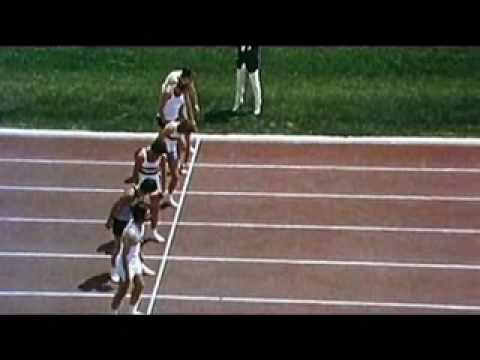
This stramash seems to be being pushed by Mencap who have specifically called for him to be censored from the airwaves - "It would be disappointing if these steps were undermined by providing a comedian who has repeatedly caused profound offence to disabled people opportunities to do so again."
Mencap, of course, does not consist of disabled people and cannot honestly claim to speak for them. In fact it looks like there is only one group Mencap can speak for.
Yes, while Mencap claims to be a charity it's own site says nothing about who pays them and does have a link through which you can donate it is clear that Mencap is yet another government funded sock puppet.
The fact that their donations icon is less central than their "come and work for us and help build our bureaucratic empire" icon. Bodies doing real charitable work with limited money don't have their priorities in that order.
Bodies whose main activity seems to be running "campaigns" of "raising awareness" about how their bosses, the state civil service, should have ever more money do. Such sock puppets, particularly where the ever more totalitarian state also owns most of the media and will promote whatever they say, actually benefit from the publicity of saying, in a po-faced manner, how seriously they oppose free speech.
The fight against free speech is not being run by people who have principled support of censorship but simply by those who find they fit more comfortably into the totalitarian state structure by adopting such fascism.
I have emailed Mencap to see if they deny being government funded promoters of fascist censorship. We will see if they can.
============================
UPDATE I got this response from Mencap to my admitedly intemperate email. It was considerably more than previous experience has led me to expect:
in response to your email and your blog post:
Q: Are we "government funded promoters of fascist censorship"
A: No, our campaigns are not government funded. We receive funding from local authorities for the provision of care and support to individual people with a learning disability, and some grants for work we do in the community working with young people. Our campaigning work is entirely funded by donations from the public and other fundraised (non-government) income. If you look over our campaigns, such as 'Death by Indifference on ending avoidable deaths of people with a learning disability in the NHS, or our 'Stand by Me' campaign to end hate crimes against disabled people, you'll see we are an independent voice that challenges government and public services to meet the needs of people with a learning disability and tackle unlawful discrimination.
Q: Is Mencap calling for the "totalitarian fascist suppression of free speech"?
We have expressed our views, as we're entitled to do, about Frankie Boyle's comments, which is that they are offensive to many disabled people. You might want to note that we have not called for him to be sacked from Channel 4- it's their choice who they employ, but we've expressed our view that it would be pretty incoherent of them to host the paralympic coverage and then give a platform to someone who spends much of his time on and off stage denigrating disabled people.
Hope that answers your questions.
Dan Scorer
Senior Campaigns & Policy Manager
I would have been more impressed by a full breakdown. ASH has also made the same claim that their campaigns are behind a Chinese wall separating them from the government funded charitable work they do - despite the fact that ASH is 98% government funded & does virtually no conventional charitable work. I have no doubt that ASH are being wholly dishonest in making this claim. Mencap are certainly better than the 98%+ sock puppet ASH are but how much better is still undetermined.
On the second point readers may form their own opinions about whether saying it would be "disappointing if these steps were undermined by providing a comedian who has repeatedly caused profound offence to disabled people opportunities to do so again" is a call for him to be censored by C4 or if there is some other undetermined meaning in these words. I absolutely accept that if Mencap were an organisation wholly independent of government it would have as much right to call for censorship as anybody else. It is an entirely different matter for government funded bodies.
I commented:
As a gentleman of a certain age I saw this Monty Python sketch when it was first broadcast.
http://www.myspace.com/video/e...
The 27th Silly Olympiad, an event held traditionally every 3.7 years, which this year has brought together competitors from over 4 million different countries:-100 yards for people with no sense of direction-1500 meters for the deaf-200 meters freestyle for non-swimmers-Marathon for incontinents
I think one can say with confidence that if they tried it now the Pythons would instantly become as much media unpersons as David Bellamy. I think one can also say that proves we are far less free than then.
I always remembered the reaction of the 1500m runners to the firing of the starting pistol.
This stramash seems to be being pushed by Mencap who have specifically called for him to be censored from the airwaves - "It would be disappointing if these steps were undermined by providing a comedian who has repeatedly caused profound offence to disabled people opportunities to do so again."
Mencap, of course, does not consist of disabled people and cannot honestly claim to speak for them. In fact it looks like there is only one group Mencap can speak for.
Yes, while Mencap claims to be a charity it's own site says nothing about who pays them and does have a link through which you can donate it is clear that Mencap is yet another government funded sock puppet.
The fact that their donations icon is less central than their "come and work for us and help build our bureaucratic empire" icon. Bodies doing real charitable work with limited money don't have their priorities in that order.
Bodies whose main activity seems to be running "campaigns" of "raising awareness" about how their bosses, the state civil service, should have ever more money do. Such sock puppets, particularly where the ever more totalitarian state also owns most of the media and will promote whatever they say, actually benefit from the publicity of saying, in a po-faced manner, how seriously they oppose free speech.
The fight against free speech is not being run by people who have principled support of censorship but simply by those who find they fit more comfortably into the totalitarian state structure by adopting such fascism.
I have emailed Mencap to see if they deny being government funded promoters of fascist censorship. We will see if they can.
============================
UPDATE I got this response from Mencap to my admitedly intemperate email. It was considerably more than previous experience has led me to expect:
in response to your email and your blog post:
Q: Are we "government funded promoters of fascist censorship"
A: No, our campaigns are not government funded. We receive funding from local authorities for the provision of care and support to individual people with a learning disability, and some grants for work we do in the community working with young people. Our campaigning work is entirely funded by donations from the public and other fundraised (non-government) income. If you look over our campaigns, such as 'Death by Indifference on ending avoidable deaths of people with a learning disability in the NHS, or our 'Stand by Me' campaign to end hate crimes against disabled people, you'll see we are an independent voice that challenges government and public services to meet the needs of people with a learning disability and tackle unlawful discrimination.
Q: Is Mencap calling for the "totalitarian fascist suppression of free speech"?
We have expressed our views, as we're entitled to do, about Frankie Boyle's comments, which is that they are offensive to many disabled people. You might want to note that we have not called for him to be sacked from Channel 4- it's their choice who they employ, but we've expressed our view that it would be pretty incoherent of them to host the paralympic coverage and then give a platform to someone who spends much of his time on and off stage denigrating disabled people.
Hope that answers your questions.
Dan Scorer
Senior Campaigns & Policy Manager
I would have been more impressed by a full breakdown. ASH has also made the same claim that their campaigns are behind a Chinese wall separating them from the government funded charitable work they do - despite the fact that ASH is 98% government funded & does virtually no conventional charitable work. I have no doubt that ASH are being wholly dishonest in making this claim. Mencap are certainly better than the 98%+ sock puppet ASH are but how much better is still undetermined.
On the second point readers may form their own opinions about whether saying it would be "disappointing if these steps were undermined by providing a comedian who has repeatedly caused profound offence to disabled people opportunities to do so again" is a call for him to be censored by C4 or if there is some other undetermined meaning in these words. I absolutely accept that if Mencap were an organisation wholly independent of government it would have as much right to call for censorship as anybody else. It is an entirely different matter for government funded bodies.
Labels: Media, Rise of modern fascism, Social
Wednesday, August 29, 2012
"Look down there. Tell me. Would you really feel any pity if one of those dots stopped moving forever?"
My favourite wrong movie line.
Because the wars of the era in Italy were not fought by Italians but by foreign mercenaries, the most effective of whom were Swiss. The Italians had the military reputation they still enjoy and the Swiss had peace because nobody, not even Hitler, was stupid enough to take them on. There was even a rumour that during the cold war the Swiss quietly made it known they had at least 1 particularly dirty nuke which they would have used had anybody tried to come through their territory. More
And incidentally the Swiss invented rather more than the cuckoo clock.
This has been a public information and get it off my chest statement following some stuff I have and will be publishing about this admirably boring nation.
Like the fella says, in Italy for 30 years under the Borgias they had warfare, terror, murder, and bloodshed, but they produced Michelangelo, Leonardo da Vinci, and the Renaissance. In Switzerland they had brotherly love - they had 500 years of democracy and peace, and what did that produce? The cuckoo clock.
Harry Lime in the 3rd ManThere may indeed be an argument that warfare stimulates progress (looking at the progress of aircraft between 1914 & 1945 compared with the rather more than 31 years since America beat Russia to the Moon would do) Switzerland and Renaissance Italy isn't it.
Because the wars of the era in Italy were not fought by Italians but by foreign mercenaries, the most effective of whom were Swiss. The Italians had the military reputation they still enjoy and the Swiss had peace because nobody, not even Hitler, was stupid enough to take them on. There was even a rumour that during the cold war the Swiss quietly made it known they had at least 1 particularly dirty nuke which they would have used had anybody tried to come through their territory. More
And incidentally the Swiss invented rather more than the cuckoo clock.
This has been a public information and get it off my chest statement following some stuff I have and will be publishing about this admirably boring nation.
Labels: History, quotes, Social
Saturday, August 25, 2012
Golf's Final Frontier
Steve Sailor does an article on golf course architecture. Now I have no interest in golf but it is always worth watching somebody inteligent speak or write on something that really interests them and which they understand.
What I got from this is that golf courses, while entirely artificial constructs, are designed to replicate the most desirable human environment.

My personal favourite of the pictures he illustrates it with Which brought up the thought. Within decades it will be possible to start building the first O'Neill colony. Since this is an almost infinitely scalable industry (even after we have removed a few kilometres of topsoil off the Moon there are many other asteroids, comets and such out there. So in due course humanity will be manufacturing landscape by the hundreds, even thousands, of square miles. Yep - that does look like it could do with a bit of design work. Guess where we can find designers. PS I also strikes me that this artificial re-Edenising of large chunks of land (minimum 1/4 square mile) each, is one in the eye to the ecofascist who insist that "it is undeniable that mankind is destroying the Earth". It is actually undeniable that in substantial places, by any standard of human beauty, we are making it far better than nature ever did.
What I got from this is that golf courses, while entirely artificial constructs, are designed to replicate the most desirable human environment.
the nearly universal favorite among children before they imprint upon their local look is grassy parkland, and that fondness survives into adulthood.Hmm perhaps the regular presence of either sea or running water in so many landscapes also supports the idea that much of human evolution came about with us moving to the seashore.
Richard Conniff wrote in Discover: "In separate surveys, Ulrich, Orians, and others have found that people respond strongly to landscapes with open, grassy vegetation, scattered stands of branchy trees, water, changes in elevation, winding trails, and brightly lit clearings..." In one amusing study, 1001 people from 15 different countries were surveyed about what they'd like to see in a painting. Then the sponsors of the research, conceptual art pranksters Komar and Melamid, painted each country's "Most Wanted Painting." Even though the researchers hadn't mentioned what type of picture it should be, the consensus in 13 of the 15 cultures favored landscapes and 11 of the 15 looked surprisingly like golf courses. All over the world, people want to see grassland, a lake, and some trees, but not a solid forest. And they always want to see it slightly from above. The project was intended to satirize popular taste, but it ended up revealing much about about human desires. Above is Komar and Melamid's rendition of America's Most Wanted Painting and here's a par 3 from the Coeur d'Alene golf course in Idaho that is similar in outline but aesthetically superior in execution.
The current theory for why golf courses are so attractive to millions (mostly men), perhaps first put forward in John Strawn's book Driving the Green: The Making of a Golf Course, is that they look like happy hunting grounds—a Disney-version of the primordial East African grasslands. Harvard biologist Edward O. Wilson, author of the landmark 1975 book Sociobiology, once told me, "I believe that the reason that people find well-landscaped golf courses 'beautiful' is that they look like savannas, down to the scattered trees, copses, and lakes, and most especially if they have vistas of the sea."
My personal favourite of the pictures he illustrates it with Which brought up the thought. Within decades it will be possible to start building the first O'Neill colony. Since this is an almost infinitely scalable industry (even after we have removed a few kilometres of topsoil off the Moon there are many other asteroids, comets and such out there. So in due course humanity will be manufacturing landscape by the hundreds, even thousands, of square miles.
Yep - that does look like it could do with a bit of design work. Guess where we can find designers. PS I also strikes me that this artificial re-Edenising of large chunks of land (minimum 1/4 square mile) each, is one in the eye to the ecofascist who insist that "it is undeniable that mankind is destroying the Earth". It is actually undeniable that in substantial places, by any standard of human beauty, we are making it far better than nature ever did.Labels: Progress, Social, space
Wednesday, August 22, 2012
Making Life Comfortable Pays
Eduardo Saverin, a co-founder of Facebook, has abandoned his American citizenship ahead of the social networking company's possibly oversubscribed IPO in May (since not entirely successful but he will have got his money)
“Eduardo recently found it more practical to become a resident of Singapore since he plans to live there for an indefinite period of time,” his spokesman Tom Goodman told Bloomberg.
Brazilian-born Saverin made the initial investment of $1,000 in Facebook when he and Zuckerberg were students together at Harvard...
Singapore has no capital gains tax, so renouncing his citizenship ahead of the IPO is a very smart idea, according to Reuven S. Avi-Yonah, director of the international tax program at the University of Michigan’s law school. "Once it’s public you can’t fool around with the value." He'll still get a hefty bill from the IRS, but it shouldn't be too hard to swallow.We have long had European tax exiles living in Monaco & their like. We have also had rich people from the 3rd world setting up homes here (for example an extraordinary number of Bollywood stars choose to live in Britain).
This shows that the trend is not one way. Singapore is by no stretch of the imagination a 3rd world country today. However it used to be. It is also one of world's most heavily populated areas with no natural resources or indeed natural beauty (it has a lot of wonderful sights but all man made). The super rich don't just choose where to live because of the taxes - after all at that level money is just numbers whereas luxury is lifestyle.
Indeed if it weren't for the fact that it isn't floating Singapore would be a Victorian seasted - An island with few inhabitants the Victorians built into a major city & whose own inhabitants have built it into a major world city.
If that can be done there it can be done anywhere.
Within our lifetimes we may see the rich and talented no longer living in California, New York, London or even Aspen (itself a city that deliberately built itself into a home for the rich) but on ocean seasteds, permanently cruising ships, orbit, the Moon or L5 colonies. The important things will be (A) are they attractive places to live & (B) taxes (in that order).
On one point the space orbital, Lunar and L5 settlements will have one unique selling point - low or zero gravity. We don't know if low gravity will slow ageing, though it is not unlikely. However it will certainly make it more comfortable and falls, a major cause of incapacity in the elderly, will lose its terrors.
Will Mr Saverin eventually retire to an O'Neill colony with a particularly low spin? I wouldn't bet against it. Will the money from others like him be invested in space and seasteds as soon as they look like comfortable places to live? That I would bet on.
Labels: Science/technology, Social, space
Tuesday, August 21, 2012
I found this listing of government expenditure as a % of GDP to be interesting:
Country - Tax burden % GDP - Govt. expend. % GDP
Albania 24.3 32.3
Algeria 8.0 35.4
Angola 6.1 41.6
Argentina 26.1 24.7
Armenia 16.8 21.8
Australia 30.8 34.3
Austria 42.9 49.0
Azerbaijan 17.7 31.1
Bahamas 16.8 20.9
Bahrain 4.8 25.7
Bangladesh 8.8 15.9
Belarus 30.4 49.6
Belgium 46.5 50.0
Bolivia 28.5 34.8
Bosnia and Herzegovina 37.6 50.3
Brazil 34.4 41.0
Bulgaria 33.3 37.3
Burma 3.0 8.0
Canada 32.2 39.7
Central African Republic 7.9 15.5
China 18.0 20.8
Croatia 23.3 40.7
Cuba 41.2 78.1
Cyprus 39.2 42.6
Czech Republic 36.2 42.9
Egypt 15.4 34.0
Estonia 32.3 39.9
Finland 43.2 49.5
France 44.6 52.8
Germany 40.6 43.7
Ghana 20.6 42.4
Greece 35.1 46.8
Hong Kong 13.0 18.6
Hungary 40.5 49.2
Iceland 40.1 57.8
India 18.6 27.2
Indonesia 13.3 19.2
Iran 6.1 28.3
Ireland 30.8 42.0
Japan 28.3 37.1
Kuwait 1.5 31.8
Malaysia 15.3 26.3
Mexico 8.2 23.7
Montenegro 30.0 48.8
Morocco 26.9 29.1
Netherlands 39.8 45.9
New Zealand 34.5 41.1
Nigeria 5.9 30.0
Pakistan 10.2 19.3
Poland 34.9 43.3
Portugal 37.7 46.1
Qatar 4.9 27.0
Romania 28.5 37.6
Russia 34.1 34.1
Saudi Arabia 6.6 29.1
Serbia 36.3 44.0
Singapore 14.2 17.0
South Africa 25.7 27.4
South Korea 26.6 30.0
Spain 33.9 41.1
Sweden 47.9 52.5
Switzerland 29.4 32.0
Taiwan 12.9 18.5
Tanzania 14.8 25.5
Thailand 16.0 17.7
Ukraine 37.7 47.3
United Arab Emirates 1.8 26.4
United Kingdom 38.9 47.3
United States 26.9 38.9
Venezuela 13.6 34.0
Vietnam 23.6 28.8
Yemen 7.3 43.0
Zimbabwe 31.7 97.8
I've edited out most of the smaller & island nations. I assume governments getting money from oil count as owning the oil not getting it in tax & there may well be other countries with significant non-tax sources of income. This explaind how the UAE can manage to raise only 1.8% by taxes and spend 26.4%. Beyond that the correlatio9n between being poor and having low taxes seems closer than that between being competently run and having low expenditure, though bith exist. I guess when everybody is on the breadline government simply cannot walk off with 50% of the country's money but in richer countries we can afford parasitism without starving. Countries with low spanding rates (Burma) are not closely associated with those where government is not opporesive. Everybody (except Russia & I'm not sure i 100% trust their figure) is spending more than they raise in taxes. The well run countries generally have a disparity of under 5%. Here it may be that economic growth, averaging above 5% world wide, allows an expansion of the money supply and that is how they make up the difference. The ones with significantly more than a 10% imbalance & no oil are mainly kletocracies (Montenegro, Zimbabwe) or in crisis (Egypt|). Despite our deficit our disparity is not to great which is probably why we can still borrow. On the other hand as a proportion of GNP our government spends more than everybody but Belguim, Bosnia, Cuba, Finland, France, Iceland, Montenegro, Sweden and of course Zimbabwe. An interesting mixture of basket cases and some of the world's most wealthy. Though the wealthy ones are all slow growing.
Country - Tax burden % GDP - Govt. expend. % GDP
Albania 24.3 32.3
Algeria 8.0 35.4
Angola 6.1 41.6
Argentina 26.1 24.7
Armenia 16.8 21.8
Australia 30.8 34.3
Austria 42.9 49.0
Azerbaijan 17.7 31.1
Bahamas 16.8 20.9
Bahrain 4.8 25.7
Bangladesh 8.8 15.9
Belarus 30.4 49.6
Belgium 46.5 50.0
Bolivia 28.5 34.8
Bosnia and Herzegovina 37.6 50.3
Brazil 34.4 41.0
Bulgaria 33.3 37.3
Burma 3.0 8.0
Canada 32.2 39.7
Central African Republic 7.9 15.5
China 18.0 20.8
Croatia 23.3 40.7
Cuba 41.2 78.1
Cyprus 39.2 42.6
Czech Republic 36.2 42.9
Egypt 15.4 34.0
Estonia 32.3 39.9
Finland 43.2 49.5
France 44.6 52.8
Germany 40.6 43.7
Ghana 20.6 42.4
Greece 35.1 46.8
Hong Kong 13.0 18.6
Hungary 40.5 49.2
Iceland 40.1 57.8
India 18.6 27.2
Indonesia 13.3 19.2
Iran 6.1 28.3
Ireland 30.8 42.0
Japan 28.3 37.1
Kuwait 1.5 31.8
Malaysia 15.3 26.3
Mexico 8.2 23.7
Montenegro 30.0 48.8
Morocco 26.9 29.1
Netherlands 39.8 45.9
New Zealand 34.5 41.1
Nigeria 5.9 30.0
Pakistan 10.2 19.3
Poland 34.9 43.3
Portugal 37.7 46.1
Qatar 4.9 27.0
Romania 28.5 37.6
Russia 34.1 34.1
Saudi Arabia 6.6 29.1
Serbia 36.3 44.0
Singapore 14.2 17.0
South Africa 25.7 27.4
South Korea 26.6 30.0
Spain 33.9 41.1
Sweden 47.9 52.5
Switzerland 29.4 32.0
Taiwan 12.9 18.5
Tanzania 14.8 25.5
Thailand 16.0 17.7
Ukraine 37.7 47.3
United Arab Emirates 1.8 26.4
United Kingdom 38.9 47.3
United States 26.9 38.9
Venezuela 13.6 34.0
Vietnam 23.6 28.8
Yemen 7.3 43.0
Zimbabwe 31.7 97.8
I've edited out most of the smaller & island nations. I assume governments getting money from oil count as owning the oil not getting it in tax & there may well be other countries with significant non-tax sources of income. This explaind how the UAE can manage to raise only 1.8% by taxes and spend 26.4%. Beyond that the correlatio9n between being poor and having low taxes seems closer than that between being competently run and having low expenditure, though bith exist. I guess when everybody is on the breadline government simply cannot walk off with 50% of the country's money but in richer countries we can afford parasitism without starving. Countries with low spanding rates (Burma) are not closely associated with those where government is not opporesive. Everybody (except Russia & I'm not sure i 100% trust their figure) is spending more than they raise in taxes. The well run countries generally have a disparity of under 5%. Here it may be that economic growth, averaging above 5% world wide, allows an expansion of the money supply and that is how they make up the difference. The ones with significantly more than a 10% imbalance & no oil are mainly kletocracies (Montenegro, Zimbabwe) or in crisis (Egypt|). Despite our deficit our disparity is not to great which is probably why we can still borrow. On the other hand as a proportion of GNP our government spends more than everybody but Belguim, Bosnia, Cuba, Finland, France, Iceland, Montenegro, Sweden and of course Zimbabwe. An interesting mixture of basket cases and some of the world's most wealthy. Though the wealthy ones are all slow growing.
Labels: economics, International politics, Social
Sunday, August 05, 2012
History - Not Ended Yet
Sometimes people achieve fame by saying something that is absolute rubbish but fits the political/social needs of the time. Paul Ehrlich, whose has achieved fame (& $250,000 "genius" grants) by making dozens of environmental catastrophe predictions, all of them proven by time to be completely wrong, is one such.
Another is Francis Fukuyama who famously said, when the USSR fell, that this was "the end of history" since, from now own, all governments would simply be administrators of the law and free markets.
{I suspect he was not deliberately ripping off 1066 and All That, a wonderful satire of history which ended in 1918 with "America thus became Top Nation and History came to a ." *}
The bit of his article I am going to bring up is not that famous inanity but comes at the end of the article.
In fact what we have seen is these same allegedly liberal governments becoming ever more controlling as they suck up an ever increasing share of GNP to pay the ever increasing number of government employees and their friends, and then having to find more things to regulate to justify this growth.
It is increasingly apparent that government is not solving technical problems; not successfully calculating effective economic answers; failing to satisfy consumer demands; and while using environmental concerns to enhance its power, since this is the only field it is even possible to claim government action is worthwhile, merely increasing false concerns, such as CAGW, without achieving any discernible results.
The fact is that at all the things used to justify "liberal" western big government - the last 20 years have seen the liberal facade collapse and illiberal policies introduced which have consistently failed at the very things Fukuyama said our government was supposed to be committed to and better at.
If, as Marx said, societies inevitably develop towards the most effective use of the "means of production" western governments have absolutely failed. The things used by Fukuyama to justify government - solving economic, technical & ending real environmental problems - are things at which these governments are clearly heavily counterproductive and free market solution (with "hidden costs" to the environment being properly included in the price system) are obviously more effective.
Time for the withering away of the state then.
The other point he has entirely missed is that of technological and particularly space development. It is difficult to imagine that when space development ceases to be prevented by the illiberal and all consuming state & we are exploring Mars, Saturn, Pluto and beyond, that boredom (or a failure to find new philosophies or artistic insights) will be such a problem.
Or indeed that history will end.
* The punch line to 1066 and All That requires one to know that the dot at the end of a sentence ( . ) known in America as a "period" is known in Britain as a "full stop". England and America are two countries separated by a common language.
Another is Francis Fukuyama who famously said, when the USSR fell, that this was "the end of history" since, from now own, all governments would simply be administrators of the law and free markets.
{I suspect he was not deliberately ripping off 1066 and All That, a wonderful satire of history which ended in 1918 with "America thus became Top Nation and History came to a ." *}
The bit of his article I am going to bring up is not that famous inanity but comes at the end of the article.
The end of history will be a very sad time. The struggle for recognition, the willingness to risk one's life for a purely abstract goal, the worldwide ideological struggle that called forth daring, courage, imagination, and idealism, will be replaced by economic calculation, the endless solving of technical problems, environmental concerns, and the satisfaction of sophisticated consumer demands. In the post-historical period there will be neither art nor philosophy, just the perpetual caretaking of the museum of human history...... Perhaps this very prospect of centuries of boredom at the end of history will serve to get history started once again.
In fact what we have seen is these same allegedly liberal governments becoming ever more controlling as they suck up an ever increasing share of GNP to pay the ever increasing number of government employees and their friends, and then having to find more things to regulate to justify this growth.
It is increasingly apparent that government is not solving technical problems; not successfully calculating effective economic answers; failing to satisfy consumer demands; and while using environmental concerns to enhance its power, since this is the only field it is even possible to claim government action is worthwhile, merely increasing false concerns, such as CAGW, without achieving any discernible results.
The fact is that at all the things used to justify "liberal" western big government - the last 20 years have seen the liberal facade collapse and illiberal policies introduced which have consistently failed at the very things Fukuyama said our government was supposed to be committed to and better at.
If, as Marx said, societies inevitably develop towards the most effective use of the "means of production" western governments have absolutely failed. The things used by Fukuyama to justify government - solving economic, technical & ending real environmental problems - are things at which these governments are clearly heavily counterproductive and free market solution (with "hidden costs" to the environment being properly included in the price system) are obviously more effective.
Time for the withering away of the state then.
The other point he has entirely missed is that of technological and particularly space development. It is difficult to imagine that when space development ceases to be prevented by the illiberal and all consuming state & we are exploring Mars, Saturn, Pluto and beyond, that boredom (or a failure to find new philosophies or artistic insights) will be such a problem.
Or indeed that history will end.
* The punch line to 1066 and All That requires one to know that the dot at the end of a sentence ( . ) known in America as a "period" is known in Britain as a "full stop". England and America are two countries separated by a common language.
Labels: economics, International politics, Social
Friday, August 03, 2012
The Scottish Highlander Tradition - Guest Post by Thomas MacAulay
It is not easy for a modern Englishman, who can pass in a day from his club in St. James's Street to his shooting box among the Grampians, and who finds in his shooting box all the comforts and luxuries of his club, to believe that, in the time of his greatgrandfathers, St. James's Street had as little connection with the Grampians as with the Andes. Yet so it was. In the south of our island scarcely any thing was known about the Celtic part of Scotland; and what was known excited no feeling but contempt and loathing. The crags and the glens, the woods and the waters, were indeed the same that now swarm every autumn with admiring gazers and stretchers. ... Yet none of these sights had power, till a recent period, to attract a single poet or painter from more opulent and more tranquil regions. Indeed, law and police, trade and industry, have done far more than people of romantic dispositions will readily admit, to develope in our minds a sense of the wilder beauties of nature. A traveller must be freed from all apprehension of being murdered or starved before he can be charmed by the bold outlines and rich tints of the hills. He is not likely to be thrown into ecstasies by the abruptness of a precipice from which he is in imminent danger of falling two thousand feet perpendicular; by the boiling waves of a torrent which suddenly whirls away his baggage and forces him to run for his life; by the gloomy grandeur of a pass where he finds a corpse which marauders have just stripped and mangled; or by the screams of those eagles whose next meal may probably be on his own eyes. ...
[The poet Oliver] Goldsmith was one of the very few Saxons who, more than a century ago, ventured to explore the Highlands. He was disgusted by the hideous wilderness, and declared that he greatly preferred the charming country round Leyden, the vast expanse of verdant meadow, and the villas with their statues and grottoes, trim flower beds, and rectilinear avenues. Yet it is difficult to believe that the author of the Traveller and of the Deserted Village was naturally inferior in taste and sensibility to the thousands of clerks and milliners who are now thrown into raptures by the sight of Loch Katrine and Loch Lomond.
His feelings may easily be explained. It was not till roads had been cut out of the rocks, till bridges had been flung over the courses of the rivulets, till inns had succeeded to dens of robbers, till there was as little danger of being slain or plundered in the wildest defile of Badenoch or Lochaber as in Cornhill, that strangers could be enchanted by the blue dimples of the lakes and by the rainbows which overhung the waterfalls, and could derive a solemn pleasure even from the clouds and tempests which lowered on the mountain tops.
The change in the feeling with which the Lowlanders regarded the highland scenery was closely connected with a change not less remarkable in the feeling with which they regarded the Highland race. It is not strange that the Wild Scotch, as they were sometimes called, should, in the seventeenth century, have been considered by the Saxons as mere savages. But it is surely strange that, considered as savages, they should not have been objects of interest and curiosity. The English were then abundantly inquisitive about the manners of rude nations separated from our island by great continents and oceans. Numerous books were printed describing the laws, the superstitions, the cabins, the repasts, the dresses, the marriages, the funerals of Laplanders and Hottentots, Mohawks and Malays. The plays and poems of that age are full of allusions to the usages of the black men of Africa and of the red men of America. The only barbarian about whom there was no wish to have any information was the Highlander. ...
In the reign of George the First, a work was published which professed to give a most exact account of Scotland; and in this work, consisting of more than three hundred pages, two contemptuous paragraphs were thought sufficient for the Highlands and the Highlanders. We may well doubt whether, in 1689, one in twenty of the well read gentlemen who assembled at Will's coffeehouse knew that, within the four seas, and at the distance of less than five hundred miles from London, were many miniature courts, in each of which a petty prince, attended by guards, by armour bearers, by musicians, by a hereditary orator, by a hereditary poet laureate, kept a rude state, dispensed a rude justice, waged wars, and concluded treaties. While the old Gaelic institutions were in full vigour, no account of them was given by any observer, qualified to judge of them fairly.
Had such an observer studied the character of the Highlanders, he would doubtless have found in it closely intermingled the good and the bad qualities of an uncivilised nation. He would have found that the people had no love for their country or for their king; that they had no attachment to any commonwealth larger than the clan, or to any magistrate superior to the chief. He would have found that life was governed by a code of morality and honour widely different from that which is established in peaceful and prosperous societies. He would have learned that a stab in the back, or a shot from behind a fragment of rock, were approved modes of taking satisfaction for insults. He would have heard men relate boastfully how they or their fathers had wreaked on hereditary enemies in a neighbouring valley such vengeance as would have made old soldiers of the Thirty Years' War shudder. He would have found that robbery was held to be a calling, not merely innocent, but honourable. He would have seen, wherever he turned, that dislike of steady industry, and that disposition to throw on the weaker sex the heaviest part of manual labour, which are characteristic of savages. He would have been struck by the spectacle of athletic men basking in the sun, angling for salmon, or taking aim at grouse, while their aged mothers, their pregnant wives, their tender daughters, were reaping the scanty harvest of oats. Nor did the women repine at their hard lot. In their view it was quite fit that a man, especially if he assumed the aristocratic title of Duinhe Wassel and adorned his bonnet with the eagle's feather, should take his ease, except when he was fighting, hunting, or marauding. To mention the name of such a man in connection with commerce or with any mechanical art was an insult. Agriculture was indeed less despised. Yet a highborn warrior was much more becomingly employed in plundering the land of others than in tilling his own.
The religion of the greater part of the Highlands was a rude mixture of Popery and Paganism. The symbol of redemption was associated with heathen sacrifices and incantations. Baptized men poured libations of ale to one Daemon, and set out drink offerings of milk for another. Seers wrapped themselves up in bulls' hides, and awaited, in that vesture, the inspiration which was to reveal the future. Even among those minstrels and genealogists whose hereditary vocation was to preserve the memory of past events, an enquirer would have found very few who could read. In truth, he might easily have journeyed from sea to sea without discovering a page of Gaelic printed or written. The price which he would have had to pay for his knowledge of the country would have been heavy. He would have had to endure hardships as great as if he had sojourned among the Esquimaux or the Samoyeds. Here and there, indeed, at the castle of some great lord who had a seat in the Parliament and Privy Council, and who was accustomed to pass a large part of his life in the cities of the South, might have been found wigs and embroidered coats, plate and fine linen, lace and jewels, French dishes and French wines. But, in general, the traveller would have been forced to content himself with very different quarters. In many dwellings the furniture, the food, the clothing, nay the very hair and skin of his hosts, would have put his philosophy to the proof. His lodging would sometimes have been in a hut of which every nook would have swarmed with vermin. He would have inhaled an atmosphere thick with peat smoke, and foul with a hundred noisome exhalations. At supper grain fit only for horses would have been set before him, accompanied by a cake of blood drawn from living cows. Some of the company with which he would have feasted would have been covered with cutaneous eruptions, and others would have been smeared with tar like sheep. His couch would have been the bare earth, dry or wet as the weather might be; and from that couch he would have risen half poisoned with stench, half blind with the reek of turf, and half mad with the itch.
This is not an attractive picture. And yet an enlightened and dispassionate observer would have found in the character and manners of this rude people something which might well excite admiration and a good hope. Their courage was what great exploits achieved in all the four quarters of the globe have since proved it to be. Their intense attachment to their own tribe and to their own patriarch, though politically a great evil, partook of the nature of virtue. The sentiment was misdirected and ill regulated; but still it was heroic. There must be some elevation of soul in a man who loves the society of which he is a member and the leader whom he follows with a love stronger than the love of life. It was true that the Highlander had few scruples about shedding the blood of an enemy: but it was not less true that he had high notions of the duty of observing faith to allies and hospitality to guests. It was true that his predatory habits were most pernicious to the commonwealth. Yet those erred greatly who imagined that he bore any resemblance to villains who, in rich and well governed communities, live by stealing. When he drove before him the herds of Lowland farmers up the pass which led to his native glen, he no more considered himself as a thief than the Raleighs and Drakes considered themselves as thieves when they divided the cargoes of Spanish galleons. He was a warrior seizing lawful prize of war, of war never once intermitted during the thirty-five generations which had passed away since the Teutonic invaders had driven the children of the soil to the mountains. That, if he was caught robbing on such principles, he should, for the protection of peaceful industry, be punished with the utmost rigour of the law was perfectly just. But it was not just to class him morally with the pickpockets who infested Drury Lane Theatre, or the highwaymen who stopped coaches on Blackheath. His inordinate pride of birth and his contempt for labour and trade were indeed great weaknesses, and had done far more than the inclemency of the air and the sterility of the soil to keep his country poor and rude. Yet even here there was some compensation. It must in fairness be acknowledged that the patrician virtues were not less widely diffused among the population of the Highlands than the patrician vices. As there was no other part of the island where men, sordidly clothed, lodged, and fed, indulged themselves to such a degree in the idle sauntering habits of an aristocracy, so there was no other part of the island where such men had in such a degree the better qualities of an aristocracy, grace and dignity of manner, self respect, and that noble sensibility which makes dishonour more terrible than death. A gentleman of this sort, whose clothes were begrimed with the accumulated filth of years, and whose hovel smelt worse than an English hogstye, would often do the honours of that hovel with a lofty courtesy worthy of the splendid circle of Versailles.
Though he had as little booklearning as the most stupid ploughboys of England, it would have been a great error to put him in the same intellectual rank with such ploughboys. It is indeed only by reading that men can become profoundly acquainted with any science. But the arts of poetry and rhetoric may be carried near to absolute perfection, and may exercise a mighty influence on the public mind, in an age in which books are wholly or almost wholly unknown. ...
There was therefore even then evidence sufficient to justify the belief that no natural inferiority had kept the Celt far behind the Saxon. It might safely have been predicted that, if ever an efficient police should make it impossible for the Highlander to avenge his wrongs by violence and to supply his wants by rapine, if ever his faculties should be developed by the civilising influence of the Protestant religion and of the English language, if ever he should transfer to his country and to her lawful magistrates the affection and respect with which he had been taught to regard his own petty community and his own petty prince, the kingdom would obtain an immense accession of strength for all the purposes both of peace and of war.
Such would doubtless have been the decision of a well informed and impartial judge. But no such judge was then to be found. The Saxons who dwelt far from the Gaelic provinces could not be well informed. The Saxons who dwelt near those provinces could not be impartial. National enmities have always been fiercest among borderers; and the enmity between the Highland borderer and the Lowland borderer along the whole frontier was the growth of ages, and was kept fresh by constant injuries. One day many square miles of pasture land were swept bare by armed plunderers from the hills. Another day a score of plaids dangled in a row on the gallows of Crieff or Stirling. Fairs were indeed held on the debatable land for the necessary interchange of commodities. But to those fairs both parties came prepared for battle; and the day often ended in bloodshed. Thus the Highlander was an object of hatred to his Saxon neighbours; and from his Saxon neighbours those Saxons who dwelt far from him learned the very little that they cared to know about his habits. When the English condescended to think of him at all,—and it was seldom that they did so,—they considered him as a filthy abject savage, a slave, a Papist, a cutthroat, and a thief.
This contemptuous loathing lasted till the year 1745 [when Bonnie Prince Charlie, Pretender to the throne lost by the Stuarts in 1688, led an invading Highland army to within 100 miles of London], and was then for a moment succeeded by intense fear and rage. England, thoroughly alarmed, put forth her whole strength. The Highlands were subjugated rapidly, completely, and for ever. During a short time the English nation, still heated by the recent conflict, breathed nothing but vengeance. The slaughter on the field of battle and on the scaffold was not sufficient to slake the public thirst for blood. The sight of the tartan inflamed the populace of London with hatred, which showed itself by unmanly outrages to defenceless captives. A political and social revolution took place through the whole Celtic region. The power of the chiefs was destroyed: the people were disarmed: the use of the old national garb was interdicted: the old predatory habits were effectually broken; and scarcely had this change been accomplished when a strange reflux of public feeling began.
Pity succeeded to aversion. The nation execrated the cruelties which had been committed on the Highlanders, and forgot that for those cruelties it was itself answerable. Those very Londoners, who, while the memory of the march to Derby was still fresh, had thronged to hoot and pelt the rebel prisoners, now fastened on the prince who had put down the rebellion the nickname of Butcher. Those barbarous institutions and usages, which, while they were in full force, no Saxon had thought worthy of serious examination, or had mentioned except with contempt, had no sooner ceased to exist than they became objects of curiosity, of interest, even of admiration. Scarcely had the chiefs been turned into mere landlords, when it became the fashion to draw invidious comparisons between the rapacity of the landlord and the indulgence of the chief. Men seemed to have forgotten that the ancient Gaelic polity had been found to be incompatible with the authority of law, had obstructed the progress of civilisation, had more than once brought on the empire the curse of civil war. As they had formerly seen only the odious side of that polity, they could now see only the pleasing side. The old tie, they said, had been parental: the new tie was purely commercial. What could be more lamentable than that the head of a tribe should eject, for a paltry arrear of rent, tenants who were his own flesh and blood, tenants whose forefathers had often with their bodies covered his forefathers on the field of battle?
As long as there were Gaelic marauders, they had been regarded by the Saxon population as hateful vermin who ought to be exterminated without mercy. As soon as the extermination had been accomplished, as soon as cattle were as safe in the Perthshire passes as in Smithfield market, the freebooter was exalted into a hero of romance. As long as the Gaelic dress was worn, the Saxons had pronounced it hideous, ridiculous, nay, grossly indecent. Soon after it had been prohibited, they discovered that it was the most graceful drapery in Europe. The Gaelic monuments, the Gaelic usages, the Gaelic superstitions, the Gaelic verses, disdainfully neglected during many ages, began to attract the attention of the learned from the moment at which the peculiarities of the Gaelic race began to disappear.
So strong was this impulse that, where the Highlands were concerned, men of sense gave ready credence to stories without evidence, and men of taste gave rapturous applause to compositions without merit. Epic poems, which any skilful and dispassionate critic would at a glance have perceived to be almost entirely modern, and which, if they had been published as modern, would have instantly found their proper place in company with Blackmore's Alfred and Wilkie's Epigoniad, were pronounced to be fifteen hundred years old, and were gravely classed with the Iliad [e.g., James MacPherson's hoax epic Ossian, published around 1760]. Writers of a very different order from the impostor who fabricated these forgeries saw how striking an effect might be produced by skilful pictures of the old Highland life [e.g., Sir Walter Scott]. Whatever was repulsive was softened down: whatever was graceful and noble was brought prominently forward. Some of these works were executed with such admirable art that, like the historical plays of Shakspeare, they superseded history. The visions of the poet were realities to his readers. The places which he described became holy ground, and were visited by thousands of pilgrims.
Soon the vulgar imagination was so completely occupied by plaids, targets, and claymores, that, by most Englishmen, Scotchman and Highlander were regarded as synonymous words. Few people seemed to be aware that, at no remote period, a Macdonald or a Macgregor in his tartan was to a citizen of Edinburgh or Glasgow what an Indian hunter in his war paint is to an inhabitant of Philadelphia or Boston. Artists and actors represented Bruce and Douglas in striped petticoats. They might as well have represented Washington brandishing a tomahawk, and girt with a string of scalps. At length this fashion reached a point beyond which it was not easy to proceed. The last British King who held a court in Holyrood thought that he could not give a more striking proof of his respect for the usages which had prevailed in Scotland before the Union, than by disguising himself in what, before the Union, was considered by nine Scotchmen out of ten as the dress of a thief.
########################
Via the estimable Steve Sailer who has a talent for finding interesting things across the board and having unusual things to say about them.
[The poet Oliver] Goldsmith was one of the very few Saxons who, more than a century ago, ventured to explore the Highlands. He was disgusted by the hideous wilderness, and declared that he greatly preferred the charming country round Leyden, the vast expanse of verdant meadow, and the villas with their statues and grottoes, trim flower beds, and rectilinear avenues. Yet it is difficult to believe that the author of the Traveller and of the Deserted Village was naturally inferior in taste and sensibility to the thousands of clerks and milliners who are now thrown into raptures by the sight of Loch Katrine and Loch Lomond.
His feelings may easily be explained. It was not till roads had been cut out of the rocks, till bridges had been flung over the courses of the rivulets, till inns had succeeded to dens of robbers, till there was as little danger of being slain or plundered in the wildest defile of Badenoch or Lochaber as in Cornhill, that strangers could be enchanted by the blue dimples of the lakes and by the rainbows which overhung the waterfalls, and could derive a solemn pleasure even from the clouds and tempests which lowered on the mountain tops.
The change in the feeling with which the Lowlanders regarded the highland scenery was closely connected with a change not less remarkable in the feeling with which they regarded the Highland race. It is not strange that the Wild Scotch, as they were sometimes called, should, in the seventeenth century, have been considered by the Saxons as mere savages. But it is surely strange that, considered as savages, they should not have been objects of interest and curiosity. The English were then abundantly inquisitive about the manners of rude nations separated from our island by great continents and oceans. Numerous books were printed describing the laws, the superstitions, the cabins, the repasts, the dresses, the marriages, the funerals of Laplanders and Hottentots, Mohawks and Malays. The plays and poems of that age are full of allusions to the usages of the black men of Africa and of the red men of America. The only barbarian about whom there was no wish to have any information was the Highlander. ...
In the reign of George the First, a work was published which professed to give a most exact account of Scotland; and in this work, consisting of more than three hundred pages, two contemptuous paragraphs were thought sufficient for the Highlands and the Highlanders. We may well doubt whether, in 1689, one in twenty of the well read gentlemen who assembled at Will's coffeehouse knew that, within the four seas, and at the distance of less than five hundred miles from London, were many miniature courts, in each of which a petty prince, attended by guards, by armour bearers, by musicians, by a hereditary orator, by a hereditary poet laureate, kept a rude state, dispensed a rude justice, waged wars, and concluded treaties. While the old Gaelic institutions were in full vigour, no account of them was given by any observer, qualified to judge of them fairly.
Had such an observer studied the character of the Highlanders, he would doubtless have found in it closely intermingled the good and the bad qualities of an uncivilised nation. He would have found that the people had no love for their country or for their king; that they had no attachment to any commonwealth larger than the clan, or to any magistrate superior to the chief. He would have found that life was governed by a code of morality and honour widely different from that which is established in peaceful and prosperous societies. He would have learned that a stab in the back, or a shot from behind a fragment of rock, were approved modes of taking satisfaction for insults. He would have heard men relate boastfully how they or their fathers had wreaked on hereditary enemies in a neighbouring valley such vengeance as would have made old soldiers of the Thirty Years' War shudder. He would have found that robbery was held to be a calling, not merely innocent, but honourable. He would have seen, wherever he turned, that dislike of steady industry, and that disposition to throw on the weaker sex the heaviest part of manual labour, which are characteristic of savages. He would have been struck by the spectacle of athletic men basking in the sun, angling for salmon, or taking aim at grouse, while their aged mothers, their pregnant wives, their tender daughters, were reaping the scanty harvest of oats. Nor did the women repine at their hard lot. In their view it was quite fit that a man, especially if he assumed the aristocratic title of Duinhe Wassel and adorned his bonnet with the eagle's feather, should take his ease, except when he was fighting, hunting, or marauding. To mention the name of such a man in connection with commerce or with any mechanical art was an insult. Agriculture was indeed less despised. Yet a highborn warrior was much more becomingly employed in plundering the land of others than in tilling his own.
The religion of the greater part of the Highlands was a rude mixture of Popery and Paganism. The symbol of redemption was associated with heathen sacrifices and incantations. Baptized men poured libations of ale to one Daemon, and set out drink offerings of milk for another. Seers wrapped themselves up in bulls' hides, and awaited, in that vesture, the inspiration which was to reveal the future. Even among those minstrels and genealogists whose hereditary vocation was to preserve the memory of past events, an enquirer would have found very few who could read. In truth, he might easily have journeyed from sea to sea without discovering a page of Gaelic printed or written. The price which he would have had to pay for his knowledge of the country would have been heavy. He would have had to endure hardships as great as if he had sojourned among the Esquimaux or the Samoyeds. Here and there, indeed, at the castle of some great lord who had a seat in the Parliament and Privy Council, and who was accustomed to pass a large part of his life in the cities of the South, might have been found wigs and embroidered coats, plate and fine linen, lace and jewels, French dishes and French wines. But, in general, the traveller would have been forced to content himself with very different quarters. In many dwellings the furniture, the food, the clothing, nay the very hair and skin of his hosts, would have put his philosophy to the proof. His lodging would sometimes have been in a hut of which every nook would have swarmed with vermin. He would have inhaled an atmosphere thick with peat smoke, and foul with a hundred noisome exhalations. At supper grain fit only for horses would have been set before him, accompanied by a cake of blood drawn from living cows. Some of the company with which he would have feasted would have been covered with cutaneous eruptions, and others would have been smeared with tar like sheep. His couch would have been the bare earth, dry or wet as the weather might be; and from that couch he would have risen half poisoned with stench, half blind with the reek of turf, and half mad with the itch.
This is not an attractive picture. And yet an enlightened and dispassionate observer would have found in the character and manners of this rude people something which might well excite admiration and a good hope. Their courage was what great exploits achieved in all the four quarters of the globe have since proved it to be. Their intense attachment to their own tribe and to their own patriarch, though politically a great evil, partook of the nature of virtue. The sentiment was misdirected and ill regulated; but still it was heroic. There must be some elevation of soul in a man who loves the society of which he is a member and the leader whom he follows with a love stronger than the love of life. It was true that the Highlander had few scruples about shedding the blood of an enemy: but it was not less true that he had high notions of the duty of observing faith to allies and hospitality to guests. It was true that his predatory habits were most pernicious to the commonwealth. Yet those erred greatly who imagined that he bore any resemblance to villains who, in rich and well governed communities, live by stealing. When he drove before him the herds of Lowland farmers up the pass which led to his native glen, he no more considered himself as a thief than the Raleighs and Drakes considered themselves as thieves when they divided the cargoes of Spanish galleons. He was a warrior seizing lawful prize of war, of war never once intermitted during the thirty-five generations which had passed away since the Teutonic invaders had driven the children of the soil to the mountains. That, if he was caught robbing on such principles, he should, for the protection of peaceful industry, be punished with the utmost rigour of the law was perfectly just. But it was not just to class him morally with the pickpockets who infested Drury Lane Theatre, or the highwaymen who stopped coaches on Blackheath. His inordinate pride of birth and his contempt for labour and trade were indeed great weaknesses, and had done far more than the inclemency of the air and the sterility of the soil to keep his country poor and rude. Yet even here there was some compensation. It must in fairness be acknowledged that the patrician virtues were not less widely diffused among the population of the Highlands than the patrician vices. As there was no other part of the island where men, sordidly clothed, lodged, and fed, indulged themselves to such a degree in the idle sauntering habits of an aristocracy, so there was no other part of the island where such men had in such a degree the better qualities of an aristocracy, grace and dignity of manner, self respect, and that noble sensibility which makes dishonour more terrible than death. A gentleman of this sort, whose clothes were begrimed with the accumulated filth of years, and whose hovel smelt worse than an English hogstye, would often do the honours of that hovel with a lofty courtesy worthy of the splendid circle of Versailles.
Though he had as little booklearning as the most stupid ploughboys of England, it would have been a great error to put him in the same intellectual rank with such ploughboys. It is indeed only by reading that men can become profoundly acquainted with any science. But the arts of poetry and rhetoric may be carried near to absolute perfection, and may exercise a mighty influence on the public mind, in an age in which books are wholly or almost wholly unknown. ...
There was therefore even then evidence sufficient to justify the belief that no natural inferiority had kept the Celt far behind the Saxon. It might safely have been predicted that, if ever an efficient police should make it impossible for the Highlander to avenge his wrongs by violence and to supply his wants by rapine, if ever his faculties should be developed by the civilising influence of the Protestant religion and of the English language, if ever he should transfer to his country and to her lawful magistrates the affection and respect with which he had been taught to regard his own petty community and his own petty prince, the kingdom would obtain an immense accession of strength for all the purposes both of peace and of war.
Such would doubtless have been the decision of a well informed and impartial judge. But no such judge was then to be found. The Saxons who dwelt far from the Gaelic provinces could not be well informed. The Saxons who dwelt near those provinces could not be impartial. National enmities have always been fiercest among borderers; and the enmity between the Highland borderer and the Lowland borderer along the whole frontier was the growth of ages, and was kept fresh by constant injuries. One day many square miles of pasture land were swept bare by armed plunderers from the hills. Another day a score of plaids dangled in a row on the gallows of Crieff or Stirling. Fairs were indeed held on the debatable land for the necessary interchange of commodities. But to those fairs both parties came prepared for battle; and the day often ended in bloodshed. Thus the Highlander was an object of hatred to his Saxon neighbours; and from his Saxon neighbours those Saxons who dwelt far from him learned the very little that they cared to know about his habits. When the English condescended to think of him at all,—and it was seldom that they did so,—they considered him as a filthy abject savage, a slave, a Papist, a cutthroat, and a thief.
This contemptuous loathing lasted till the year 1745 [when Bonnie Prince Charlie, Pretender to the throne lost by the Stuarts in 1688, led an invading Highland army to within 100 miles of London], and was then for a moment succeeded by intense fear and rage. England, thoroughly alarmed, put forth her whole strength. The Highlands were subjugated rapidly, completely, and for ever. During a short time the English nation, still heated by the recent conflict, breathed nothing but vengeance. The slaughter on the field of battle and on the scaffold was not sufficient to slake the public thirst for blood. The sight of the tartan inflamed the populace of London with hatred, which showed itself by unmanly outrages to defenceless captives. A political and social revolution took place through the whole Celtic region. The power of the chiefs was destroyed: the people were disarmed: the use of the old national garb was interdicted: the old predatory habits were effectually broken; and scarcely had this change been accomplished when a strange reflux of public feeling began.
Pity succeeded to aversion. The nation execrated the cruelties which had been committed on the Highlanders, and forgot that for those cruelties it was itself answerable. Those very Londoners, who, while the memory of the march to Derby was still fresh, had thronged to hoot and pelt the rebel prisoners, now fastened on the prince who had put down the rebellion the nickname of Butcher. Those barbarous institutions and usages, which, while they were in full force, no Saxon had thought worthy of serious examination, or had mentioned except with contempt, had no sooner ceased to exist than they became objects of curiosity, of interest, even of admiration. Scarcely had the chiefs been turned into mere landlords, when it became the fashion to draw invidious comparisons between the rapacity of the landlord and the indulgence of the chief. Men seemed to have forgotten that the ancient Gaelic polity had been found to be incompatible with the authority of law, had obstructed the progress of civilisation, had more than once brought on the empire the curse of civil war. As they had formerly seen only the odious side of that polity, they could now see only the pleasing side. The old tie, they said, had been parental: the new tie was purely commercial. What could be more lamentable than that the head of a tribe should eject, for a paltry arrear of rent, tenants who were his own flesh and blood, tenants whose forefathers had often with their bodies covered his forefathers on the field of battle?
As long as there were Gaelic marauders, they had been regarded by the Saxon population as hateful vermin who ought to be exterminated without mercy. As soon as the extermination had been accomplished, as soon as cattle were as safe in the Perthshire passes as in Smithfield market, the freebooter was exalted into a hero of romance. As long as the Gaelic dress was worn, the Saxons had pronounced it hideous, ridiculous, nay, grossly indecent. Soon after it had been prohibited, they discovered that it was the most graceful drapery in Europe. The Gaelic monuments, the Gaelic usages, the Gaelic superstitions, the Gaelic verses, disdainfully neglected during many ages, began to attract the attention of the learned from the moment at which the peculiarities of the Gaelic race began to disappear.
So strong was this impulse that, where the Highlands were concerned, men of sense gave ready credence to stories without evidence, and men of taste gave rapturous applause to compositions without merit. Epic poems, which any skilful and dispassionate critic would at a glance have perceived to be almost entirely modern, and which, if they had been published as modern, would have instantly found their proper place in company with Blackmore's Alfred and Wilkie's Epigoniad, were pronounced to be fifteen hundred years old, and were gravely classed with the Iliad [e.g., James MacPherson's hoax epic Ossian, published around 1760]. Writers of a very different order from the impostor who fabricated these forgeries saw how striking an effect might be produced by skilful pictures of the old Highland life [e.g., Sir Walter Scott]. Whatever was repulsive was softened down: whatever was graceful and noble was brought prominently forward. Some of these works were executed with such admirable art that, like the historical plays of Shakspeare, they superseded history. The visions of the poet were realities to his readers. The places which he described became holy ground, and were visited by thousands of pilgrims.
Soon the vulgar imagination was so completely occupied by plaids, targets, and claymores, that, by most Englishmen, Scotchman and Highlander were regarded as synonymous words. Few people seemed to be aware that, at no remote period, a Macdonald or a Macgregor in his tartan was to a citizen of Edinburgh or Glasgow what an Indian hunter in his war paint is to an inhabitant of Philadelphia or Boston. Artists and actors represented Bruce and Douglas in striped petticoats. They might as well have represented Washington brandishing a tomahawk, and girt with a string of scalps. At length this fashion reached a point beyond which it was not easy to proceed. The last British King who held a court in Holyrood thought that he could not give a more striking proof of his respect for the usages which had prevailed in Scotland before the Union, than by disguising himself in what, before the Union, was considered by nine Scotchmen out of ten as the dress of a thief.
########################
Via the estimable Steve Sailer who has a talent for finding interesting things across the board and having unusual things to say about them.
Labels: History, Reading, Social
Thursday, July 26, 2012
Panspermia & the Fermi Question
The Fermi Question which I have discussed previously is - Where is Everybody - why haven't other alien lifeforms evolved and spread around the universe long before we got close to being able to do so. Its a pretty important question to which I know no satisfactory answers.
Panspermia makes it more difficult because one answer heretofore is that the accidental linking together of enough items able to replicate themselves is so mathematically improbable that it is likely to happen no more than once per galaxy, perhaps once per universe.
But if any form of panspermia is correct, life is not only not that rare it must be comparatively common so that excuse goes.
The next best reason is the assumption that as our ability to manipulate energy and the environment grows our ability to destroy ourselves grows faster and that intelligent civilisations inevitable wipe themselves out.
Hmm.
I'll come back to that.
The only other alternative I can think of (& I am very open to ideas) is that some link in the chain other than the development of life is still so mathematically improbable in the rise to our present state that it is still in the around 1 per galaxy. I touched on that before in my essay Life, the Universe and Everything before I had looked at so seriously panspermia.I pointed to the fact that life appeared on Earth almost as soon as we had a surface cool enough to be solid. That is statistically unlikely if life is a random accident and exactly what we would expect if microbes are arriving here from space continuously. To quote myself

So back to the "we're bound to wipe ourselves out" scenario. I have come up with a problem for that too. The human race is now at the stage where we are within decades, at most, of being able to build a civilisation of space settlements and within a century of being able to build a fully self sustaining O'Neill colony able to leave this solar system. If we hadn't been immersed in ecofascist Luddism we would probably be building the first part of that now.
When we have life off Earth the entire human civilisation cannot be destroyed by a planetary nuclear war.
When we have O'Neills able to go to other systems we cannot even exterminate everybody by novaing (my claim to fame) the Sun.
If we are within a century of that then, if alien civilisations were, or rather had been, in existence in substantial numbers at least some of them would have been bound to get a century or 2 beyond where we are now.
I don't say insist that such a civilisation would have got beyond the ability to destroy itself, though that might be the case. But I do say that to destroy itself it would have to produce some pretty spectacular side effects. A number of Novas in adjoining systems happening to stars that would not scientifically be expected to to go for billions of years would be the minimum of it.
Any society that aggressive/expansionist is not going to go quietly into that good night. The astronomers would have seen something sufficiently spectacular and anomalous to recognise, at least potentially, as intelligent action.
This is not an argument which would have been convincing during the cold war when we were quite clearly stuck on 1 planet with 50,000 nukes, but it is now.
Of course the same argument applies to any civilisation that survives and keeps growing. I don't necessarily mean growing at the 5% rate of humanity now - Growing at even a thousandth of a per cent, far slower than at any time in known prehistory would triple a society in million years - a mere eyeblink in the age of the galaxy.
I can conceive of what was a human type civilisation which had learned and done absolutely everything, though I think it would have to be a post human cybernetic one, which simply decided to switch off. But even that is a stretch.
I think, that though microbial life is very common, we are the first and only intelligent civilisation.
Panspermia makes it more difficult because one answer heretofore is that the accidental linking together of enough items able to replicate themselves is so mathematically improbable that it is likely to happen no more than once per galaxy, perhaps once per universe.
But if any form of panspermia is correct, life is not only not that rare it must be comparatively common so that excuse goes.
The next best reason is the assumption that as our ability to manipulate energy and the environment grows our ability to destroy ourselves grows faster and that intelligent civilisations inevitable wipe themselves out.
Hmm.
I'll come back to that.
The only other alternative I can think of (& I am very open to ideas) is that some link in the chain other than the development of life is still so mathematically improbable in the rise to our present state that it is still in the around 1 per galaxy. I touched on that before in my essay Life, the Universe and Everything before I had looked at so seriously panspermia.I pointed to the fact that life appeared on Earth almost as soon as we had a surface cool enough to be solid. That is statistically unlikely if life is a random accident and exactly what we would expect if microbes are arriving here from space continuously. To quote myself
"0.5 bn years, or less, possibly much less for life to form.
1 bn to start photosynthesis
1 bn to develop a cell nucleus.
1 bn to produce multi-cellular life.
0.5 bn to get up to the reptiles.
0.2 bn to get to dinosaurs and mammals.
& 0.005bn - maximum time to get from the chimpanzees to us.
Looks to me like the difficult and improbable stuff wasn't the formation of life or the evolution of humans but the evolution of anything bigger than a microbe. Go figure."
So back to the "we're bound to wipe ourselves out" scenario. I have come up with a problem for that too. The human race is now at the stage where we are within decades, at most, of being able to build a civilisation of space settlements and within a century of being able to build a fully self sustaining O'Neill colony able to leave this solar system. If we hadn't been immersed in ecofascist Luddism we would probably be building the first part of that now.
When we have life off Earth the entire human civilisation cannot be destroyed by a planetary nuclear war.
When we have O'Neills able to go to other systems we cannot even exterminate everybody by novaing (my claim to fame) the Sun.
If we are within a century of that then, if alien civilisations were, or rather had been, in existence in substantial numbers at least some of them would have been bound to get a century or 2 beyond where we are now.
I don't say insist that such a civilisation would have got beyond the ability to destroy itself, though that might be the case. But I do say that to destroy itself it would have to produce some pretty spectacular side effects. A number of Novas in adjoining systems happening to stars that would not scientifically be expected to to go for billions of years would be the minimum of it.
Any society that aggressive/expansionist is not going to go quietly into that good night. The astronomers would have seen something sufficiently spectacular and anomalous to recognise, at least potentially, as intelligent action.
This is not an argument which would have been convincing during the cold war when we were quite clearly stuck on 1 planet with 50,000 nukes, but it is now.
Of course the same argument applies to any civilisation that survives and keeps growing. I don't necessarily mean growing at the 5% rate of humanity now - Growing at even a thousandth of a per cent, far slower than at any time in known prehistory would triple a society in million years - a mere eyeblink in the age of the galaxy.
I can conceive of what was a human type civilisation which had learned and done absolutely everything, though I think it would have to be a post human cybernetic one, which simply decided to switch off. But even that is a stretch.
I think, that though microbial life is very common, we are the first and only intelligent civilisation.
Labels: Science/technology, Social, space
Tuesday, July 24, 2012
Panspermia - Going for the Evidence
The way to test a scientific theory is to get the evidence. Those who tell you "the debate is over" or there is a greater consensus than over the law of gravity (as Al Gore and the BBC said respectively of global warming) are frauds and charlatans, with no place in any scientific matter.
So what sort of evidence would prove or disprove microbial life in space as discussed previously? Nothing but finding it could prove it and nothing but looking and failing to find it repeatedly could disprove it.
I suggest 2 particular places. On a comet and Mars' upper atmosphere.
Searching a Comet
Actually a comet close approach, though not a landing has been made.
Or the British, or US, or Texan or New Mexican or Singaporean or wherever. Finding proof that life is spread across the universe is certainly something not beneath the most ambitious nation.
Searching Mars
But this is a new idea all my own. If Wickramasinghe's balloon experiment have found microbial life in Earth's upper atmosphere which did not come from Earth's surface then there should be comparable amounts of life in Mars' upper atmosphere. The presumed lack of such life on the ground, at least in common amounts, would be irrelevant if it didn't come from there and if Mars is close to as habitable as Antarctica on the surface its upper atmosphere would be a good a home to life as Earth's. But life found in the upper atmosphere would be proof of panspermia, whether it came from space or the surface or both.
Sending a probe to dive through the tenuous upper atmosphere of Mars would be much easier than making a soft landing like Beagle. Such a probe could even return samples to Earth or perhaps Earth orbit where anything found could not credibly be put down to contamination with Earth's biosphere.
When the Viking Lander first tested for life it was declared not to have been found because only 1 of the 4 experiments produced positive results. While the results haven't changed conclusions, for many, have.
More recent observations have found both methane and formaldehyde in the Martian atmosphere.
So what sort of evidence would prove or disprove microbial life in space as discussed previously? Nothing but finding it could prove it and nothing but looking and failing to find it repeatedly could disprove it.
I suggest 2 particular places. On a comet and Mars' upper atmosphere.
Searching a Comet
Actually a comet close approach, though not a landing has been made.
NASA's Stardust Mission launched a spacecraft, named Stardust, on February 7, 1999. It flew by Wild 2 on January 2, 2004, and collected particle samples from the comet's coma, which were returned to Earth along with interstellar dust it collected during the journey. 72 close-up shots were taken of Wild 2 by Stardust.Proof of liquid water is certainly an amazing matter & does greatly enhance the habitability of the cometary cloud. On the other hand they didn't actually find living particles. On the 3rd and 4th hands not landing and only examining coma particles does limit the possibilities, the mission wasn't preconfigured to find life, or rather dessicated particles capable of life, and with the material spread around 150 scientists across life rich Earth it is difficult to think anything could have been found which could not have been considered contamination. As Professor Wickramasinghe said
Stardust's "sample return canister," was reported to be in excellent condition when it landed in Utah, on January 15, 2006. A NASA team analyzed the particle capture cells and removed individual grains of comet and interstellar dust, then sent them to about 150 scientists around the globe. NASA is collaborating with The Planetary Society who will run a project called "Stardust@Home", using volunteers to help locate particles on the Stardust Interstellar Dust Collector (SIDC).
As of 2006,[11] the composition of the dust has contained a wide range of organic compounds, including two that contain biologically usable nitrogen. Indigenous aliphatic hydrocarbons were found with longer chain lengths than those observed in the diffuse interstellar medium.
In April 2011, scientists from the University of Arizona discovered evidence for the presence of liquid water. They have found iron and copper sulfide minerals that must have formed in the presence of water. The discovery shatters the existing paradigm that comets never get warm enough to melt their icy bulk.
The 2005 Deep Impact mission to Comet Tempel 1 discovered a mixture of organic and clay particles inside the comet. One theory for the origins of life proposes that clay particles acted as a catalyst, converting simple organic molecules into more complex structures. The 2004 Stardust Mission to Comet Wild 2 found a range of complex hydrocarbon molecules - potential building blocks for life.
The Cardiff team suggests that radioactive elements can keep water in liquid form in comet interiors for millions of years, making them potentially ideal "incubators" for early life. They also point out that the billions of comets in our solar system and across the galaxy contain far more clay than the early Earth did. The researchers calculate the odds of life starting on Earth rather than inside a comet at one trillion trillion (10 to the power of 24) to one against.
Professor Wickramasinghe said: "The findings of the comet missions, which surprised many, strengthen the argument for panspermia. We now have a mechanism for how it could have happened. All the necessary elements - clay, organic molecules and water - are there. The longer time scale and the greater mass of comets make it overwhelmingly more likely that life began in space than on earth."So lets send one, or better several, new probes to comets. The Stardust probe cost NASA $300 million (£190m) but with SpaceX having cut costs 20 fold and miniaturisation & other technology having also proceeded since then a 20 fold reduction in costs is reasonable. Particularly if the contract is given to the lowest commercial bidder. I suggest a 2 part process. Government should offer the money for a vehicle able to soft land a package of agreed size on a comet agreed to look a good candidate and universities & other organisations should compete to be chosen to have their instrument package landed. Cannibalising my previous asteroid prize motion
the Scottish Parliament to offer a prize of 15 million pounds to the first Scottish group to soft land a vehicle on an agreed comet, carrying a nominated package of ? kg in a condition to deploy.
Or the British, or US, or Texan or New Mexican or Singaporean or wherever. Finding proof that life is spread across the universe is certainly something not beneath the most ambitious nation.
Searching Mars
But this is a new idea all my own. If Wickramasinghe's balloon experiment have found microbial life in Earth's upper atmosphere which did not come from Earth's surface then there should be comparable amounts of life in Mars' upper atmosphere. The presumed lack of such life on the ground, at least in common amounts, would be irrelevant if it didn't come from there and if Mars is close to as habitable as Antarctica on the surface its upper atmosphere would be a good a home to life as Earth's. But life found in the upper atmosphere would be proof of panspermia, whether it came from space or the surface or both.
Sending a probe to dive through the tenuous upper atmosphere of Mars would be much easier than making a soft landing like Beagle. Such a probe could even return samples to Earth or perhaps Earth orbit where anything found could not credibly be put down to contamination with Earth's biosphere.
When the Viking Lander first tested for life it was declared not to have been found because only 1 of the 4 experiments produced positive results. While the results haven't changed conclusions, for many, have.
Of the four experiments, only the Labeled Release (LR) experiment returned a positive result, showing increased 14CO2 production on first exposure of soil to water and nutrients. All scientists agree on two points from the Viking missions: that radiolabeled 14CO2 was evolved in the Labeled Release experiment, and that the GC-MS detected no organic molecules. However, there are vastly different interpretations of what those results imply.I find "inconclusive" hard to argue with but since the same Viking experiment carried out in Antarctica also failed to find life there it is reasonable to assume the fault lies more in the experiment than in life not actually being there.
The image taken by Viking probes resembling a human face caused many to speculate that it was the work of an extraterrestrial civilization.One of the designers of the Labeled Release experiment, Gilbert Levin, believes his results are a definitive diagnostic for life on Mars. However, this result is disputed by many scientists, who argue that superoxidant chemicals in the soil could have produced this effect without life being present. An almost general consensus discarded the Labeled Release data as evidence of life, because the gas chromatograph & mass spectrometer, designed to identify natural organic matter, did not detect organic molecules.The results of the Viking mission concerning life are considered by the general expert community, at best, as inconclusive.
More recent observations have found both methane and formaldehyde in the Martian atmosphere.
Trace amounts of methane in the atmosphere of Mars were discovered in 2003 and verified in 2004. As methane is an unstable gas, its presence indicates that there must be an active source on the planet in order to keep such levels in the atmosphere. It is estimated that Mars must produce 270 ton/year of methane, but asteroid impacts account for only 0.8% of the total methane production. Although geologic sources of methane such as serpentinization are possible, the lack of current volcanism, hydrothermal activity or hotspots are not favorable for geologic methane....
Mars Express Orbiter, detected traces of formaldehyde in the atmosphere of Mars. Vittorio Formisano, the director of the PFS, has speculated that the formaldehyde could be the byproduct of the oxidation of methane, and according to him, would provide evidence that Mars is either extremely geologically active, or harbouring colonies of microbial life Again not conclusive but that is, again, quite a lot of evidence piling up that life is indeed tenacious enough to be there. If I were betting I would bet on it being there but the only way we will know for sure is by going and looking.
Finding life beyond Earth means we are not alone in the universe (though it may not mean there is other intelligence). That would be one of the most important things in human history and well worth 0.0002% of annual human wealth (£100m or 1 minutes worth).
The philosophical aspects bear study.
Labels: Science/technology, Social, space
Sunday, July 22, 2012
Panspermia - The Evidence
I have recently been reading about panspermia, the theory that life originated not on Earth but in space, probably on comets, and will thus have crossed and settled the universe. I am impressed with the balance of evidence. Not convinced, because one should not make up one's mind before there is sufficient evidence, but I would bet on it being more likely than a purely terrestrial origin of life.
This is by Chandra Wickramasinghe, the most prominent living proponent.:
The radical answer proposed by Fred Hoyle and myself in the late 1970s was that we came from space! Our genes and those of all living forms on Earth were brought here by comets, neatly packaged within cosmic microorganisms. The idea was not plucked out of the skies, but was the result of careful analysis of astronomical and biological data over several years.
we argued the molecular arrangements bearing this information could not arise under the hopelessly diminutive conditions that existed in a “warm little terrestrial pond.” The origin of life must surely involve the combined resources of all the stars in all the galaxies of the Universe. Once originated, however, the dispersal and distribution of life across cosmic distances would be assured by virtue of the well-attested resistance of bacteria to the harshest of conditions in space.
The next fact in our favour was that life appears on early Earth when comets were colliding with great frequency and when the planet had neither a stable ocean or atmosphere.2 The conditions on Earth at this time were manifestly unsuitable for producing even the chemical building blocks of life indigenously.
In the late 1970s there was also a growing body of evidence for biochemical substances in the interstellar clouds of deep space.3 Astronomical observations, first made by my brother Professor Dayal Wickramasinghe of the Australian National University and David Allen, showed in 1979 that cosmic dust had a composition similar to dried out bacteria.4 They also showed the same conclusion to hold for the dust that flowed out of Halley’s comet in March 1986.5 The discovery that clinched our hypothesis was the realisation that one third of all the available carbon in interstellar space had to be tied up in the form of hollow organic particles with the average size of a bacterium and with spectral properties that could not be distinguished from biological material. No other process apart from biology seemed reasonable to invoke in order to produce the vast amount (some 1030 tonnes) of bacteria-like matter that existed in our galaxy alone.
###############################
More Evidence
A 2008 analysis of 12C/13C isotopic ratios of organic compounds found in the Murchison meteorite indicates a non-terrestrial origin for these molecules rather than terrestrial contamination....
On August 8, 2011, a report, based on NASA studies with meteorites found on Earth was published suggesting building blocks of DNA (adenine, guanine and related organic molecules) may have been formed extraterrestrially in outer space. In October 2011, scientists reported that cosmic dust contains complex organic matter
Of the four Viking biological experiments performed by the Mars lander Viking in 1976, only the LR (Labeled Release) experiment gave results that were initially indicative of life (metabolism)....
Microstructures in ALH84001 claimed to be of biogenic originA meteorite originating from Mars known as ALH84001 was shown in 1996 to contain microscopic structures resembling small terrestrial nanobacteria....
On May 11, 2001, two researchers from the University of Naples claimed to have found live extraterrestrial bacteria inside a meteorite...
An Indian and British team of researchers led by Chandra Wickramasinghe reported on 2001 that air samples over Hyderabad, India, gathered from the stratosphere by the Indian Space Research Organization, contained clumps of living cells. Wickramasinghe calls this "unambiguous evidence for the presence of clumps of living cells in air samples from as high as 41 km, above which no air from lower down would normally be transported...Pushkar Ganesh Vaidya from the Indian Astrobiology Research Centre reported in his 2009 paper that "the three microorganisms captured during the balloon experiment do not exhibit any distinct adaptations expected to be seen in microorganisms occupying a cometary niche".[59][60]
In 2005 an improved experiment was conducted by ISRO. On April 10, 2005 air samples were collected from six places at different altitudes from the earth ranging from 20 km to more than 40 km. Adequate precautions were taken to rule out any contamination from any microorganisms already present in the collection tubes. The samples were tested at two labs in India. The labs found 12 bacterial and 6 fungal colonies in these samples... Out of the 12 bacterial samples, three were identified as new species and named Janibacter hoyeli.sp.nov (after Fred Hoyle), Bacillus isronensis.sp.nov (named after ISRO) and Bacillus aryabhati (named after the ancient Indian mathematician, Aryabhata). These three new species showed that they were more resistant to UV radiation than similar bacteria found on Earth.
A NASA research group found a small number of Streptococcus mitis bacteria living inside the camera of the Surveyor 3 spacecraft when it was brought back to Earth by Apollo 12. They believed that the bacteria survived since the time of the craft's launch to the Moon.
################################
None of these are conclusive, even for the finding of previously unknown life at 40km, it getting there from Earth's surface by some unknown weather combination cannot be entirely excluded. Equally spectrographic analysis of galactic light is more consistent with complex hollow carbon based structures than simple ones
But there are a lot of separate pieces of evidence and no actual evidence that life originated here. The only reason for expecting a terrestrial origin, and it is a strong one I have used before, is that if life is common we should have expected the development of intelligent life and its settlement of the galaxy long before we came down form the trees.
Other reading
Cosmic Ancestry - book length series of articles.
Panspermia Theory
Wickramasinghe interview
The argument for and indeed against panspermia does suffer from a lack of evidence. I will discuss how to change that tomorrow. And philosophical implications after.
This is by Chandra Wickramasinghe, the most prominent living proponent.:
The radical answer proposed by Fred Hoyle and myself in the late 1970s was that we came from space! Our genes and those of all living forms on Earth were brought here by comets, neatly packaged within cosmic microorganisms. The idea was not plucked out of the skies, but was the result of careful analysis of astronomical and biological data over several years.
we argued the molecular arrangements bearing this information could not arise under the hopelessly diminutive conditions that existed in a “warm little terrestrial pond.” The origin of life must surely involve the combined resources of all the stars in all the galaxies of the Universe. Once originated, however, the dispersal and distribution of life across cosmic distances would be assured by virtue of the well-attested resistance of bacteria to the harshest of conditions in space.
The next fact in our favour was that life appears on early Earth when comets were colliding with great frequency and when the planet had neither a stable ocean or atmosphere.2 The conditions on Earth at this time were manifestly unsuitable for producing even the chemical building blocks of life indigenously.
In the late 1970s there was also a growing body of evidence for biochemical substances in the interstellar clouds of deep space.3 Astronomical observations, first made by my brother Professor Dayal Wickramasinghe of the Australian National University and David Allen, showed in 1979 that cosmic dust had a composition similar to dried out bacteria.4 They also showed the same conclusion to hold for the dust that flowed out of Halley’s comet in March 1986.5 The discovery that clinched our hypothesis was the realisation that one third of all the available carbon in interstellar space had to be tied up in the form of hollow organic particles with the average size of a bacterium and with spectral properties that could not be distinguished from biological material. No other process apart from biology seemed reasonable to invoke in order to produce the vast amount (some 1030 tonnes) of bacteria-like matter that existed in our galaxy alone.
###############################
More Evidence
A 2008 analysis of 12C/13C isotopic ratios of organic compounds found in the Murchison meteorite indicates a non-terrestrial origin for these molecules rather than terrestrial contamination....
On August 8, 2011, a report, based on NASA studies with meteorites found on Earth was published suggesting building blocks of DNA (adenine, guanine and related organic molecules) may have been formed extraterrestrially in outer space. In October 2011, scientists reported that cosmic dust contains complex organic matter
Of the four Viking biological experiments performed by the Mars lander Viking in 1976, only the LR (Labeled Release) experiment gave results that were initially indicative of life (metabolism)....
Microstructures in ALH84001 claimed to be of biogenic originA meteorite originating from Mars known as ALH84001 was shown in 1996 to contain microscopic structures resembling small terrestrial nanobacteria....
On May 11, 2001, two researchers from the University of Naples claimed to have found live extraterrestrial bacteria inside a meteorite...
An Indian and British team of researchers led by Chandra Wickramasinghe reported on 2001 that air samples over Hyderabad, India, gathered from the stratosphere by the Indian Space Research Organization, contained clumps of living cells. Wickramasinghe calls this "unambiguous evidence for the presence of clumps of living cells in air samples from as high as 41 km, above which no air from lower down would normally be transported...Pushkar Ganesh Vaidya from the Indian Astrobiology Research Centre reported in his 2009 paper that "the three microorganisms captured during the balloon experiment do not exhibit any distinct adaptations expected to be seen in microorganisms occupying a cometary niche".[59][60]
In 2005 an improved experiment was conducted by ISRO. On April 10, 2005 air samples were collected from six places at different altitudes from the earth ranging from 20 km to more than 40 km. Adequate precautions were taken to rule out any contamination from any microorganisms already present in the collection tubes. The samples were tested at two labs in India. The labs found 12 bacterial and 6 fungal colonies in these samples... Out of the 12 bacterial samples, three were identified as new species and named Janibacter hoyeli.sp.nov (after Fred Hoyle), Bacillus isronensis.sp.nov (named after ISRO) and Bacillus aryabhati (named after the ancient Indian mathematician, Aryabhata). These three new species showed that they were more resistant to UV radiation than similar bacteria found on Earth.
A NASA research group found a small number of Streptococcus mitis bacteria living inside the camera of the Surveyor 3 spacecraft when it was brought back to Earth by Apollo 12. They believed that the bacteria survived since the time of the craft's launch to the Moon.
################################
None of these are conclusive, even for the finding of previously unknown life at 40km, it getting there from Earth's surface by some unknown weather combination cannot be entirely excluded. Equally spectrographic analysis of galactic light is more consistent with complex hollow carbon based structures than simple ones
But there are a lot of separate pieces of evidence and no actual evidence that life originated here. The only reason for expecting a terrestrial origin, and it is a strong one I have used before, is that if life is common we should have expected the development of intelligent life and its settlement of the galaxy long before we came down form the trees.
Other reading
Cosmic Ancestry - book length series of articles.
Panspermia Theory
Wickramasinghe interview
The argument for and indeed against panspermia does suffer from a lack of evidence. I will discuss how to change that tomorrow. And philosophical implications after.
Labels: Science/technology, Social, space
Sunday, July 15, 2012
The Mind of Humanity

I find this from Kurzweill's site, to be a very beautiful picture. Many thousands of times better art than Damien Hurst's sharks in formaldehyde. It is a graphic of the links between patents "helps forecast emerging technologies, thanks to an innovative data-mining technique. Developed by Péter Érdi at the Hungarian Academy of Sciences in Budapest and colleagues, it works by analyzing the frequency with which prior-art (previous patents) are cited by other patents. Plotting how the frequency of these citations changes over time shows that patents can be grouped into related clusters. These clusters evolve, sometimes branching into new disciplines, sometimes merging with one another.
That we are not only making new discoveries but now starting to learn how the process of making new discoveries works, and thus how it could be encouraged is a 2nd order of progress. I doubt if there are enough prizes won yet but it would be interesting to see patents which won prizes, or were involved in winning prizes, were placed. If prizes are as useful as I think we would expect them to form the longest extensions from the main body of knowledge.
Labels: Progress, Science/technology, Social
Monday, July 09, 2012
Lords Reform - Constitutional Amendments 16
Some time ago I had a letter published on Lords reform and said I would get round to suggesting the ideal. John Redwood has asked toe same question so, belatedly, here is my view.
It is generally accepted that a bicameral legislature provides a separation of powers of government and thus makes unitary dictatorship more difficult. For this reason the vast majority of countries now and at least since the Middle Ages in Europe, have been bicameral.
The British House of Lords is what remains of Britain's bicameral legislature but in practice, it has little real power and no democratic legitimacy and thus serves more to create the illusion of such separation than the actuality. This is fairly satisfactory to those in the Commons who have all the power which is why, after more than a century of almost everybody agreeing that reform is needed we haven't had it. Indeed the MPs are almost unanimous in fearing that a democratic Lords would be a rival for the Commons.
What should the purpose of a 2nd chamber. It should be an impediment to useless regulation. It should also assist in making government more competent and less parasitic. If we want a government of liberty and democracy I think it should also be representative of the people (ie democratic). On the other hand if elected in exactly the same way as the Commons & with powers either the same or subset of the Commons powers, it would serve no extra purpose.
I would therefore not give it the power to introduce new legislation. Nor the power to bring the government down through a vote of no confidence. It therefore could not be the primary chamber or indeed any significant influence on the executive part of government.
Instead its power should be that of pruning useless bits of government. By having only that power it would concentrate on it. I would give the Lords the power to introduce the repeal of laws (I would not prevent the Commons doing so as well but they rarely do). The Commons would also have to debate and pass the repeal initially, as now, but if they did not and the Lords reintroduced and passed it again a year later a Commons veto would have to be passed by 60%. This is roughly the reverse of the power the Commons have now to override a Lords veto.
I am here lifting from Heinlein's Lunar Assembly speech though I am afraid I am not being as radical as he.
I would also add to that the :ords should have power to close down any branch of government found to have lied to enhance its power; produced regulations whose cost/benefit ratio is at least 4 times greater than that of the restrictions applying to a comparable field; or funded a quango/charity which used that money and could reasonably have been expected to use that money, to advertise/"raise awareness" of the need for more government regulation; or which had broken its Charter or articles of association by lying or grossly exaggerating. The Lords would also have the power to permanently exclude anybody involved, or anybody involved in any personal overuse of their powers, from any form of government employment.
This is again taken from Heinlein
To do all that we have to have a chamber with a democratic mandate. I propose that the chamber be made up of 300 Senators. 100 chosen every 5 years at the same time as the general election. The choice proportionately with the entire country serving as 1 constituency, Israeli style. This means that anybody who agree with as much as 1% of the country is going to be represented. I would not go for such a fully representative system for a chamber that was going to form a government, since e it is likely to be so splintered (though it must be admitted that Israel has survived it).
I don't think it can be seriously denied that this would serve to, with at least some degree of success, prune our government of the parasitic growths which are directly sucking up half the national wealth and destroying at least as much of the potential economy as actually gets produced. There are a previous 15 such controls over government that I have suggested that could also be considered. http://a-place-to-stand.blogspot.co.uk/search/label/constitutional%20amendments
OK now for something a bit controversial. Limiting the franchise.
On the one hand the argument that democracy cannot long withstand having the free loaders voting themselves "bread and circuses" and that "every election is a sort of advance sale of stolen goods" (Mencken).
On the other virtually every proposal to limit the franchise and exclude those unworthy tends, coincidentally, to leave those in the group the proposer is in, whether this means limiting it to the intelligent, the educated, the rich, heads of families, people whose grandfathers lived here, Aryans, self styled "technocrats", believers in catastrophic warming, or the urban proletariat.
So here is something original. Let people sell their votes to the Lords. Let the government offer, say £500 to everybody willing to give up their vote for a 5 year term & sell them on at the same price to anybody who wants to buy, with a minimum of 5 votes per person. Government simply carries out the exchange. Government is instructed to vary the amount annually by 5% (plus growth and inflation) to bring it to a balance of 25% of the population disenfranchising themselves.
I think it not unreasonable that somebody willing to see their vote is not likely to consider the national interest much when choosing who to vote for. The cynical might think that £500 would have far more than 25% of the population lining up, particularly when it is the 2nd chamber we don't have any say in at the moment. However I am idealistic enough to think the cynical might be in for a surprise. In any case I am quite certain that it would see a higher electoral turnout. People value what they have paid for (Heinlein again) and I doubt if many who had paid that money, or foregone getting it, for their vote, wouldn't use it and use it with some thought.
Finally, the decision to reform the Lords should be by a multiple choice run off referendum, or more likely 2 rounds of such, with proper broadcast debates on each version. I do suspect that my option would be a bit to much for most people but that is how it goes. Another stitch up where the people are simply bystanders in how our "democracy" is stitched up by those already in power, would not have legitimacy, or deserve to.
It is generally accepted that a bicameral legislature provides a separation of powers of government and thus makes unitary dictatorship more difficult. For this reason the vast majority of countries now and at least since the Middle Ages in Europe, have been bicameral.
The British House of Lords is what remains of Britain's bicameral legislature but in practice, it has little real power and no democratic legitimacy and thus serves more to create the illusion of such separation than the actuality. This is fairly satisfactory to those in the Commons who have all the power which is why, after more than a century of almost everybody agreeing that reform is needed we haven't had it. Indeed the MPs are almost unanimous in fearing that a democratic Lords would be a rival for the Commons.
What should the purpose of a 2nd chamber. It should be an impediment to useless regulation. It should also assist in making government more competent and less parasitic. If we want a government of liberty and democracy I think it should also be representative of the people (ie democratic). On the other hand if elected in exactly the same way as the Commons & with powers either the same or subset of the Commons powers, it would serve no extra purpose.
I would therefore not give it the power to introduce new legislation. Nor the power to bring the government down through a vote of no confidence. It therefore could not be the primary chamber or indeed any significant influence on the executive part of government.
Instead its power should be that of pruning useless bits of government. By having only that power it would concentrate on it. I would give the Lords the power to introduce the repeal of laws (I would not prevent the Commons doing so as well but they rarely do). The Commons would also have to debate and pass the repeal initially, as now, but if they did not and the Lords reintroduced and passed it again a year later a Commons veto would have to be passed by 60%. This is roughly the reverse of the power the Commons have now to override a Lords veto.
I am here lifting from Heinlein's Lunar Assembly speech though I am afraid I am not being as radical as he.
1 proposal to make this Congress a two-house body. Excellent - the more impediment to legislation the better. But instead of following tradition, I suggest one house of legislators, another whose single duty is to repeal laws. Let the legislators pass laws only with a 2/3rds majority ... while the repealers are able to cancel any law through a mere 1/3rd minority. Preposterous? think about it. If a bill is so poor that it cannot command 2/3rds of your consents is it not likely to make a poor law? And if a law is disliked by as many as 1/3rd is it not likely that you would be better off without it?
I would also add to that the :ords should have power to close down any branch of government found to have lied to enhance its power; produced regulations whose cost/benefit ratio is at least 4 times greater than that of the restrictions applying to a comparable field; or funded a quango/charity which used that money and could reasonably have been expected to use that money, to advertise/"raise awareness" of the need for more government regulation; or which had broken its Charter or articles of association by lying or grossly exaggerating. The Lords would also have the power to permanently exclude anybody involved, or anybody involved in any personal overuse of their powers, from any form of government employment.
This is again taken from Heinlein
if his intention is to govern as little as possible-as that means he must keep a sharp eye out and his ear tuned for signs that subordinates are doing unnecessary governing. Half my time is used in the negative work of plucking such officious officials and ordering that they never again serve in any public capacity.This would mean that the government parasite who assured us “Children just aren't going to know what snow is,” by now because of catastrophic warming would, along with the social workers who kidnap kids for no good reason, the promoters of the evidence free LNT theory and other scares and the BBC, who continuously break their Charter duty of "due balance" would at least have to consider that their jobs could be on the line. Ditto Ed Davy who lied to the Commons that the "experts in the shale gas industry" had told him and Cameron how dodgy their predictions were when in fact it was, quite deliberately, only their competitors he had chosen to speak to.
To do all that we have to have a chamber with a democratic mandate. I propose that the chamber be made up of 300 Senators. 100 chosen every 5 years at the same time as the general election. The choice proportionately with the entire country serving as 1 constituency, Israeli style. This means that anybody who agree with as much as 1% of the country is going to be represented. I would not go for such a fully representative system for a chamber that was going to form a government, since e it is likely to be so splintered (though it must be admitted that Israel has survived it).
I don't think it can be seriously denied that this would serve to, with at least some degree of success, prune our government of the parasitic growths which are directly sucking up half the national wealth and destroying at least as much of the potential economy as actually gets produced. There are a previous 15 such controls over government that I have suggested that could also be considered. http://a-place-to-stand.blogspot.co.uk/search/label/constitutional%20amendments
OK now for something a bit controversial. Limiting the franchise.
On the one hand the argument that democracy cannot long withstand having the free loaders voting themselves "bread and circuses" and that "every election is a sort of advance sale of stolen goods" (Mencken).
On the other virtually every proposal to limit the franchise and exclude those unworthy tends, coincidentally, to leave those in the group the proposer is in, whether this means limiting it to the intelligent, the educated, the rich, heads of families, people whose grandfathers lived here, Aryans, self styled "technocrats", believers in catastrophic warming, or the urban proletariat.
So here is something original. Let people sell their votes to the Lords. Let the government offer, say £500 to everybody willing to give up their vote for a 5 year term & sell them on at the same price to anybody who wants to buy, with a minimum of 5 votes per person. Government simply carries out the exchange. Government is instructed to vary the amount annually by 5% (plus growth and inflation) to bring it to a balance of 25% of the population disenfranchising themselves.
I think it not unreasonable that somebody willing to see their vote is not likely to consider the national interest much when choosing who to vote for. The cynical might think that £500 would have far more than 25% of the population lining up, particularly when it is the 2nd chamber we don't have any say in at the moment. However I am idealistic enough to think the cynical might be in for a surprise. In any case I am quite certain that it would see a higher electoral turnout. People value what they have paid for (Heinlein again) and I doubt if many who had paid that money, or foregone getting it, for their vote, wouldn't use it and use it with some thought.
Finally, the decision to reform the Lords should be by a multiple choice run off referendum, or more likely 2 rounds of such, with proper broadcast debates on each version. I do suspect that my option would be a bit to much for most people but that is how it goes. Another stitch up where the people are simply bystanders in how our "democracy" is stitched up by those already in power, would not have legitimacy, or deserve to.
Labels: British politics, constitutional amendments, Social
