
Thursday, June 26, 2014
Matt Ridley's Articles
Here are some of the best or at least the ones that, as a libertarian technophile, I thought most important:
Alone in the Universe http://www.mattridley.co.uk/blog/very-well,-alone.aspx
Science is usually derived from technologic progress http://www.mattridley.co.uk/blog/technology-is-often-the-mother-of-science,-not-vice-versa.aspx
http://www.mattridley.co.uk/blog/determined-to-be-different.aspx
http://www.mattridley.co.uk/blog/global-outlook-rosy-europe's-outlook-grim.aspx
Ban of GM rice kills http://www.mattridley.co.uk/blog/gm-crops-don't-kill-kids-opposing-them-does.aspx
Reinventing the dodo/mammoth http://www.mattridley.co.uk/blog/reversing-extinction.aspx
http://www.mattridley.co.uk/blog/why-nuclear-power-costs-so-much.aspx
Julian Simon and our good future http://www.mattridley.co.uk/blog/julian-simon-on-rational-optimism.aspx
http://www.mattridley.co.uk/blog/keeping-an-open-mind-about-the-sun.aspx
http://www.mattridley.co.uk/blog/the-probable-net-benefits-of-climate-change-till-2080.aspx
Panspermia http://www.mattridley.co.uk/blog/did-life-arrive-on-earth-as-microbes.aspx
http://www.mattridley.co.uk/blog/obsidian-chronicles-ancient-trade.aspx
Getting rid of smallpox http://www.mattridley.co.uk/blog/sometimes-it-is-right-to-wipe-out-a-species.aspx
http://www.mattridley.co.uk/blog/the-benefits-of-gm-crops.aspx
http://www.mattridley.co.uk/blog/too-much-intellectual-property-smothers-innovation-(1).aspx
http://www.mattridley.co.uk/blog/why-can't-things-get-better-faster-(or-slower).aspx
http://www.mattridley.co.uk/blog/an-epidemic-of-absence.aspx
http://www.mattridley.co.uk/blog/connecting-human-islands.aspx
http://www.mattridley.co.uk/blog/did-your-ancestor-date-a-neanderthal.aspx
http://www.mattridley.co.uk/blog/in-denial-about-denial.aspx
http://www.mattridley.co.uk/blog/balance-of-nature.aspx
http://www.mattridley.co.uk/blog/nuclear's-future.aspx
http://www.mattridley.co.uk/blog/speaking-in-hands-before-tongues.aspx
http://www.mattridley.co.uk/blog/the-precautionary-principle-does-not-take-into-account-the-deaths-caused-by-not-adopting-new-tecnology-the-deaths-caused.aspx
http://www.mattridley.co.uk/blog/two-rival-kinds-of-plants-and-their-future.aspx
http://www.mattridley.co.uk/blog/why-aliens-are-silent.aspx
Labels: eco-fascism, History, Science/technology


Friday, May 09, 2014
Greatest Military Victory In The History Of The British Isles - Arthur at Solsbury Hill
I also accepted the site of his most important battle, Mount Badon as being near Bath, probably Solsbury Hill (Bath and Badon were probably pronounced similarly at the time and there is reference to it being near volcanic springs, which exist there alone in Britain).
The Battle of Badon Hill is considered a great victory and looking at the map today we can see why. If the Saxons had been able to advance only a little further, to the Severn where Bristol is, they would have cut the Briton stronghold of Wales off from the Briton stronghold of Cornwall. Technically an army could have moved between the 2 by boat but this would mean no cavalry and much less convenient movement.
Obviously, standing alone, neither area could have hoped to drive back the Saxons. England would have become a wholly Anglo-Saxon nation rather than the mixture our culture and blood groups show. Reaching the Severn at Bristol, 11 miles away, would have been a literally pivotal moment in our history.
But actually Bath, not Bristol was the pivot.
This winter (& next unless our politicians' promises mean anything) we have seen flooding of the Somerset Levels. This is not because of global warming, whatever the ecofascists say, but because these same ecofascists, assisted by the parasitic EU bureaucracy are, quite deliberately, destroying the drainage system established in the 18th century (which takes some effort because a system established in the horse and shovel age would not take many bulldozers to maintain).
However it has made it obvious what the land used to be like before such drainage.
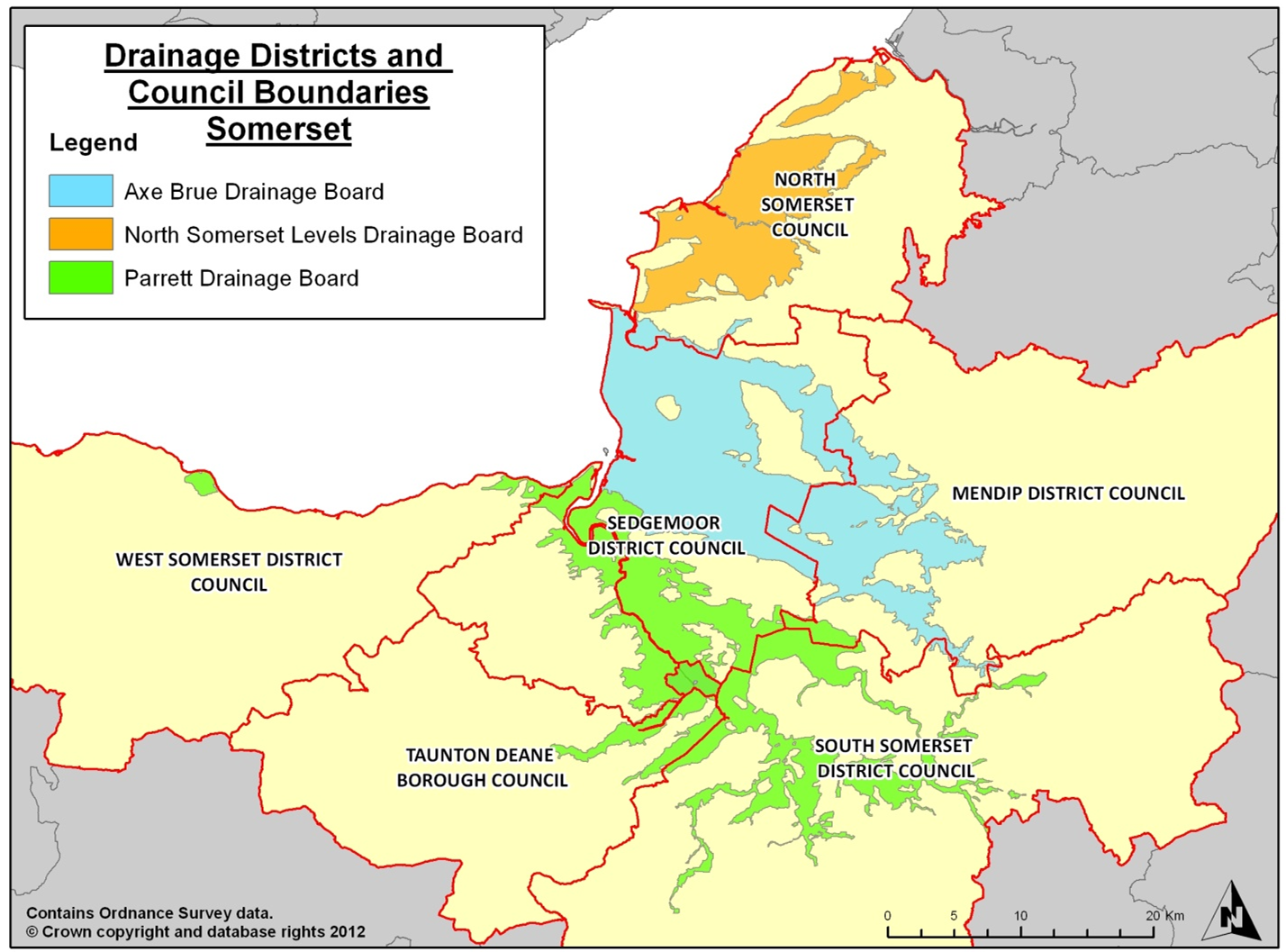

So basically Badon/Bath is the high point covering the entire coast as it was then. The sea, then. came in to almost directly south of Bath as well as being directly to its east. No enemy army could march along the coast, as it then was, without exposing its flank, all the way, to an enemy working on its own interior lines.
Almost certainly the Saxons had not been held at Badon as I previously thought, but had advanced all the way to the sea, at one of any of the points close to Badon and decided that the Badon Hill fort was the natural, indeed inevitable central control point.
And Arthur, in one last throw of the dice, got both Welsh and Cornish to combine on an attack there.
And won what increasingly looks like it really was the most important land victory in the British Isles (mores than Hastings which mainly changed the aristocracy)
Labels: British politics, History
Saturday, March 29, 2014
The Venitian Independence Vote Is A Big Thing - Bigger Than We Can Yet Know
Over 89 percent of residents in Italy's Veneto region have voted in an unofficial referendum in favor of independence from the rest of the country as Venetians seek to restore the glory of the old days by creating a state of their own.
Over two million residents of Veneto – the region of Italy surrounding Venice – took part in the so-called 'Veneto independence referendum' that lasted from Sunday to Friday. The survey, conducted online and backed by the region’s independence parties, has no legal power but aims to gather support for a bill calling for a referendum.
The poll also asked residents if they want the region to keep the euro and remain part of the European Union and NATO if it declares its independence. More than 55 percent of voters said they would prefer an independent Veneto to remain part of the EU, and over 51 percent said they want to remain in the eurozone. Over 64.5 percent said they want Veneto to be part of NATO.
The results of the vote were announced Friday in the city of Treviso, where hundreds of pro-independence activists gathered for a demonstration, waving the flags of the old Venetian Republic.
I suspect they don't know what to make of it. Catalonia is nation sized; it has been a "leftist" cause since the Spanish Civil War and people know where it is. Veneto on the other hand is a new story; it looks like it would be energetically free market; and somewhat more difficult to define on a map.
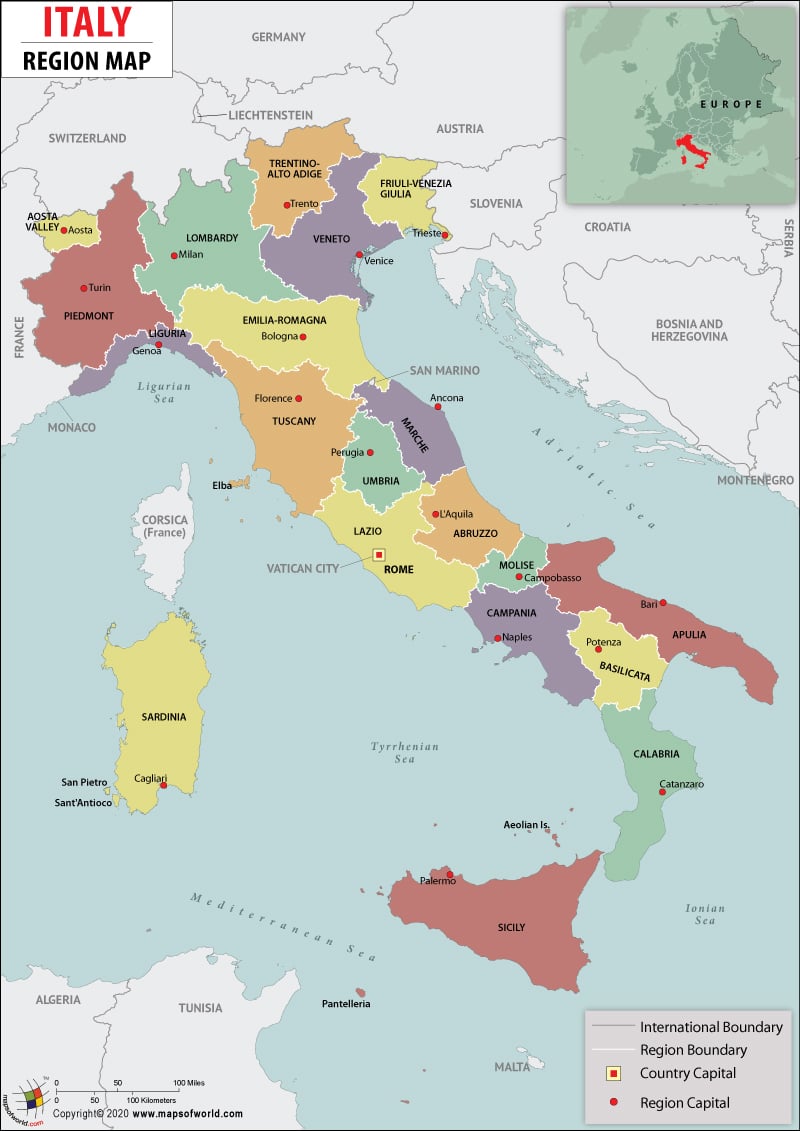
I assume the province of Friulia, along the Slovenian border, would go with Veneto, since it would no longer have any link to Italy. Trentino is a more nationalistically dodgy problem since it is largely Austrian, having been given to Italy, against the rule of nationality, because it was the price of Italian entry to WW1. Perhaps it would become a separate country or be linked with predominantly German speaking Switzerland.
If the comparison between Scotland and Catalonia is well established the obvious one with Veneto is Slovenia, with which it shares a border. Both are areas feeling held back by being the northern and richest tip of a comparatively poor southern state. Of the 2 Veneto is wealthier, has the larger population and has, by a very long way, the greater history as an independent state.
I have no doubt an independent Veneto, particularly as a culturally entrepreneurial society, would be a success. Considering they are surrounded by the EU, with whom they would trade, and that the issue has not come up strongly yet, I am quite surprised that only 55% want to stay in the EU for now. They would be very good Europeans but I suspect uncomfortable EUropeans.
The really important thing about this is that it confirms the direction of travel of statehood in the world. For centuries countries grew larger - the union of Italy in 1866 was part of that trend. Now, a century and a half later the Venetians want to reinvent themselves as an independent state. In all previous such break ups it was a rickety colonial structure (Singapore, South Sudan, east Timor), or a failed state falling apart (USSR, Czechoslovakia) or active foreign intervention (Yugoslavia, Crimea). This is a successful western European economy and indeed probably the most successful part, feeling, not that Italy is failing but just that they can do better on their own. it is a complete repudiation of what appeared to be the march of history, such as few have envisaged (ie Heinlein) and whatever sort of world society it develops into, it will be something different from anything previously known.
The lessons for Scotland are equivocal. Of course we can have separation if we wish, but it will also enhance the feeling that what would happen would us be giving England their independence from us. I would have no worries about Scottish independence if I thought our government was going to be a competent, rational, market orientated one but that is obviously not on offer.
The other message is that separation doesn't stop at the divisions everybody expects. Scotland has only been a fully unified country since 1746 (crushing of the Jacobites). Orkney and Shetland ("its our oil"), the Western Isles, the Highlands as a whole or indeed the Borders are likely, even if 51% of Scots vote for separation, to have a majority for union (or possibly separate separation). If that was all that was left a lot of Edinburghers would look askance at being in a union that consisted mainly of Greater Glasgow.
A matter of some importance to the US as well. They fought a bloody war against secession but having accepted the principle over Yugoslavia, Ukraine, South Sudan etc it would now be hard to deny it to Americans.
Labels: History, International politics, Scottish politics
Monday, March 17, 2014
Moral Relativism When Considering Megadeaths
FYI from Wikipedia:
- 1944 to 1947 & 1951: 1.5 million Poles were deported from the eastern territories annexed by the Soviet Union into the western territories, which Soviets transferred from Germany to Poland. By 1950, 1.6 million Poles from the eastern territories annexed by the Soviet Union had been settled in what the government called the Regained Territories.
- 1944 to 1948: Flight and expulsion of Germans after World War II. Between 13.5 and 16.5 million Germans were expelled, evacuated or fled from Central and Eastern Europe, making this the largest single instance of ethnic cleansing in recorded history. Estimated number of those who died in the process is being debated by historians and estimated between 500,000 and 3,000,000.[44]
- November and December 1944: more than 200,000 Danube Swabians in Yugoslavia were expelled from their homes and interned in starvation and concentration camps for the old, young and disabled. Some 30,000 workers were expelled to Russia as slave laborers for war reparations.[45]
![clip_image002[1]](http://www.jerrypournelle.com/chaosmanor/wp-content/uploads/2014/03/clip_image00213.gif "clip_image002[1]")
Though I have long promoted more reporting of the atrocities "our side" & NATO police carried out in the wars against Yugoslavia, it is worth, for balance, remembering that atrocities get carried out by all sides.
Though our schools and media airbrush these out of history.
If you read up about the Danube Swabians they certainly did side with Hitler against their neighbours in the atrocities he committed. It is difficult to think of a way in which locals, assuming they were not saintly, would not have expelled them. Nonetheless they should not be forgotten.
Also worth noting the enormous dubiety about the number of death. This demonstrates one of the obscene things about genocide - since it is a crime that eliminates the witnesses, and even moreso, tends to eliminate those with an interest in the crimes being known, the numbers quoted in almost all such, owe more to politics than reality.
This, of course, does not apply to the Jewish Holocaust where the number of 6 million is enforced by both historians and police as being certain. Though in earlier times figures between 3 & 11 million were common. This is fortunate for the western countries since they were able to justify WW2 as being against a uniquely barbaric regime without having to mention that the Germans killed 24 million Soviet citizens (something they would have had difficulty in denouncing as bad during the cold war when we were threatening to wipe out 200 million of them).
Labels: History, International politics, Media, Yugoslavia
Wednesday, March 12, 2014
Russia, Ukraine, Population and Geometric Growth
---------------------------------------------------
Putin Needs Russians
Presumably he doesn’t really understand how free enterprise works much better than Obama. He has plenty of money. all he has to do is put lots of it into child support, probably only of children who have at least 2 ethnic Russian grandparents though that would get a lot of western fingerwagging.
If you tax something you will get less of it. if you subsidize it, enough, you will get more.
That would be cheaper than wars.
One of the lessons of wars since the industrial revolution is that a nation no longer gets powerful by grabbing the territory of unfriendly neighbors if you have to keep their recalcitrant population too. Britain learned this in Ireland and India & learned the opposite lesson about the strength of friends in Australia and Canada (& despite a little carelessness in 1776 in the US too).
I once calculated that by 2050, at present rates of population growth <http://www.geographyiq.com/ranking/ranking_Population_growth_Rate_dall.htm> [my article http://a-place-to-stand.blogspot.co.uk/2007/01/demographic-population-growth-war.html ] Yemen will have a larger population and a more aggressive population than Russia (more aggressive because poorer, more crowded and large families make young men more expendable). Not problems I wish on either.
Best WishesI am quite certain that Mr. Putin understands family incentives and tax breaks. And not wanting recalcitrant minorities is likely to look very high in his calculations. In the case of the Crimea the benefits of annexation outweigh the costs. In the cast of the ‘stans’, it is better to lure the Russians to Russia; the land is not really wanted. With the Ukraine itself things get complicated. I suspect Russians are quite capable of rational analysis on these issues.
Neil Craig
--------------------------------
I like his gentle chiding of the possibility that Obama and his circle might have not an infinitely worse understanding of free markets than the ex-KGB colonel Putin has. Having read some speeches from both I have to accept he is probably right. Ditto on a whole range of other subjects.
Jerry's site is one that should be read by anybody who is philosophically interested in politics rather than simply as a way of using tribalism to fleece the voters and by anybody who supports human progress. I am proud to say that his site and earlier writings are probably my primary political influence so you know who to blame.
Labels: Errata, History, International politics
Tuesday, February 18, 2014
The Original Scots Soldiers On The North West Frontier

The Kalash people of Pakistan were found to have chunks of DNA from an ancient European population. Statistical analysis suggests a mixing event before 210 B.C., possibly from the army of Alexander the Great
This could reflect the invasion of India by Alexander the Great in 326 B.C. The Kalash claim to be descended from Alexander’s soldiers, as do several other groups in the region.
Did Alexander the Great have a Scottish regiment? Perhaps that explains why he was so successful.
"Sir, it was an ambush there were 2 of them" - traditional.
Not entirely impossible - it is known that after 1066 much of the Byzantine Empire's Varangian Guard, nominally Vikings, was made up of English warriors driven out by the Norman Conquest, but at that stage the Norse had established trade routes across Russia (the Russ were Norse conquerors) so there was the contact.
This is part of the newly produced Genetic Atlas of Human Diversity. The amount of information available in each of our DNA is incredible (I am told that unlinking 1 DNA coil it could be stretched to the Moon) and we have barely started being able to read them.
Labels: Errata, History, Science/technology
Monday, February 17, 2014
You Started It - You Invaded Poland
I have just finished reading Carroll Quigley's The Anglo-American Establishment widely known in conspiracy circles as it deals with the Rhodes/Round Table group's growth into the CFR/Trilateral Commission/Bilderbergers. In fact it doesn't actually do that - effectively stopping with the outbreak of WW2 which lead the members of all groups who had promoted "appeasement" to lie low.
What the book makes abundantly clear is that not only the Round Table conspiracy but more importantly Chamberlain and his friends (which amounts to the entire party) were not only pushing "appeasement" but that the inverted commas are justified. "Appeasement" was never intended, at least by Chamberlain and co either to provide justice for german aspirations (the original reason given) or to buy Hitler off from war (the later reason). It was, at all times, a deliberate programme of building up Germany and pointing then into a genocidal war against the USSR to cruch communism (& incidentally the genocide of at least 100 million). And in which the main enemy to be bamboozled was the British people bwho would not put up with Germany being encoureged in unlimited aggression.
Start with the German reoccupation of the Rhineland which was immediately followed by an Anglo-German Naval Treaty 1935 (p 270) in which Britain recognised Germany's right to breach the Versailles Treaty by building a navy 35% of the size of Britain's in surface ships and unlimited submarines. This is normally considered simple poltroonery by Chamberlain but the book explains how it was no such thing. It was an attempt to put Britain in a direct alliance with Nazi Germany against France. The point is that France and Britain already had a naval alliance by which France had agreed to keep its navy to 33% of Britain's. We released Germany from its Versailles obligations but not France from their's. Thus we were giving Germany the power to defeat France at sea, particularly since France had to station ships in the far east to protect indo-China and the Mediterranean to deter Mussolini. At one blow Chamberlain emasculated our big nominal ally and did so sufficiently unobtrusively that nobody could effectively object.
This ties in with something Quigley's book doesn't mention - that when the Spanish Civil war broke out the British government told France, that if they helped the government, the way the Italians and Germans were helping Franco, we would consider that to be aggression under the Locarno Treaty by which Britain had guaranteed to support the non-aggressor side in a Franco-German war.
In 1937 our Foreign Secretary Lord Halifax had a long conversation with Hitler which German records show he said "(a) Britain regarded Germany as the chief bulwark against communism in Europe; (b) Britain wantecd a 4 power agreement between Britain, Germany, france & Italy to run Europe; (c) Germany couls liquidate Austria, Czecholsovakia and Poland if it could be done without provoking a war Britain would be however unwillingly dragged into" (p 275).
What Hitler apparently did not appreciate was how much the British government feared that the British people would insist on us standing by our treaty obligations (or, perhaps more likely, refuse to re-elect the Tories if they betrayed them) so that to do this Germany had to do it by threats and limited aggression while avoiding a general war.
Possibly Hitler didn't entirely understand the subtlties of such a "democratic" politician and his need to have a fig leaf to conceal what he was doing from the people.
That is pretty much what they did. Chamberlain ensured that the Munich Agreement "negotiations" involved those 4 countries but not the USSR or Czechs despite the fact they were willing to fight and italy wasn't.
During these "negotiations" Chamberalain arranged an entirely spurious "poison gas air raid" scare purely to scare the population into obedience - there was no military justification for it whatsoever.
Then, following a speech in Birmingham where the audience made it clear to Chamberlain they did not want to sell out to Hitler (mentioned in AJP Taylors Origins of the 2nd World War rather than this book) he covered himself by offering a guarantee to Poland.
But Quigly points out that this was not meant to be a serious guarantee. Specifically it was a guarantee only of the continued existence of a Polish state not of its territory. In particular Danzig and the Polish corridor were up for grabs. In fact Chamberlain tried to use his guarantee as an excuse to press Poland to give up that territory.
The objective, the book says, was to give Germany that corridor which would thus give it a continuous frontier up to the Baltic states which Germany could then seize giving it a frontier with the USSR, enabling his desired war of genocidal aggression.
This also explains the nature of British "negotiation" with Russia for a collective security guarantee of Poland - why it was designed to ensure Russia could not safely accept it. The French, not being privy to the plot always wanted a straight 3 power defencive alliance and guarantee of Poland which was exactly what Britain's government feared since it would have averted WW2 (or if Hitler and the Germans were wholly insane, ensured it was over in weeks). What we offered instead was that Russia make a unilateral offer to go to war to defend Poland, if asked, without any corresponding collective security promise from the allies, or indeed Poland. That would have given Poland more leeway in negotiating away their corridor but done absolutely nothing to prevent the war Chamberlain was pushing for (p 300). Also on 25th August the, a week before the war broke out, the British ambassador offered an alliance between us against Russia after a successful "negotiation" with Poland (p299).
And so we had WW2.
I think that if Hitler had just realised how deceitful Chamberlain's policy was he would simply have said that his attack on Poland was to seize the corridor and other territory and would maintain an "independent" Poland, albeit German occupied, our government, eager for this war against Russia, would have accepted that.
Enen during the Phoney War, where we were technically at war with Germany but doing nothing, he made 2 attempts to get into war with Russia at the same time (over Finland and incredibly by planning bombing Georgia). This attempt to make it an absolutely unwinnable war can nonly be explained if Chamberlain was as totally loony as Hitler is sometimes said to have been, or it it was an attempt to produce a fait accompli for the british people that would oblige us to switch enemies even at that late date.
Labels: British politics, conspiracies, History
Monday, January 27, 2014
Things Can only Get Better - Except When The Politicos Are Involved


Trade barriers is not the whole story since the main factor in trade is shipping cost which has dropped enormously with the advent of shipping containers and keeps dropping as ship design and their increasing size keeps making them more efficient. The non-political cost of shipping something from China to Liverpool is now often less than driving it from Liverpool to here.
Nonetheless it is important to remember that even though anything driven by technology is getting much better, politically driven stuff, of which war is the most obvious, is more equivocal.
Our political systems are not only backward compared to technical ones, they are barely improving.
Labels: Fear, History, International politics
Thursday, January 16, 2014
The Truth About the "Highland Clearances"
It is fairly long and you can usefully skip the Preamble and start with "2 Evidence"

Also he refers to what is a genuinely shameful ignoring of our true heritage:
The real story of Scotland in this period is not that of the oppressed noble savage of the clearances but people like James Watt who invented the steam engine in 1775. But what is it that every museum and book of the period remembers? The oppressed noble savage! And where is that steam engine? It is dumped round the back of Kinneil House beside the roofless cottage where James watt lived covered in graffiti. It is as if Scotland does not want to admit that Scotsmen like James Watt led the world and it was they who were attracting the highlanders away from the uplands – not by whinging about oppression, but by creating a vibrant economy based on great thinkers like Hume and Smith and engineers like Watt. Yet where are we now? After decades of emigration, we are led by whinging politicians whose first act in power is to seek an apology for mythical genocide apparently seeking to blame the economic problems of modern Scotland on the clearances rather than their own inability to understand the ingredients that are necessary to create a vibrant economy utilising the engineering skills that once made Scotland great.

I commented:
"
The problem is lack of research – and the reason is the same as climate.
No academic would get funding for a project that did not show the Scots as a victim of English oppression.

Labels: conspiracies, History, Scottish politics
Saturday, December 07, 2013
The Mandela News The Media Won't Report Though It Shows His Nobility
My contribution is I have decided to link to this post by Steve Sailer with something you are definitely not going to hear from any "official" MSM source. Indeed I will submit it as letter to the nation's press to prove that statement.
It shows the essential decency, love of country and freedom nobility he had.
It also shows a degree of Machiavellian ruthlessness and disbelief in democracy, which allowed him to do the right thing when the plaster saint the media are erecting could never have done it.
Also that real politics, behind the scenes, is not remotely as simple and black and white as what we, the audience, are shown by the "mainstream media":
You may vaguely recall that the first open election in South Africa in 1994 was accompanied by huge lines at the polling booths and scenes of chaos at vote-counting centers. The media predicted it might take weeks to tabulate all the ballots. Then, almost instantly, the final, official results were announced, with no one objecting that that was logistically impossible.
Several years later, The Economist explained what happened: The vote counting was indeed chaotic and looked to go on indefinitely, but early returns conclusively showed Mandela's African National Congress winning a crushing victory that would give it the 2/3rd's majority needed to write the new constitution all by itself. So, Mandela called together the leaders of opposition parties and told them he was rigging the results to restrict his own party to about 5/8ths of the seats so that the new constitution would require some support from other parties to pass. He also gave local control of the Cape province to the white-led party and the KwaZulu province to the Zulu party. Not surprisingly, the opposition was deeply grateful and while many within the ANC were angry, they could hardly overrule Mandela.
Labels: conspiracies, History, International politics
Sunday, November 03, 2013
Jesus - Looking For The Man
Was there a real Jesus?
I do not doubt that there was a real Moses because his name is Egyptian and who would invent a national founder of a different nationality? The same applies to the name Heracles who, in all the stories, was tormented by Hera. Jesus was so common a name if you threw a rock in any Judean street you were likely to hit a Jesus or Mary.
The Dead Sea Scrolls also refer to a Messiah who had lived a few generations back, despite them being contemporary with or predating the biblical Jesus.
On the other hand the Beatitudes rhyme in Aramaic, but not in the Greek it was written in, which means they were said by an Aramaic speaking teacher.
Wikipedia's article on the Historicity of Jesus says almost all the biblical scholars agree he did, but then they have an incentive to don't they.
But they have another Christ Myth article, which lists opponents and their views and in fact most of them are willing to accept there was a guy it is just that most of the stories are accretions, which I am comfortable with.
However I ran across this list on Listverse, of 8 reasons he existed.
Of them I find #8 convincing. Paul's Epistles are accepted as historical letters and Paul refers not just to meeting and not getting on with St James but of him being Jesus' brother. Since James was the leader of a rival faction (more committed to having a primarily Jewish cult) there is no way he would have acknowledged the link if he could disputed it.
One writer who started doubting his reality came round to accepting Jesus as the author of what is called the Q document - something which is a common source of the 4 gospels. The common source seems difficult to doubt but the fact that no trace of such a document exists has always been a problem.
However if it was not a written record but an oral one of the actual words of Jesus then there is no problem. Remember this is an era before mass literacy when Homer was passed on orally for most of a millennium.
These are the bits of the bible generally attributed to the Q document:
Thursday, October 10, 2013
Idenhtification Of A Climate Changing Volcano About 1275AD
Volcanologist Franck Lavigne of the Université Paris in and colleagues now think they’ve identified the volcano in question: Indonesia’s Samalas. ...... put the eruption’s magnitude at a minimum of 7 on the volcanic explosivity index (which has a scale of 1 to 8)—making it one of the largest known in the Holocene. The eruption, the authors note, was on the scale of the Tambora eruption of 1815, and more powerful than Krakatoa in 1883.
The team also performed radiocarbon analyses on carbonized tree trunks and branches buried within the pyroclastic deposits to confirm the date of the eruption; it could not, they concluded, have happened before 1257 C.E., and certainly happened in the 13th century."
However they seem to be overstating the influence this had on the medieval warming p
1275 AD is about 750 years ago so this looks like it is after the height of the MWP. Actually it might coi8ncide with a short plateau in the dropping temperature.
(Also it shows we are not unusually, let alone catastrophically warm now)
I commented
:But 1275 ish wasn't the end of the Medieval warming. That as the article acknowledges was about 1430.
In the same way neither Tamboro, said to be about the same strength as this, nor Krakatoa were the start of cooling trends, or even stopped the rise in temperature (even though serious CO2 rise doesn't start till the 1950s.
This strongly suggests that while eruptions can, unsurprisingly, produce years without summers they have little or no effect after about 2 years.
What this does confirm is that we can reasonably expect at least 2 tamboro events per millennium & I would guess at least 4 times as many Krakatoa/Laki sized ones. Which makes another about due
Here are some eruptions over the last 1,000 years.
- Pinatubo, island of Luzon, Philippines; 1991, June 15; VEI 6; 6 to 16 km3
- Novarupta, Alaska Peninsula; 1912, June 6; VEI 6; 13 to 15 km3
- Santa Maria, Guatemala; 1902, October 24; VEI 6; 20 km3
- Krakatoa, Indonesia; 1883, August 26–27; VEI 6; 21 km3
- Mount Tambora, Lesser Sunda Islands, Indonesia; 1815, Apr 10; VEI 7; 150 km3 -- the "Year Without a Summer"[11]
- Grímsvötn, Northeastern Iceland; 1783–1785;
- Laki; 1783–1784; VEI 6; 14 km3
- Long Island (Papua New Guinea), Northeast of New Guinea; 1660 ±20; VEI 6; 30 km3
- Kolumbo, Santorini, Greece; 1650, September 27; VEI 6; 60 km3
- Huaynaputina, Peru; 1600, February 19; VEI 6; 30 km3
- Billy Mitchell, Bougainville Island, Papua New Guinea; 1580 ±20; VEI 6; 14 km3
- Bárðarbunga, Northeastern Iceland; 1477; VEI 6; 10 cubic kilometres
- 1452-53 New Hebrides arc, Vanuatu; the location of this eruption in the South Pacific is uncertain, as it has been identified from distant ice core records; the only pyroclastic flows are found at Kuwae; 36 to 96 km3
- Quilotoa, Ecuador; 1280(?); VEI 6; 21 km3
- Samalas volcano, Rinjani Volcanic Complex, Lombok Island, Indonesia; 1257; 40 km3 (dense-rock equivalent) of tephra, Arctic and Antarctic Ice cores provide compelling evidence to link the ice core sulfate spike of 1258/1259 A.D. to this volcano. [18] [19]
So although there have been a fair number of these over the millennium Tambora in 1815 seems to be the largest. And that took place in a period of rising temperatures as we came out of the Little Ice Age (& incidentally was well before industrialisation had produced significant CO2 so that can't have been causing the rise).
So basically volcanos can't be tipping points for climate change though they do produce unhelpful short term (ie 1 or a few years) changes. No problem being around 10 years later but might be nasty the next year.
Previous to Tambora the big one was Santorini, 1650 (60km) (also site of the Santorini eruption believed to be Atlantis) so it would be statistically reasonable to expect something similar fairly soon,
Friday, September 20, 2013
The Way The Future Was
===========================================
Bob_Robertson
Not different in the slightest.
Well, ok, very different for some million Japanese who would not have been irradiated, but the firebombings did more damage and cost much less.
- Knowing they would have to invade Japan the allies accept peace without occupation
- Japanese fight to the last man
Labels: History, International politics, nuclear
Wednesday, August 14, 2013
The Great Victorian Way
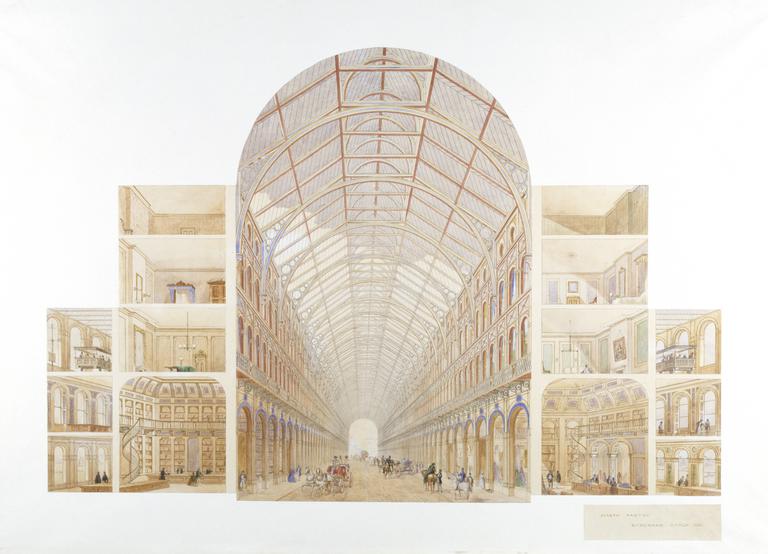
This was the Great Victorian Way designed by Sir Joseph Paxton in 1855 as a mixed shopping mall and 10 mile circular bypass for central London.

It wasn't built because they didn't have money for both it and a sewerage system and decided, I guess rightly, that they needed water more.
It would have cost £34 million then which equals £3,100 million today. Which comes to £58,700 per foot. That looks pretty good when the Glasgow motorway extension came in at £26,000 a foot.
Those were the days when big engineering projects using new technology weren't automatically stifled. OK the world was much poorer then and governments only collected under 10% of gdp so they ultimately couldn't afford everything but at least they thought big.
Imagine what Victorian London would have been like if it had gone ahead. As it was London was the capital city of the world but this would have been so much bigger.
Labels: Big Engineering, History, Science/technology
Tuesday, August 06, 2013
Evolution in Action - Milk Drinking Mutants Conquering the Earth

Amazingly the estimate, from the degree of variation in DNA, is that this happened 7,500 years ago (5,500 BC) in Hungary. This isn't long before the earliest recorded history yet it has been enough to repopulate Europe (not to mention America and Australasia) at least of this gene.
The other areas of lactose tolerance, the western Sahara, Saudi Arabia and coastal Pakistan are said to be caused by different mutations. I assume the numbers in Sahara and Saudi are very small (perhaps the Saudi and Pakistani variants are the same gene since they are close to each other). Why didn't they grow so much - perhaps because northern Europe is ideal dairy farming country. It is implied the others are older mutations so perhaps they had some side effect.
However the fact that such a favourable mutation happened, or survived, only 4 times since agriculture started 11,000 years ago shows how difficult the initial mutations are. And the fact that it has spread so far in such a short, in normal evolutionary terms, shows how easy it is when the conditions are right.
Thursday, August 01, 2013
Solar Flare Misses Earth - This Time
Solar Flare Narrowly Misses Earth…I have not done a systematic study, but I believe that northern lights were seen in Alexandria about every 300 years since classical times. That probably indicates a Carrington class solar event. In 1859 the only long insulated wires in the world were telegraph lines. So far as I can tell, during the 1859 event there were electrical events in every telegraph station, and many of them caught fire. We have a lot more long electrical lines now, and of course the effect on the electrical power grid cannot accurately be predicted. Some would make it the end of civilization. Something of this sort is the premise of Lloyd Tackitt’s A Distant Eden and its sequels, which presents a grim picture of post disaster life.
http://washingtonexaminer.com/massive-solar-flare-narrowly-misses-earth-emp-disaster-barely-avoided/article/2533727
"There had been a near miss about two weeks ago, a Carrington-class coronal mass ejection crossed the orbit of the Earth and basically just missed us," said Peter Vincent Pry, who served on the Congressional EMP Threat Commission from 2001-2008. He was referring to the 1859 EMP named after astronomer Richard Carrington that melted telegraph lines in Europe and North America."
Not to worry, though. I am certain all the. "climate change" models have thus factored into their data bases.
Charles Brumbelow
=================================================
I have written about the Carrington Event before as one of the serious threats to civilisation.
It strikes me that, since it is so directionally focused when it coincides with the presence of out particular planet is virtually random. That we last had a major one in 1859 does not make it more or less likely now (unlike say Vesuvius where the pressure builds up and the fact they haven't had once since 1945 suggests the next one will be spectacular). On the other hand if our solar observation is now good enough that we can see and measure coronal mass ejections we must have a large statistical population. Dividing the total area where such ejections, at different levels of intensity reach the height of Earth orbit by the areas actually hit each year at each level of intensity gives the odds for any one year. It will vary depending on the sunspot season, making it more complicated but in principle this can be done.
It also means we can tell the odds of something more serious than Carrington and how much more. Before electricity we have no way of telling more accurate that the northern lights of old Alexandria records which say little about the possible maximum strength.
Labels: History, Science/technology, space
Monday, July 15, 2013
Another Historic X-Prize - How The South Did Better Than It Should Have
"The Confederate Prize for Inventions that Sink or Destroy Union Ships (1861)
During the Civil War, the confederacy couldn't compete with the Union navy. So the the Confederate Congress authorized a prize for a "new kind of armed vessel, or floating battery, or defense invention" capable of sinking or destroying enemy vessels. The legislation led to the development of the H.L. Hunley — the first submarine ever to sink an enemy vessel (though the Hunley sank on its way back to port, killing its entire crew.)"
There is remarkably little information, well almost none, on these prizes. This is what Wikipedia says
The C. S. Navy could never achieve equality with the Union Navy, so it used technological innovation, such as ironclads, submarines, torpedo boats, and naval mines
(then known as torpedoes) to gain advantage. In February 1861 the Confederate Navy had thirty ships, only fourteen of which were seaworthy, while the Union Navy had ninety vessels; the C. S. Navy eventually grew to 101 ships to meet the rise in naval threats and conflicts.
and
On 17 April, 1861, Confederate President Jefferson Davis invited applications for letters of marque and reprisal to be granted under the seal of the Confederate States, against ships and property of the United States and their citizens:
- Now, therefore, I, Jefferson Davis, President of the Confederate States of America, do issue this, my proclamation, inviting all those who may desire, by service in private armed vessels on the high seas, to aid this government in resisting so wanton and wicked an aggression, to make application for commissions or letters of marque and reprisal, to be issued under the seal of these Confederate States....
As a submarine the Hunley was of only limited success - it sank killing the entrepreneur responsible, Mr Hunley, then while it succeeded in sinking the Housatonic it was so close to the explosion that it sank itself, killing its 2nd crew.
But this is in line with test pilot experience - test pilots die testing the limits of new vehicles - as the original X aircraft programme showed. Possibly the fact that they were at war meant that the testing was "on the job" as it were.
What is certainly the case is that the CSA, generally an agricultural society, where the North had the industrial capacity, produced a remarkable range of naval high tech (for the time) and with ironclads came very close to defeating the Northern Navy, with its far greater resources. I am assuming that the Confederacy prizes stimulated the whole range of naval warfighting not just the submarine.
Also that this war came close to rendering all previous navies obsolete (only close because none of these ironclads were capable of crossing oceans. I believe that war stimulates technology partly because governments are normally not keen on technological progress and it is only during wars which threaten the existence of specific governments that they are willing to go for high technology and X-Prizes.
An example of this is that, despite the 1861 experience the US government insisted that submarines were "impractical" right up until they were virtually forced to start building one 32 years later in 1893.
"Ten years after the end of the Civil War, Irish-born John Holland began designing and building submarines in the United States. Holland submitted his first submarine design to the U.S. Navy in 1875, which at the time was dismissed as impractical. Seeing this rejection as a challenge, Holland quickly went back to the drawing board to redesign and improve on the construction of these underwater boats.
| By 1888, the U.S. Navy recognized the potential for submarines in its fleet and held a design competition for a new underwater vessel. Holland won the competition and began building the submarine Pluger five years later." |
Labels: History, Progress, X-Prizes
Sunday, June 30, 2013
Richard III & The Murder of the Princes in the Tower - Shakespeare & The Decay of Bodies
|
|
|
|
|
This is from Shakespeare and is Hamlet's unlovely way of telling King Claudius that he has killed his chief Minister, Polonius, and where he put the body.
Incidentally Claudius proceeds to keep the murder quiet and as a result Polonius' son Laertes leads a popular rebellion against him. Clearly kings who try to maintain the appearance of peace by hiding their enemies' activities run the risk of being blamed. Shakespeare's choice of the foot of the stairs as a burial site may well be coincidental. It was a common place in medieval times to bury waste since the area behind the bottom of stairs serves no other useful purpose.
This article is about Richard III and the murder of the Princes in the Tower.
In particular the discovery in 1674, of 2 bodies in a trunk in rubble at the foot of the stairs to the Royal Chapel in the Tower of London. In the 1920s a serious examination of the bodies was made and it and subsequent opinion based on the photographs taken at the time largely agree that it was 2 related bodies of the correct age group at the time the children were last seen. And that they show signs of being related to Anne Warwick whose corpse has also been examined. If all of that is correct the bodies can only be those of the Princes.
It also fits with Sir Thomas More's history of the period which says the bodies were buried at the foot of stairs.
But this leaves 2 problems.
That Henry VII is said to have initiated a search for the bodies and didn't find them - despite More's history being based on information from Henry's court, friends and indeed Henry himself. If the court knew that precisely where the bodies were they would have found them. Alternately if Henry was lying and he had the bodies already he could have had them buried there specifically to back up his story, but that works only if he already has the bodies elsewhere.
And the one raised by Shakespeare - that the presence of 2 bodies, buried indoors in the Tower would have been quite unmistakable for months and perhaps years.
Which means the bodies were planted there some considerable time after their deaths. That means in the reign of Henry VII (possibly at the time of the conviction and alleged confession of Sir James Tyler or later). There is no other actual evidence for the confession and Tyler was not executed for killing them but on an unrelated matter, let alone convicted. But from the ages of the bodies they were clearly killed in the time of Richard III. Incidentally Tyler had a remarkably as an ex-Yorkist, successful career working, outside the country, for Henry after he came to power (as well, less remarkably, for Richard before)..
Extraordinarily there is one suspect connected to both Richard and Henry whom both would have been embarrassed to be connected to.
The Duke of Buckingham.
Buckingham and Richard, then Duke of Gloucester, had been responsible for seizing the Princes from the Woodville family and Buckingham had been, at least publicly, the motivator of them then being declared illegitimate and Richard thus succeeding to the kingship. They were very much partners.
Then suddenly Buckingham rose in rebellion against him, publicly in favour of Henry Tudor. Why?
Buckingham was already the 2nd person in the kingdom - what could Henry possibly offer him that would be better than that? The reason often given by historians to say that Richard had reneged on a promise to give Buckingham the Bohun estate but records show that, until his rebellion, Richard was still going through the process of giving him the title right up until Buckingham publicly rebelled. In fact the only reason to suggest Richard was not giving him the estate is that Buckingham rebelled which appears to be reversing the normal laws of cause and effect.
Also Buckingham was listening to Henry's intelligence chief, Bishop Morton, who was his prisoner and to Margaret Beaufort who was Henry's mother, but Buckingham was no wind up doll for them to so easily reprogramme.
Here is my suggestion that seems to fit the facts better than assuming Richard did it (in which case the "buried" bodies would not have gone undetected, or that Henry did it after capturing the Tower (in which case the bodies would have been older than they were at death).
After Richard had been crowned Buckingham suggested to Richard that it was politically necessary to get rid of the princes. So long as they lived they would retain a claim to the throne. However they were Richard's half nephews (it is now as certain as can be that their father, Edward the IV was not his father's son but was still his mother's) and he may have balked at this. They were not Buckingham's close relation and he would have found it easier to recognise the necessity. So when Richard went on his tour of the country Buckingham arranged for Tyrel to enter the Tower. In theory he did not have this right but he was known to be both the king's right hand man and the 1st noble of the land so it need not have been a problem.
Buckingham might have killed them and removed the bodies, expecting Richard to accept it, even be grateful, for the fait accompli (in the way the killers of Thomas Beckett expected after hearing the king say "who will rid me of this turbulent priest, expected Henry II to be grateful without knowing in advance) or smuggled them out alive. Alive they could have been a figurehead for Buckingham's rebellion and he would have had total control of them, at least until they grew up making him de facto ruler.
Either way there was no way back for him. If Richard was upset at the killings there would be no way back for Buckingham. if brought out alive I have to assume they died subsequently - perhaps accidentally as they made their own escape bid or perhaps he made the mistake of leaving them in the same building with Bishop Morton or Margaret Beaufort and they took care of the matter, thereby disposing of people blocking Henry's path to the throne.
I am assuming that, alive or dead, they were removed from the Tower for the reasons Hamlet gives.
This largely explains the most surprising thing about the disappearances. That while there was no evidence of the Princes appearance after August 148- (and there were certainly rumours at the time of them being murdered which played a part in Richard's overthrow which he could have dispelled by producing them) Henry did not make any public attempt to cast the blame on Richard (though it was to his advantage to do so and not doing so cast suspicion on him). Even the word's of Tyler's alleged confession actively fail to mention who had hired him. Both of those who held legal responsibility for the safety of the occupants of the Tower (Richard until Bosworth, Henry afterwards) refused to blame anybody else. Buckingham, being the ally of both is the only one both might prefer not to implicate (although if Buckingham removed the children alive and they were killed by Henry's mother or Morton or only after Buckingham had raised the standard of rebellion in Henry's name, Henry has particular reason not to discuss the subject in his lifetime.
As with so many other political scandals including Polonius' murder, it is the cover up not the event that causes the problem for the leader. Even if he wasn't thinking of this case Shakespeare's understanding of the nature of politics stands out.
Labels: conspiracies, Errata, History
Tuesday, March 12, 2013
Stonehenge and the Round Table
Here is what I think is another piece of the Arthur story and how it delineates British culture on a deeper level than previously understood.
Last Sunday Channel 4 did a programme on new archaeological discoveries at Stonehenge.
It centred on the post holes that make up an outer circle around the famous stone circle and predates it

The results of his latest investigation:
reveal that the first stones at Stonehenge were put up 500 years earlier than previously thought at around 3000 BC. The monument we see today was not the original Stonehenge;
prove that Stonehenge as it looks today was built 200 years earlier than previously thought, around 2500 BC;
explain the choice of the site on Salisbury Plain;
prove that Stonehenge was once the site of vast communal feasts attended by some 4000 people, a substantial proportion of the British population (then estimated at only tens of thousands), with people coming from as far afield as highland Scotland to celebrate the solstice.
Professor Parker Pearson believes his findings provide compelling evidence that Stonehenge once united the people of Britain. And his analysis of the bodies and grave goods found on and around the site and around it also offers an answer to the mystery of Stonehenge’s decline.
The 3,000 BC Stonehenge was the outer circle with 53 "bluestones" marking the graves of high status people from all over Britain. Ignore all the modern stuff in the middle - it wasn't there when the place really was an annual winter (Yuletide) celebration site for a large proportion of the entirety of Britain. The bones of animals eaten in the feasting came fom across the British Isles, as far away as Orkney, but not from across the Channel, proving a political or at least cultural unity even 5,000 years ago.
What the central stones, added 500 years later show is that this site was remembered as being important long after, after the intervening arrival of the Beaker People in Britain. In many ways very like the way the written record of Arthur in the 12thC is far greater than that of the 5thC but the reality happened in the 5thC.
When I saw the layout of 53 separate graves round what is now the outer edge of Stonehenge I immediately said "Round Table".and subsequent thought fits with the idea.
The point about the round table was that it has no head and thus nobody there has the formal leadership role.
The concept of rulership by a group of people seated in such a way that they are all of equal rights fits this old Stonehenge. In fact it fits it better than in the Arthurian legend because Arthur was the leader (though he was the war leader not a king and certainly not the sort of Feudal king that existed at the time the legend was written down). Round Table as symbol of governance is indeed the complete antithesis of the sort of Feudal monarch Arthur was eventually writtin into being.
Was there a real round table in the centre of the open space that was/is Stonehenge or was it a metaphorical device? We cannot know because it is long gone but I suspect it is no metaphor and there actually was. Historians have a long record of assuming something was a metaphor when it wasn't - Atlantis, Agamemnon's crown and Troy. The remains of ones ancestors are of great importance in many cultures and common evidence of rights. If there was a central table each of these descendants of the original grave occupiers would be able to sit in front of their own ancestor asserting their hereditary right to be there and acknowledging that of all the others. That is as good a way of maintaining order as I can imagine for any political confederation of that level of technology.
The Round Table is not mentioned in Geoffrey of Monmouth's original book about Arthur of about 1236. It appears in Wace's Norman-French version of 1155 and is expanded by Laymon.
Wace says Arthur created the Round Table to prevent quarrels among his barons, none of whom would accept a lower place than the others.[1] Layamon added to the story when he adapted Wace's work into the Middle English Brut in the early 13th century, saying that the quarrel between Arthur's vassals led to violence at a Yuletide feast. In response a Cornish carpenter built an enormous but easily transportable Round Table to prevent further dispute.[1] Wace claims he was not the source of the Round Table; both he and Layamon credit it instead to the Bretons....
There is some similarity between the chroniclers' description of the Round Table and a custom recorded in Celtic stories, in which warriors sit in a circle around the king or lead warrior, in some cases feuding over the order of precedence as in Layamon.[1]
The Bretons who settled Brittany had come from Britain when the Saxons were overrunning the country. It is thus in no way surprising that they would know ancient British lore as well as, or perhaps better than the inhabitants of England, who were as Saxon as they were ancient British. Geoffrey might not have heard of it but if Wace was in the process of transforming the Arthur legend from a mythic version of a historic person to an origin myth of the British people that is exactly when we might expect the addition of a Round Table myth (mythic only in the way that Troy used to be mythic) which was and had been for 4,000 years, central to the origin of the British people.
Many modern people may find it impropable that, without books, a historic story could be preserved for that many generations of bardic retelling. The Iliad was probably written within 1,000 tears of the events described but that is a much shorter time. The Epic of Gilgamesh survives but because it was written. Older stories, such as the Garden of Eden referring to either the Climate Optimum of about 5,000 BC or the flooding of the Black Sea are uncertain.
But there is something almost that old. The earliest written record of Merlin, written about the time of the historic Arthur, refers to him as having flown the Stones that make up the "modern" Stonehenge from Ireland. Obviously they weren't flown, but floated, and they came from Wales not Ireland, which in both cases can mean - from a little known land far away to the west. But the fact that they had been brought from such a distance, even by non-magical means, is not a random assumption. Clearly some memory of Stonehenge had been repeated down the millennia.
In which case a non-magical Round Table is no more difficult to remember.
With Arthur, finding that his name originated near Modena, where his first visualisation was, gave corroboration.
In the same way finding Laymon's unanticipated assertion that the Round Table was built to preserve peace at a mid-winter feast, when we know the main use of the early Stonehenge was around a mid-winter feast, seems to me to provide as much corroboration as we can currently expect.
If culture is important to social stability and progress and there is strong evidence that it is, finding part of a common egalitarian British political culture that has lasted 5,000 years is no small matter.
Labels: British politics, Errata, History, Social
Monday, February 04, 2013
Important News of the Day - Richard III Dead
This came back to me today when it was announced that the body beiing examined by Leicester University really was, if DNA is to be believed, Richard III and that he had indeed died fighting rather than looking for a horse. The probably killing blow having come from what is likely a halbard - a large axe on a long pole.
Richard Buckley, the lead archaeologist on a project to identify the bones, told reporters that tests and research since the remains were discovered last September proved “beyond reasonable doubt” that the “individual exhumed” from a makeshift grave under the parking lot was “indeed Richard III, the last Plantagenet king of England.”
Part of the evidence came from DNA testing by the geneticist Turi King, who told the same news conference that DNA samples taken from modern-day descendants of Richard’s family matched those from the bones found at the site.
The skeleton, with a gaping hole in the skull consistent with contemporary accounts of the battlefield blow that killed him, was exhumed in the ruins of an ancient priory.
I do now think it likely he killed the Princes, officially his nephews, or at least that they died under his protection. If not he would have produced them. Though it may be that others, particularly the Duke of Buckingham did it without his permission.
When Henry II's knights killed Thomas Beckett history assumes it was done without his approval though there seems no doubt he asked for it; Richard, on the other is assumed guilty. Such is how history is written.
Interestingly the question of the Princes was one that Henry VI actively didn't ask and did not seriously use as part of his justification for overthrowing Richard. Personally I think what did for him was the death of his son in 1484. Thus leaving no real successor to keep the wars going if he were overthrown. That would have been a moment to reinstate his "nephews" as his legitimate successors had they still been alive at the time.
While the killings are normally seen as particularly evil there is an alternative. Henry does not get criticised for the judicial or sometimes non-judicial execution of almost everybody other than himself with a claim to the throne. Indeed historians (he was on the winning side) generally agree that this was a wise, if unattractive, precaution which prevented the outbreak of new wars and thus saved far more lives than it cost.
In that spirit the reason I placed apostrophes around "nephews" earlier is important. There seems no real question that Edward, the previous king and officially Richard's brother was not his father's son but the offspring of a fling his mother had. He was thus not legally in the line of succession. Richard also justified his supplanting of the princes by saying that he had found out that Edward's sons weren't legitimate either, since he already had a common law marriage. This has normally been assumed to be just spin but it is consistent with Edward's character and was accepted by Parliament.
While legitimacy is not much of an issue to us it was a massive one to medieval people (Richard himself had an illigitimate son whom he never thought of making his heir). While killing his nephews would indeed have been a great sin by his lights killing a couple of bastard sons of a bastard, claiming the throne, to maintain the peace of the realm might well not have been - indeed he might have seen it as his duty.
Always difficult to remember that people of centuries ago had different values from today's.
Anyway I will be watching C4 at 9.00 tonight.
----------------------------------
In other news today a nasty little ecofascist turd called Chris Huhne, who used to be the the next LibDem Leader and who went on and on about how he wasn't really guilty of perverting the course of justice has plead guilty. Prison is almost always the sentence.
His political career is over. High probability his party's political career is over as well. In the, previously Lib/Con marginal,by election UKIP and Tories will take the top 2 places (I very much hope UKIP leads) Labour probably 3rd and the LDs will be facing the BNP and Greens for 4th to 6th places.
Will Clegg be working hard for the LD candidate or will he effectively ask voters to support the Tories to stop UKIP?
Labels: conspiracies, Errata, History

If the “real clearances” date from 1851 and the lack of establishment of any major urban centres in the west Highlands (I assume the countryside in the central belt also lost population to a similar proportion but it doesn’t matter because the towns grew) then the probable reason looks like the lack of transport infrastructure. You can’t make a good manufacturing centre where there are no good communications – Oban, which is a 19thC creation, being the best the area could do.
I would, in that light, be interested in seeing how population moved in the islands – this may show the same pattern in a more extreme way. Many of the islands, even out to St Kilda, held significant populations more than 4,000BC, at a time when mainland Scotland was devoid of almost any major settlements. This could happen partly because, due to weather, the islands were not overgrown with forest but also because sea transport was far easier than land, roads being non-existent, yet now St Kilda is uninhabited and Jura has a population of 250, probably less than it had when Troy was built.
Thus in the “dark ages” the ruler of Orkney and Shetland could make war on more than equal terms with the king of Scots (& may, if Dorothy Dunnit is correct, have been the same person).
(Which in turn suggests the possible utility of the Scottish Tunnel Project for reversing a real clearance which has taken place not under the rule of lairds but of politicians since 1851.)
I was unaware of the ignoring of Watt’s birthplace. Reminiscent of how in the 19thC Shakespeare’s house (at the time serving as a butcher shop) was nearly carted off to the US to be a sideshow exhibit, but when this became public the British people were shamed into the protection of his legacy that continues to today. It should be being treated as equivalent.