
Monday, June 16, 2014
Big Engineering 68 Constitution On Computer
In 2009 I wrote a Big Engineering article on offering a prize for an open source computer programme able to function as a judge on matters of international law - a relatively simple field because there isn't much of it.
Big Engineering 40 World Peace By Prize
With Moore's Law (computer capacity doubles every 18 months) it has now increased some million times since 1980 & 250 times since 1997 (now 10 million or 2,500 times). Time for something bigger. The golden aim of such computer science is something that can pass the Turing Test - be able to carry out a conversation indistinguishable from that of a human (& more technical way of saying a computer with human level intelligence). I will aim for something lower - or higher.
I propose a series of prizes should be put up for a process culminating in the establishment of an open source computer programme which could determine the legality of national actions under international law.
The prizes should start with something capable of rendering a simulated decision in a war game atmosphere which both sides agreed was satisfactory. Then a larger prize for something used in a real situation & ultimately for one which
successfully acts as a judge on the International Court of Justice, or if that option is refused, is able, on its own to render judgement in a years worth of different cases with judgements not agreed by a worldwide panel, to be inferior to the ICJ rulings. It is obviously necessary that, though the copyright remains in the designer's hands, the programme be open source so that it can be checked & run by anybody who needs to be able to trust it.Also here
Law is a very computer like system with either/or decisions, set rules, logic & great importance laid on previous examples. As such it would be much easier for a computer programme to impersonate a superior judge than an ordinary human being.
It is overstating to say this would provide peace on Earth but it would provide a framework for it. Conflict usually occurs when both sides have convinced themselves they are in the right. Even where it isn't it is usually important for bystanders to be able to make a decision on that order.
The fact that a third of the judges believed in the reality of the boy – this is a very significant figure. Under the terms of the test, developed in 1950 by the legendary scientist Alan Turing, it can be considered for the program passed if at least 30 per cent of judges are confident in communicating with the person."
Of course those who don't want to accept it say that 30% approval is to low a bar and so on, and they may have a point, but it doesn't matter. Moore's law is continuing and progress is going to continue.
Ray Kurwzeil here call it a premature announcement; that he thinks the test somewhat fixed and he "has seen better". This is probably true however being a 13 year old boy, on all subjects, is clearly a much more complicated task than being a Supreme Court judge discussing only the subject of the logical processes of the law. Whether a true Turing test or not it is clearly enough for a judge programme.
There can now be no reasonable dispute that that proposal is currently practical. And not much, that we can go further.
Which is why I am now proposing that the same process be applied to interpretation of constitutions. The whole point of a constitution is to say what government can, cannot & possibly must do and government itself is obviously an unsuitable entity to interpret this. Which is why we have "separation of powers" and judges, nominally independent of government deciding - except that, being human appointees there can be no certainty of them being independent.
But an open source computer programme has to be because it can be tested by anybody (well anybody who knows how) and while many will dislike some decisions, because they will dislike the constitutional assumptions (republicans in Britain, gun opponents in the US) they will have to be consistent, whoever is making the case - that's what impartial justice means.
We should design a programme to act as a Supreme Court for interpreting constitutional law. In turn new laws, or indeed a new Scottish constitutional settlement can be tested before it is enshrined. making laws mean what we want them to mean is most of constitutional law. With this programme that can be done quickly and easily. For example we have little idea how the redefinition of marriage will affect other laws, and currently we have no way of definitively knowing until after, perhaps decades after, passing it.
Big Engineering 40 World Peace By Prize
With Moore's Law (computer capacity doubles every 18 months) it has now increased some million times since 1980 & 250 times since 1997 (now 10 million or 2,500 times). Time for something bigger. The golden aim of such computer science is something that can pass the Turing Test - be able to carry out a conversation indistinguishable from that of a human (& more technical way of saying a computer with human level intelligence). I will aim for something lower - or higher.
I propose a series of prizes should be put up for a process culminating in the establishment of an open source computer programme which could determine the legality of national actions under international law.
The prizes should start with something capable of rendering a simulated decision in a war game atmosphere which both sides agreed was satisfactory. Then a larger prize for something used in a real situation & ultimately for one which
successfully acts as a judge on the International Court of Justice, or if that option is refused, is able, on its own to render judgement in a years worth of different cases with judgements not agreed by a worldwide panel, to be inferior to the ICJ rulings. It is obviously necessary that, though the copyright remains in the designer's hands, the programme be open source so that it can be checked & run by anybody who needs to be able to trust it.Also here
Law is a very computer like system with either/or decisions, set rules, logic & great importance laid on previous examples. As such it would be much easier for a computer programme to impersonate a superior judge than an ordinary human being.
It is overstating to say this would provide peace on Earth but it would provide a framework for it. Conflict usually occurs when both sides have convinced themselves they are in the right. Even where it isn't it is usually important for bystanders to be able to make a decision on that order.
I think this is possibly the most important of my proposals over the years (& I have a high opinion of the value of many).
There is a common feeling that "Peace on Earth" is highly desirable.
Most of our problems are, by a broad definition, political - caused by human argumentativeness. However the rest of the world has yet to agree.
I was diffident about this because, at the time, not being a computer specialist, I didn't know how technologically practical it was.
That changed when the Turing Test, mentioned above, was passed a few days ago:
"Eugene Gustman like an ordinary 13-year-old boy – so third of the judges decided the event Turing Test in 2014, which was held on June 8. Gustman said that he loves hamburgers and candy, and his father works as a gynecologist. But in fact, such a person does not exist – in fact, a program developed by a team of computer engineers led by English Vladimir Veselov and uraintsa Eugene Demchenko.
The fact that a third of the judges believed in the reality of the boy – this is a very significant figure. Under the terms of the test, developed in 1950 by the legendary scientist Alan Turing, it can be considered for the program passed if at least 30 per cent of judges are confident in communicating with the person."
Of course those who don't want to accept it say that 30% approval is to low a bar and so on, and they may have a point, but it doesn't matter. Moore's law is continuing and progress is going to continue.
Ray Kurwzeil here call it a premature announcement; that he thinks the test somewhat fixed and he "has seen better". This is probably true however being a 13 year old boy, on all subjects, is clearly a much more complicated task than being a Supreme Court judge discussing only the subject of the logical processes of the law. Whether a true Turing test or not it is clearly enough for a judge programme.
There can now be no reasonable dispute that that proposal is currently practical. And not much, that we can go further.
Which is why I am now proposing that the same process be applied to interpretation of constitutions. The whole point of a constitution is to say what government can, cannot & possibly must do and government itself is obviously an unsuitable entity to interpret this. Which is why we have "separation of powers" and judges, nominally independent of government deciding - except that, being human appointees there can be no certainty of them being independent.
But an open source computer programme has to be because it can be tested by anybody (well anybody who knows how) and while many will dislike some decisions, because they will dislike the constitutional assumptions (republicans in Britain, gun opponents in the US) they will have to be consistent, whoever is making the case - that's what impartial justice means.
We should design a programme to act as a Supreme Court for interpreting constitutional law. In turn new laws, or indeed a new Scottish constitutional settlement can be tested before it is enshrined. making laws mean what we want them to mean is most of constitutional law. With this programme that can be done quickly and easily. For example we have little idea how the redefinition of marriage will affect other laws, and currently we have no way of definitively knowing until after, perhaps decades after, passing it.
Labels: Big Engineering, Science/technology, Social, X-Prizes


Wednesday, June 11, 2014
Big Engineering 67 Greening Western China
Some years ago I did a number of articles about bringing water to deserts. In particular was this one on Greening of Central Asia. Taking the 650 cubic km a year from Lake Baikal and, instead of letting it flow into the Arctic Ocean, redirecting it through a series of tunnels along the Mongolian & Chinese borders into and across the central Asian republics to the Caspian Sea.
That is a lot of water. More than 7 times the Nile's output.
Something I have only fairly recently realised is that western China's water basin is largely unconnected to China's coastal region. Which means water in that area would, if there was enough of it, would ultimately flow west too.
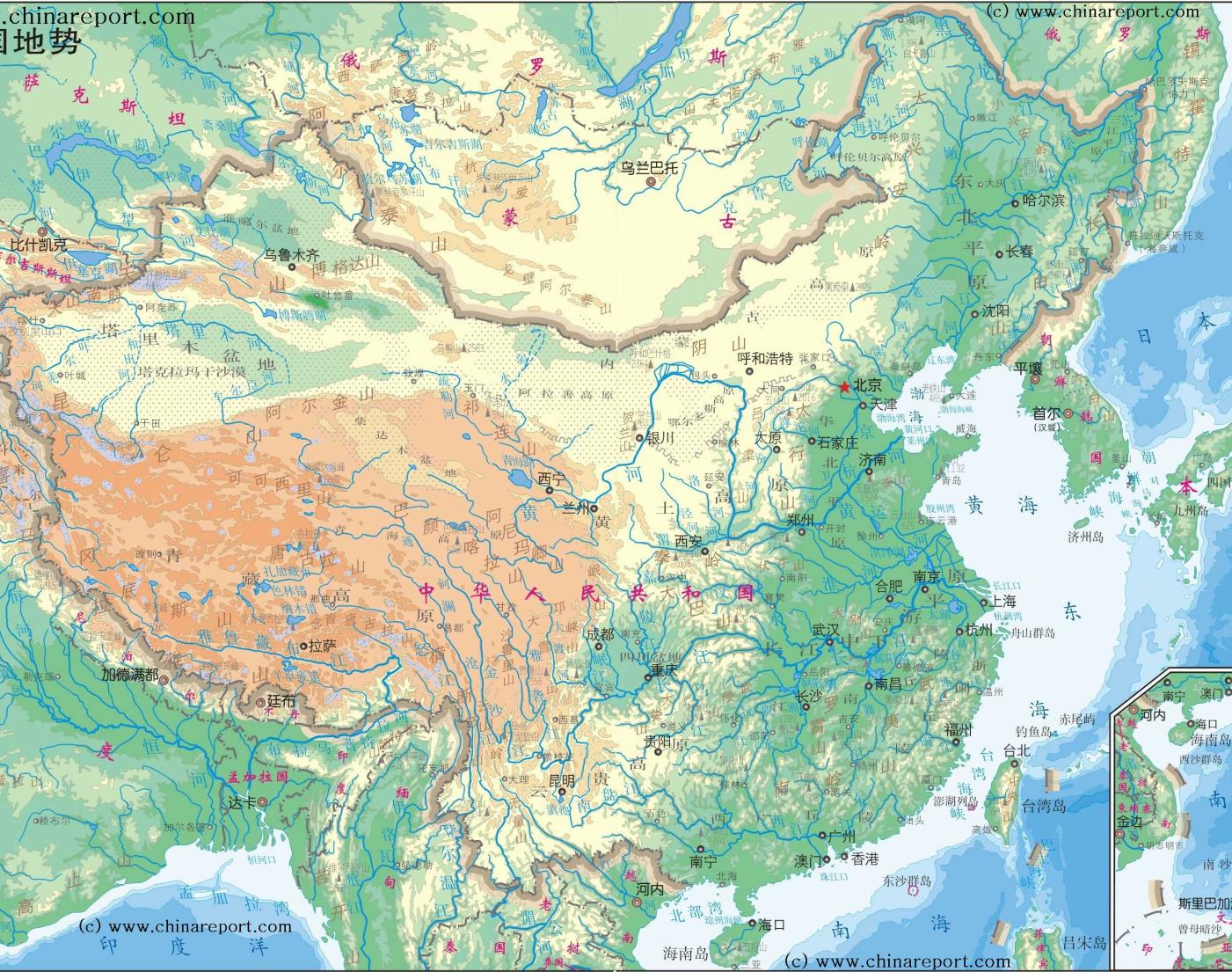
This map shows ground levels fairly well. Lake Baikal at the top has both yellow and green coloured land beside it so must be almost exactly on the line between the 2. So tunnels or canals could carry water across any of the yellow areas.
The distance from Baikal to the point on the Mongolian southern border where the highest ground is is 1,000 km. I'm not sure whether there is or isn't land above the Baikal level all the way or a few miles where an aqueduct would be required. From there the distance to the Tarim basin (the oblong at the west bordered by the Himalayas and a row of mountains on the western end) is about 700 km.
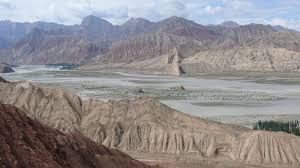
The Tarim basin is one of the driest areas in the world. Rain doesn't get in (or out) from the central Asia region because of those mountains. The river Tarim (the longest) and others are some of the few rivers in the world that never wander down to the sea. Instead they peter out in the Lop Nor salt marshes (sufficiently unattractive the Chinese once used them for their nuclear tests). This is what it looks like now:

However, as the map shows, much of this land is at the green level, below the level of Baikal. A couple of year's flow from there (ie 1300 cubic km) would make a big difference. The major green zone there looks like about 50,000 square km but I don't think any of it would end up more that a few tens of meters deep. 650 cubic km would fill that to an average of 10m in 9 months but probably at least twice that as dry ground soaks up water. Because of the mountains that stop moisture getting in, we could expect moisture to stay in the area and get a decent rainfall. After that the water can be drained into the green zone to its north and then, by tunnel through the mountains to the green zone above and then in turn back across the Chinese border to Russia and rejoining the line from Baikal to Kazakhstan which I previously wrote of.
The absolutely enormous amount of water available means that while it might take 4 years longer for the water to reach the Caspian there is plenty to go round. This would not have been the case if the water had drained eastward towards the sea, but it doesn't.
That means a total of about 1,800 km of tunnels. At Norwegian costs of £4m per km it would be about £8bn but I suspect the tunnels would have to be wider, or even duplicated and the total would be several times that. Still pretty minor for such a great increase in the fertility of the worlds most populous and now richest state. Less, possibly much less, than running a railway to Bradford.
Of course the real expense is buying the water from Russia. Russia and Mongolia would reasonably want quite well paid. China might feel they are now strong enough to grab it. On previous cases I have said that the way to deal with political issues on these Big Engineering articles is simply to ignore them and treat the question as purely what can be done in engineering terms. I'm going to do that again but lets be clear - it is a big issue.
UPDATE
I have this comment which is of importance:
Hi Neil - an impressive idea, though I find the numbers a bit daunting. 650 cubic kilometres per annum requires an AVERAGE flow of 20,610 cubic metres per second. Our river Tay is the largest in the UK by annual discharge and it's peak flow is about 1,965 cubic metres per second. A typical 8 metre internal diameter tunnel has a cross section area of about 50 square metres , so even if the water was flowing at a whopping 10 metres per second (36 km per hour)you would require 42 such tunnels.Remember also you wish to use gravity as much as possible and to cover the distances you are talking about the cross sectional area of the aquaduct has to increase greatly as the flow rate needs must be slow for such a distance from a limited drop in elevation. Without pumping of some sort you are not talking of a few tunnels, but a broad canal possibly 30 times the combined width and depth of the Tay at Perth
----------------------------------------------------
That is an issue.
We could double the diameter to quadruple cross section area but the wider it gets the weaker it is so we can go up to the size of the Norwegian ship tunnel but anything else is going to need expensive reinforcing. I think the flow would be considerably lower than 10 meters because the gradient over the entire distance is low.
Even assuming major economies of scale that sounds like app £80 bn rather than £8 bn. Still that is inexpensive for more than a million square km. It would also mean that it would take more than a year or 2 to put it in place.
It might well turn out, bearing in mind that the depth here is not to great, that it would be cheaper to cut down from the surface and create an artificial canal. The aqueduct might also be replaced by an above ground canal held there by dams. All a matter of the most cost effective way.
That is a lot of water. More than 7 times the Nile's output.
Something I have only fairly recently realised is that western China's water basin is largely unconnected to China's coastal region. Which means water in that area would, if there was enough of it, would ultimately flow west too.
This map shows ground levels fairly well. Lake Baikal at the top has both yellow and green coloured land beside it so must be almost exactly on the line between the 2. So tunnels or canals could carry water across any of the yellow areas.
The distance from Baikal to the point on the Mongolian southern border where the highest ground is is 1,000 km. I'm not sure whether there is or isn't land above the Baikal level all the way or a few miles where an aqueduct would be required. From there the distance to the Tarim basin (the oblong at the west bordered by the Himalayas and a row of mountains on the western end) is about 700 km.
The Tarim basin is one of the driest areas in the world. Rain doesn't get in (or out) from the central Asia region because of those mountains. The river Tarim (the longest) and others are some of the few rivers in the world that never wander down to the sea. Instead they peter out in the Lop Nor salt marshes (sufficiently unattractive the Chinese once used them for their nuclear tests). This is what it looks like now:
However, as the map shows, much of this land is at the green level, below the level of Baikal. A couple of year's flow from there (ie 1300 cubic km) would make a big difference. The major green zone there looks like about 50,000 square km but I don't think any of it would end up more that a few tens of meters deep. 650 cubic km would fill that to an average of 10m in 9 months but probably at least twice that as dry ground soaks up water. Because of the mountains that stop moisture getting in, we could expect moisture to stay in the area and get a decent rainfall. After that the water can be drained into the green zone to its north and then, by tunnel through the mountains to the green zone above and then in turn back across the Chinese border to Russia and rejoining the line from Baikal to Kazakhstan which I previously wrote of.
The absolutely enormous amount of water available means that while it might take 4 years longer for the water to reach the Caspian there is plenty to go round. This would not have been the case if the water had drained eastward towards the sea, but it doesn't.
That means a total of about 1,800 km of tunnels. At Norwegian costs of £4m per km it would be about £8bn but I suspect the tunnels would have to be wider, or even duplicated and the total would be several times that. Still pretty minor for such a great increase in the fertility of the worlds most populous and now richest state. Less, possibly much less, than running a railway to Bradford.
Of course the real expense is buying the water from Russia. Russia and Mongolia would reasonably want quite well paid. China might feel they are now strong enough to grab it. On previous cases I have said that the way to deal with political issues on these Big Engineering articles is simply to ignore them and treat the question as purely what can be done in engineering terms. I'm going to do that again but lets be clear - it is a big issue.
UPDATE
I have this comment which is of importance:
Hi Neil - an impressive idea, though I find the numbers a bit daunting. 650 cubic kilometres per annum requires an AVERAGE flow of 20,610 cubic metres per second. Our river Tay is the largest in the UK by annual discharge and it's peak flow is about 1,965 cubic metres per second. A typical 8 metre internal diameter tunnel has a cross section area of about 50 square metres , so even if the water was flowing at a whopping 10 metres per second (36 km per hour)you would require 42 such tunnels.Remember also you wish to use gravity as much as possible and to cover the distances you are talking about the cross sectional area of the aquaduct has to increase greatly as the flow rate needs must be slow for such a distance from a limited drop in elevation. Without pumping of some sort you are not talking of a few tunnels, but a broad canal possibly 30 times the combined width and depth of the Tay at Perth
----------------------------------------------------
That is an issue.
We could double the diameter to quadruple cross section area but the wider it gets the weaker it is so we can go up to the size of the Norwegian ship tunnel but anything else is going to need expensive reinforcing. I think the flow would be considerably lower than 10 meters because the gradient over the entire distance is low.
Even assuming major economies of scale that sounds like app £80 bn rather than £8 bn. Still that is inexpensive for more than a million square km. It would also mean that it would take more than a year or 2 to put it in place.
It might well turn out, bearing in mind that the depth here is not to great, that it would be cheaper to cut down from the surface and create an artificial canal. The aqueduct might also be replaced by an above ground canal held there by dams. All a matter of the most cost effective way.
Labels: Big Engineering, International politics, Science/technology
Thursday, May 22, 2014
Big Engineering 66 Container Ships Without Crews
This article was put up on Next Big Future a few days ago:
Rolls-Royce (RR/) Holdings Plc is designing unmanned cargo ships.
Rolls-Royce’s Blue Ocean development team has set up a virtual-reality prototype at its office in Alesund, Norway, that simulates 360-degree views from a vessel’s bridge. Eventually, the London-based manufacturer of engines and turbines says, captains on dry land will use similar control centers to command hundreds of crewless ships.
Drone ships would be safer, cheaper and less polluting for the $375 billion shipping industry that carries 90 percent of world trade, Rolls-Royce says.
The company’s schematics show vessels loaded with containers from front to back, without the bridge structure where the crew lives. By replacing the bridge -- along with the other systems that support the crew, such as electricity, air conditioning, water and sewage -- with more cargo, ships can cut costs and boost revenue, Levander said. The ships would be 5 percent lighter before loading cargo and would burn 12 percent to 15 percent less fuel, he said.
Crew costs of $3,299 a day account for about 44 percent of total operating expenses for a large container ship, according to Moore Stephens LLP, an industry accountant and consultant.
Unmanned ships are currently illegal under international conventions that set minimum crew requirements, said Simon Bennett, a spokesman for the London-based International Chamber of Shipping, an industry association representing more than 80 percent of the global fleet.
Nextbigfuture proposed solutions to problems of Drone Container ships
* have minimum crews operate as parking valet crews to hop onto the ship just outside the territorial waters of a port that requires minimum crews.
* Use some cost savings to fund rapid security deployment teams [mercenaries] to retake any pirated ship or hacked drone ship. A pirated ship can only get about 500 miles in one day
Need to have a hackproof way to stop the ship - a safety stall switch
There needs to be a hackproof way to stop the ship safely.
This would prevent the ship from being used to blackmail the ship owner or others by ramming it into something that would cause a lot of life loss and expensive damage.
Stealing containers not that big a deal
Attempts to board the ship and remove containers is not that meaningful. It would be difficult to unload the ship quickly.
It would be easy and affordable to put tracking beacons on each of the different containers. This would also be useful for rapid wireless inventory.
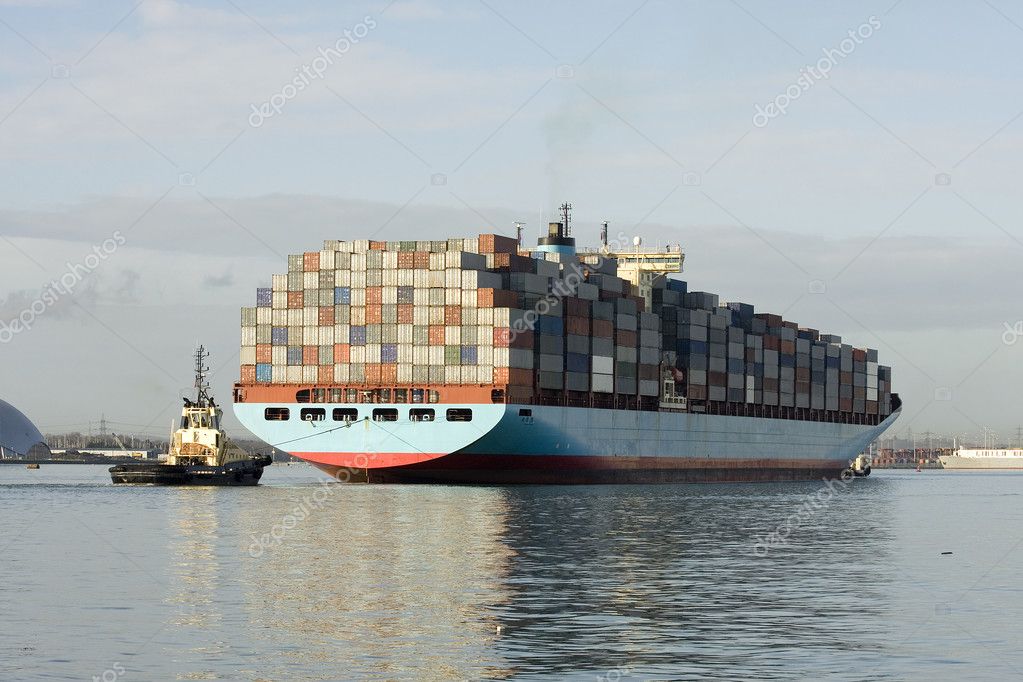
The proposal is technically not entirely automated sailing since the land base will direct it and "hundreds" of others. But it is close as dammit and I'm sure the remaining under 1% could be automated too if required.
The cost savings listed are pretty substantial. Ships 5% lighter, fuel savings app 12.5%, other operating expenses down 44%. Comes to 50% of the industry's $375 bn costs.
I can see no reason why cranes loading and unloading could not be more easily computerised.
I have previously, several times, written of automated trains, which could deliver single container carriages anywhere with rail connection. We also have automated driving systems which may, as soon as politics allows, become commonplace.
The net effect of this is that, pretty much as soon as it is allowed, it will be possible to dial up the uplifting of a container in any developed country and its fairly speedy delivery anywhere in the world, untouched by human hands and at a much reduced, almost token, cost. Long distance sea freight is already easily the cheapest transport we have so halving it would be astonishing. But easy.
On piracy - note that ransoming the crews is a large part, possibly the main part of their profits. That will go and I don't see anybody being able to unload hundreds of containers in a Somali fishing village.
As the underlined bit shows the barrier is political agreements on crew levels. Can't criticise that in the past - it looked like and probably was a decent bit of regulatory welfare. However, as the technology always moves far faster then politics we are left with it being an absolute ban on progress. Perhaps the rules will be very quickly removed, or perhaps we will see all the bureaucracies fighting an unrestrained battle to hold onto their jobs and power - and since it is international agreements it is likely to be easy to pass the blame for footdragging around till "nobody is to blame". In which case libertarians should be prepared to take up cudgels too.
Rolls-Royce (RR/) Holdings Plc is designing unmanned cargo ships.
Rolls-Royce’s Blue Ocean development team has set up a virtual-reality prototype at its office in Alesund, Norway, that simulates 360-degree views from a vessel’s bridge. Eventually, the London-based manufacturer of engines and turbines says, captains on dry land will use similar control centers to command hundreds of crewless ships.
Drone ships would be safer, cheaper and less polluting for the $375 billion shipping industry that carries 90 percent of world trade, Rolls-Royce says.
The company’s schematics show vessels loaded with containers from front to back, without the bridge structure where the crew lives. By replacing the bridge -- along with the other systems that support the crew, such as electricity, air conditioning, water and sewage -- with more cargo, ships can cut costs and boost revenue, Levander said. The ships would be 5 percent lighter before loading cargo and would burn 12 percent to 15 percent less fuel, he said.
Crew costs of $3,299 a day account for about 44 percent of total operating expenses for a large container ship, according to Moore Stephens LLP, an industry accountant and consultant.
Unmanned ships are currently illegal under international conventions that set minimum crew requirements, said Simon Bennett, a spokesman for the London-based International Chamber of Shipping, an industry association representing more than 80 percent of the global fleet.
Nextbigfuture proposed solutions to problems of Drone Container ships
* have minimum crews operate as parking valet crews to hop onto the ship just outside the territorial waters of a port that requires minimum crews.
* Use some cost savings to fund rapid security deployment teams [mercenaries] to retake any pirated ship or hacked drone ship. A pirated ship can only get about 500 miles in one day
Need to have a hackproof way to stop the ship - a safety stall switch
There needs to be a hackproof way to stop the ship safely.
This would prevent the ship from being used to blackmail the ship owner or others by ramming it into something that would cause a lot of life loss and expensive damage.
Stealing containers not that big a deal
Attempts to board the ship and remove containers is not that meaningful. It would be difficult to unload the ship quickly.
It would be easy and affordable to put tracking beacons on each of the different containers. This would also be useful for rapid wireless inventory.
The proposal is technically not entirely automated sailing since the land base will direct it and "hundreds" of others. But it is close as dammit and I'm sure the remaining under 1% could be automated too if required.
The cost savings listed are pretty substantial. Ships 5% lighter, fuel savings app 12.5%, other operating expenses down 44%. Comes to 50% of the industry's $375 bn costs.
I can see no reason why cranes loading and unloading could not be more easily computerised.
I have previously, several times, written of automated trains, which could deliver single container carriages anywhere with rail connection. We also have automated driving systems which may, as soon as politics allows, become commonplace.
The net effect of this is that, pretty much as soon as it is allowed, it will be possible to dial up the uplifting of a container in any developed country and its fairly speedy delivery anywhere in the world, untouched by human hands and at a much reduced, almost token, cost. Long distance sea freight is already easily the cheapest transport we have so halving it would be astonishing. But easy.
On piracy - note that ransoming the crews is a large part, possibly the main part of their profits. That will go and I don't see anybody being able to unload hundreds of containers in a Somali fishing village.
As the underlined bit shows the barrier is political agreements on crew levels. Can't criticise that in the past - it looked like and probably was a decent bit of regulatory welfare. However, as the technology always moves far faster then politics we are left with it being an absolute ban on progress. Perhaps the rules will be very quickly removed, or perhaps we will see all the bureaucracies fighting an unrestrained battle to hold onto their jobs and power - and since it is international agreements it is likely to be easy to pass the blame for footdragging around till "nobody is to blame". In which case libertarians should be prepared to take up cudgels too.
Labels: Big Engineering, International politics, Science/technology
Wednesday, May 07, 2014
Big Engineering 65 Educating the World
OK, following on from yesterday's Big Engineering. Here is a secondary effect it implies.
It gives us not only mobile phone but also internet coverage everywhere in in the world (well possibly not at the north and south poles because they aren't visible from the equator).
It does so for relatively simple receivers because with the signal capability up to a million times stronger than current satellite broadcasters picking it up is easy. That, plus mass production, means 10s or even hundreds of millions of receivers could be produced at relatively small cost.
As regards mass production this is a relevant recent comment by Jerry Pournelle.
After 1940 America mobilized, Detroit began to turn out tanks and trucks and artillery, airplane factories sprang up, Kaiser finished Hoover Dam and put in shipyards where there had been nothing but mud flats, and GM’s Knudsen showed everyone that if you could produce one of something, you could produce a million of them, and do it with workers who hadn’t been trained – this was the time of Rosie the Riveter. Hitler never really believed that Sherman tanks were being built by women, and where did we get all those bombers?
Up to then the limit to mass production was the skilled work needed to make machine tools; in the period leading up to WW II American industry learned how to make machine tools – tools to make the machinery for mass production machines – and to get past the limit that had previously been imposed by the requirement that workers had to be highly skilled to make tools to the precision – one thousandth of an inch – needed to build precision machine tools. That opened the way to true mass production. Incidentally, we are still learning that lesson, but it isn’t fully learned yet: that is, it takes highly skilled workers to build some of the production facilities required in modern large chip production. That limit is being overcome, and Moore’s Law continues to be a good approximation of reality, with the inevitable consequence that fewer and fewer workers are required to produce more and more goods.
Then all that is needed is a teaching programme. Multiple choice questions may not be the only way to run tests but they work and you would only need 1 programme to teach millions of people that way. Might not be the best education system in the world but it would certainly be far from the worst.
 Imagine a world where 100 million kids across Africa (& India, China, Indonesia and South America) have internet readers, provided free at a cost of £1 billion instead of the 10s of billions in "aid" their masters get to put in Swiss banks. Learning everything from reading to nuclear physics with multiple choice testing.
Julian Simon always said that population growth was good because human beings are the only real wealth producing resource. We can find out.
It gives us not only mobile phone but also internet coverage everywhere in in the world (well possibly not at the north and south poles because they aren't visible from the equator).
It does so for relatively simple receivers because with the signal capability up to a million times stronger than current satellite broadcasters picking it up is easy. That, plus mass production, means 10s or even hundreds of millions of receivers could be produced at relatively small cost.
As regards mass production this is a relevant recent comment by Jerry Pournelle.
After 1940 America mobilized, Detroit began to turn out tanks and trucks and artillery, airplane factories sprang up, Kaiser finished Hoover Dam and put in shipyards where there had been nothing but mud flats, and GM’s Knudsen showed everyone that if you could produce one of something, you could produce a million of them, and do it with workers who hadn’t been trained – this was the time of Rosie the Riveter. Hitler never really believed that Sherman tanks were being built by women, and where did we get all those bombers?
Up to then the limit to mass production was the skilled work needed to make machine tools; in the period leading up to WW II American industry learned how to make machine tools – tools to make the machinery for mass production machines – and to get past the limit that had previously been imposed by the requirement that workers had to be highly skilled to make tools to the precision – one thousandth of an inch – needed to build precision machine tools. That opened the way to true mass production. Incidentally, we are still learning that lesson, but it isn’t fully learned yet: that is, it takes highly skilled workers to build some of the production facilities required in modern large chip production. That limit is being overcome, and Moore’s Law continues to be a good approximation of reality, with the inevitable consequence that fewer and fewer workers are required to produce more and more goods.
Then all that is needed is a teaching programme. Multiple choice questions may not be the only way to run tests but they work and you would only need 1 programme to teach millions of people that way. Might not be the best education system in the world but it would certainly be far from the worst.
South Korea but it can be anywhere
Julian Simon always said that population growth was good because human beings are the only real wealth producing resource. We can find out.
Labels: Big Engineering, Science/technology, space
Tuesday, May 06, 2014
Big Engineering 64 Three Geosynchronous Satellites
This (and tomorrows following from it) come from something proposed by Joseph Friedlander some time ago.
He pointed out that the amount of information that can be transferred by transmission from orbit is a multiple of the power of the transmitter and of the receiver, OK and the distance.
Our current satellite broadcasters rely on satellites whose solar collectors give them around 2 kw - ie about 15 square feet.
There is no real limit to the size of collectors or anything else we can build in orbit because they don't have to stand up against gravity, wind, rain etc. Mirror that collect and focus sunlight could easily be a couple of miles across (call it 90 million square ft).
That means no limit to what information can be transported. The limit is more likely to be all the information humanity can produce.
There is a speed of light limit - it would take about 1/4 of a second for a signal to go to Geo and back. A matter of some importance for scientific measurement and selling shares but not for normal people.
Note also that if you have big expensive transmitters you can have very cheap inexpensive receivers down here.
All that is needed to cover the planet is 3 bases in geosynchronous orbit, 120 degrees apart.
I would also suggest that a large base in orbit would be able, using laser transmission, to provide individualised programming/telephones to small areas, dividing the planet on a grid. That,in turn, further increases the amount of information that can be sent to each individual spot.
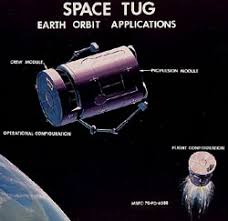
Once we build a shuttle that can get to low Earth orbit at commercial rates, something we can do at any time, we could have a, possibly unmanned, tug, powered with an electric ion rocket, to move material from low orbit to Geo. At which point building the 3 bases is simply a matter of keeping going.
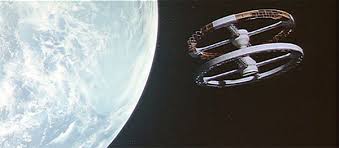 Yes one we could have had 13 years ago
In addition to communications this gives us somewhere that people can live and replace or repair other satellites. Together with a tug we have the infrastructure to connect to anywhere in near orbit.
It would not be suitable for zero-G manufacturing, because a base as large as is needed here starts to produce the sort of microgravity that is not absolutely perfect for manufacturing, but it does work as a transfer point to such manufacturing bases. An ion rocket is slow but steady. It can be powered from nuclear electricity or even solar. Either way it has virtually zero fuel costs so that, once it is in place, actual running costs are low.
I have previously written about space elevators and while we will get them this is can be put in place much more quickly - indeed it follows directly from having a working shuttle or indeed the Russian Soyuz production line, which has been in place for decades. Essentially we could do it tomorrow,
He pointed out that the amount of information that can be transferred by transmission from orbit is a multiple of the power of the transmitter and of the receiver, OK and the distance.
Our current satellite broadcasters rely on satellites whose solar collectors give them around 2 kw - ie about 15 square feet.
There is no real limit to the size of collectors or anything else we can build in orbit because they don't have to stand up against gravity, wind, rain etc. Mirror that collect and focus sunlight could easily be a couple of miles across (call it 90 million square ft).
That means no limit to what information can be transported. The limit is more likely to be all the information humanity can produce.
There is a speed of light limit - it would take about 1/4 of a second for a signal to go to Geo and back. A matter of some importance for scientific measurement and selling shares but not for normal people.
Note also that if you have big expensive transmitters you can have very cheap inexpensive receivers down here.
All that is needed to cover the planet is 3 bases in geosynchronous orbit, 120 degrees apart.
I would also suggest that a large base in orbit would be able, using laser transmission, to provide individualised programming/telephones to small areas, dividing the planet on a grid. That,in turn, further increases the amount of information that can be sent to each individual spot.
Once we build a shuttle that can get to low Earth orbit at commercial rates, something we can do at any time, we could have a, possibly unmanned, tug, powered with an electric ion rocket, to move material from low orbit to Geo. At which point building the 3 bases is simply a matter of keeping going.
Yes one we could have had 13 years agoIn addition to communications this gives us somewhere that people can live and replace or repair other satellites. Together with a tug we have the infrastructure to connect to anywhere in near orbit.
It would not be suitable for zero-G manufacturing, because a base as large as is needed here starts to produce the sort of microgravity that is not absolutely perfect for manufacturing, but it does work as a transfer point to such manufacturing bases. An ion rocket is slow but steady. It can be powered from nuclear electricity or even solar. Either way it has virtually zero fuel costs so that, once it is in place, actual running costs are low.
I have previously written about space elevators and while we will get them this is can be put in place much more quickly - indeed it follows directly from having a working shuttle or indeed the Russian Soyuz production line, which has been in place for decades. Essentially we could do it tomorrow,
Labels: Big Engineering, Science/technology, space
Thursday, May 01, 2014
Big Engineering 63 Using Nuclear Electricity
I have previously had Big Engineering articles on nuclear power. In particular on a factory mass producing small/medium reactors.
I have also put up the proof, undisputed by any factual argument from anybody, that such mass produced reactors could cut electricity prices to around 2% of what they are (at least at the production end).
The correlation between energy use and gdp growth is 1:1 and undisputed. If energy use went up close to 50 fold so would national wealth. (Though it may well be that the existing energy companies think it would go up less so they make more if they go along with windmill Luddism - another example of the fact that big business is not inherently the friend of market freedom, nor the poor losers from such freedom.)
But, as always, there are political problems. Would politicians allow such a productive factory to be built - well only UKIP ones. Would politicians both here and abroad allow such reactors to be sold and installed worldwide, otherwise the factory might not be able to sell enough? That is a more difficult one, though small, mobile reactors that can be installed quickly (& sold and removed) are vastly less vulnerable to regulatory parasitism than large static ones that take a long time to build.
However, when you are talking about building a factory that will cost £10s of billions to build and need to sell many 10s of them annually just to break even the fact that it would be able to turn out hundreds, still makes it an enormous gamble, albeit one with a theoretical return in the hundreds of billions.
What we need is an almost unlimited market for power.
Of course there is an almost unlimited economic demand for power but for 40 years the politicians have suppressed it. We need industries that themselves have almost unlimited demand for their products and need energy but no other inputs not readily available.
So here are 2 1/2.
Fertiliser - ammonium nitrate, the nitrate of ammonia with the chemical formula NH4NO3, is a white crystalline solid at room temperature and standard pressure. It is commonly used in agriculture as a high-nitrogen fertilizer
Nitrogen is available from air, hydrogrn and oxygen from water, all in literally unlimited quantities.
This is normally done through the Haber process which is more complex but energy efficient but the Birkeland Eyde process is also used which uses just water and air. In the end the nature of the universe means that chemical reactions always use a set amount of power. With cheap enough power an unlimited market can be supplied.
Magnesium
In the United States, magnesium is obtained principally by electrolysis of fused magnesium chloride from brines, wells, and sea water. At the cathode, the Mg ion is reduced by two electrons to magnesium metal.
Most of it is made in China where electricity is cheaper ;-)
So the only input apart from electricity is seawater.
"Magnesium is the third-most-commonly-used structural metal, following iron and aluminium. It has been called the lightest useful metal". It is far more expensive than those other 2 and would be used far more if it was cheaper. So once again demand is virtually unlimited and since the process is being done now it can clearly be done at far lower prices if the wholesale price is 50 fold lower (assuming production is close to the generator so grid transport cost is close to zero.
Hydrogen
H2O can be divided into oxygen and hydrogen and the latter burned in air to regain the power, just as we do with oil and natural gas. I am counting this as only the "1/2" because we would need some technical changes for gas pipes, cars and planes to work on hydrogen but it is certainly feasible. Methane could be manufactured by using carbon (CO2, wood) which is instantly usable but that is introducing an input, albeit a common one.
========================================
So if, for example, permission was given for a reactor factory (I have suggested North Jura which is almost uninhabited and could, with tunnels, be an hours drive from Glasgow, but any such coastal place anywhere in the world where there is a reservoir of educated people can and will someday do it, even a floating artificial island).
In which case that can also be the site of manufacturing of unlimited quantities of valuable materials.
In fat the situation is better than it seems. One advantage/disadvantage (ok feature) of nuclear is that it produces 100% of its power all the time. Mostly we don't want that because we use more during winter than summer (except in countries that use air conditioning) and more when we are awake than asleep. However this process can use the unlimited off peak energy we don't. Such power is not available at such virtually zero cost from normal coal/gas generators. Peak UK power use is about 70GW but we rarely use more than 40GW. 70 GW would produce, over 1 year 613 terrawatts of power - about 5 times what we normally use but costings are based on what we normally use so this previously unusable amount is close to free.
I do not know how much fertiliser, magnesium or hydrogen we could make or its value but taking that power at 2p per kwh, well below current costs, that 80% pare would be worth [80% X 613,000,000,000 X £0.02] £9.8 bn a year. With the AP1000 reactor available for £800 m individual and much less if you get 70 of them that would, even at this remarkably low price, pay off the investment, even without selling any actual reactors and without even charging for the 20% of the power put into the grid, in 3 years 7 months (though granted this is from when the reactors go online and we are assured by our politicians that it takes 10 years to build a reactor in Europe or 3 in China ;- I don't believe even the Chinese figure).
Somebody is going to do it.
I have also put up the proof, undisputed by any factual argument from anybody, that such mass produced reactors could cut electricity prices to around 2% of what they are (at least at the production end).
The correlation between energy use and gdp growth is 1:1 and undisputed. If energy use went up close to 50 fold so would national wealth. (Though it may well be that the existing energy companies think it would go up less so they make more if they go along with windmill Luddism - another example of the fact that big business is not inherently the friend of market freedom, nor the poor losers from such freedom.)
But, as always, there are political problems. Would politicians allow such a productive factory to be built - well only UKIP ones. Would politicians both here and abroad allow such reactors to be sold and installed worldwide, otherwise the factory might not be able to sell enough? That is a more difficult one, though small, mobile reactors that can be installed quickly (& sold and removed) are vastly less vulnerable to regulatory parasitism than large static ones that take a long time to build.
However, when you are talking about building a factory that will cost £10s of billions to build and need to sell many 10s of them annually just to break even the fact that it would be able to turn out hundreds, still makes it an enormous gamble, albeit one with a theoretical return in the hundreds of billions.
What we need is an almost unlimited market for power.
Of course there is an almost unlimited economic demand for power but for 40 years the politicians have suppressed it. We need industries that themselves have almost unlimited demand for their products and need energy but no other inputs not readily available.
So here are 2 1/2.
Fertiliser - ammonium nitrate, the nitrate of ammonia with the chemical formula NH4NO3, is a white crystalline solid at room temperature and standard pressure. It is commonly used in agriculture as a high-nitrogen fertilizer
Nitrogen is available from air, hydrogrn and oxygen from water, all in literally unlimited quantities.
This is normally done through the Haber process which is more complex but energy efficient but the Birkeland Eyde process is also used which uses just water and air. In the end the nature of the universe means that chemical reactions always use a set amount of power. With cheap enough power an unlimited market can be supplied.
Magnesium
In the United States, magnesium is obtained principally by electrolysis of fused magnesium chloride from brines, wells, and sea water. At the cathode, the Mg ion is reduced by two electrons to magnesium metal.
Most of it is made in China where electricity is cheaper ;-)
So the only input apart from electricity is seawater.
"Magnesium is the third-most-commonly-used structural metal, following iron and aluminium. It has been called the lightest useful metal". It is far more expensive than those other 2 and would be used far more if it was cheaper. So once again demand is virtually unlimited and since the process is being done now it can clearly be done at far lower prices if the wholesale price is 50 fold lower (assuming production is close to the generator so grid transport cost is close to zero.
Hydrogen
H2O can be divided into oxygen and hydrogen and the latter burned in air to regain the power, just as we do with oil and natural gas. I am counting this as only the "1/2" because we would need some technical changes for gas pipes, cars and planes to work on hydrogen but it is certainly feasible. Methane could be manufactured by using carbon (CO2, wood) which is instantly usable but that is introducing an input, albeit a common one.
========================================
So if, for example, permission was given for a reactor factory (I have suggested North Jura which is almost uninhabited and could, with tunnels, be an hours drive from Glasgow, but any such coastal place anywhere in the world where there is a reservoir of educated people can and will someday do it, even a floating artificial island).
In which case that can also be the site of manufacturing of unlimited quantities of valuable materials.
In fat the situation is better than it seems. One advantage/disadvantage (ok feature) of nuclear is that it produces 100% of its power all the time. Mostly we don't want that because we use more during winter than summer (except in countries that use air conditioning) and more when we are awake than asleep. However this process can use the unlimited off peak energy we don't. Such power is not available at such virtually zero cost from normal coal/gas generators. Peak UK power use is about 70GW but we rarely use more than 40GW. 70 GW would produce, over 1 year 613 terrawatts of power - about 5 times what we normally use but costings are based on what we normally use so this previously unusable amount is close to free.
I do not know how much fertiliser, magnesium or hydrogen we could make or its value but taking that power at 2p per kwh, well below current costs, that 80% pare would be worth [80% X 613,000,000,000 X £0.02] £9.8 bn a year. With the AP1000 reactor available for £800 m individual and much less if you get 70 of them that would, even at this remarkably low price, pay off the investment, even without selling any actual reactors and without even charging for the 20% of the power put into the grid, in 3 years 7 months (though granted this is from when the reactors go online and we are assured by our politicians that it takes 10 years to build a reactor in Europe or 3 in China ;- I don't believe even the Chinese figure).
Somebody is going to do it.
Labels: Big Engineering, nuclear, scottish progress
Monday, March 10, 2014
Big Engineering 62 A Lunar Space Elevator
This idea reported by Next Big Future is rather neat. A conventional space elevator from the Moon suffers from the fact that it doesn't rotate (well OK only rotates in time with the orbit round Earth) so there just isn't the centripetal force to keep it up. Pity because the lunar gravity is so much lower that there is no real difficulty now in constructing strong enough cable.
However if we place the station at the L point just above the centre point facing Earth and lock it in place with a weight (ie small asteroid) we have a stable system.

The proposers say this could be in place by 2019 and while I am sure they are technologically right (there seems to be nothing there not technologically possible today) it would require quite a lot of moving mass around and to have a market big enough to justify it would need a fair bit of space industrialisation. On current trends that means way beyond 2019 (on prsent trends, if we rely on NASA/ESA/etc it means never but lets not go there).
But if some country decided it was going to put 1% of what was put into owning Afghanistan (ie about $40 bn)(£25bn - 1/3rd of HS2, 10 Forth bridges) into this project it could be done even by that early date. It would establish the builder as, if not owner of the Moon, the nation able to exploit it FAR more easily than anybody else because only they could easily land and take off virtually unlimited amounts of material.
Couple of other gains:
1 - Lunar material is effectively unlimited in quantity. Moving it into orbit, where there is zero-G, means it can be processed (for example melted down using mirrors) gives enormous opportunities for manufacturing in zero G - both small, materials with a molecular structure that can only be formed in zero-G, to vast orbital O'Neill colonies miles long.
2 - The cable stretches beyond the stable point. Drop a spaceship off the end of that and it will fall towards the Earth. Earth being 250,000 miles away and 8,000 across is, so long as the ship produces a little lateral thrust, easy to miss. Indeed a ship launching from there will get a strong slingshot effect (building up speed by falling and then being pulled into a curve by gravity while passing Earth) which would give it enough extra speed to go (slowly) almost anywhere in the solar system.
Not bad for 1% of Afghanistan.
However if we place the station at the L point just above the centre point facing Earth and lock it in place with a weight (ie small asteroid) we have a stable system.

The proposers say this could be in place by 2019 and while I am sure they are technologically right (there seems to be nothing there not technologically possible today) it would require quite a lot of moving mass around and to have a market big enough to justify it would need a fair bit of space industrialisation. On current trends that means way beyond 2019 (on prsent trends, if we rely on NASA/ESA/etc it means never but lets not go there).
But if some country decided it was going to put 1% of what was put into owning Afghanistan (ie about $40 bn)(£25bn - 1/3rd of HS2, 10 Forth bridges) into this project it could be done even by that early date. It would establish the builder as, if not owner of the Moon, the nation able to exploit it FAR more easily than anybody else because only they could easily land and take off virtually unlimited amounts of material.
Couple of other gains:
1 - Lunar material is effectively unlimited in quantity. Moving it into orbit, where there is zero-G, means it can be processed (for example melted down using mirrors) gives enormous opportunities for manufacturing in zero G - both small, materials with a molecular structure that can only be formed in zero-G, to vast orbital O'Neill colonies miles long.
2 - The cable stretches beyond the stable point. Drop a spaceship off the end of that and it will fall towards the Earth. Earth being 250,000 miles away and 8,000 across is, so long as the ship produces a little lateral thrust, easy to miss. Indeed a ship launching from there will get a strong slingshot effect (building up speed by falling and then being pulled into a curve by gravity while passing Earth) which would give it enough extra speed to go (slowly) almost anywhere in the solar system.
Not bad for 1% of Afghanistan.
Labels: Big Engineering, Science/technology, space
Saturday, February 15, 2014
Unlimited Accessible Water in Space Means Unlimited Expansion for Humanity
Recently I did an article for ThinkScotland summarising the space current development field.
After I had completed it I found this which Brian kindly allowed me to add. On my site I highlighted it.
The reason a relatively small asteroid can hold more water than Earth is because all our water, being lighter than rock, is on the surface which, if you compare our planet to an apple would be no thicker than the skin, whereas with virtually no gravity field asteroid or cometary water can be all through it.
The reason I think it important is that some years ago I did a Big Engineering about mass production of O'Neill space colonies. In that I said that because building such settlements are endlessly scalable so long as there is lunar soil left, and automatable or run by remote handling from earth, we could build hundreds of millions of them, enough, as I said, to make a Ringworld.
"A recent paper in Nature says that there are enormous amounts of water in Ceres the 2nd largest asteroid in the belt beyond Mars perhaps more than in all Earth's oceans. If so, particularly since this is just 1 asteroid, we have enough water to supply a virtually unlimited human population in space, certainly larger than Earth's population."
But I was wrong. I assumed lack of water (back in 2008 we didn't know how much water there was on the Moon) would be a constraint, even if we brought it in from the Asteroids. This discovery, which since it is only 1 asteroid of thousands means the amount of water is only slightly short of incalculable. Being closer (much closer in terms of the energy needed to change orbits) than comets or the outer planets) it is easily available. "Easily" for a spacegoing civilisation that is - but we can have that anytime for a fraction of what we spent owning Afghanistan.
That means we could build billions, very many billions, of such settlements. Far more than 1 for every human now living. At the time I said that at 10% annual growth there could be a Ringworld by 2195AD. That means 1 dozen Ringworlds (put them each 3 million miles further out than the last and we still fit them within the orbit of Mars) by 2022. Actually the traffic congestion would probably make it longer but you take the point.
After I had completed it I found this which Brian kindly allowed me to add. On my site I highlighted it.
The reason a relatively small asteroid can hold more water than Earth is because all our water, being lighter than rock, is on the surface which, if you compare our planet to an apple would be no thicker than the skin, whereas with virtually no gravity field asteroid or cometary water can be all through it.
The reason I think it important is that some years ago I did a Big Engineering about mass production of O'Neill space colonies. In that I said that because building such settlements are endlessly scalable so long as there is lunar soil left, and automatable or run by remote handling from earth, we could build hundreds of millions of them, enough, as I said, to make a Ringworld.
"A recent paper in Nature says that there are enormous amounts of water in Ceres the 2nd largest asteroid in the belt beyond Mars perhaps more than in all Earth's oceans. If so, particularly since this is just 1 asteroid, we have enough water to supply a virtually unlimited human population in space, certainly larger than Earth's population."
But I was wrong. I assumed lack of water (back in 2008 we didn't know how much water there was on the Moon) would be a constraint, even if we brought it in from the Asteroids. This discovery, which since it is only 1 asteroid of thousands means the amount of water is only slightly short of incalculable. Being closer (much closer in terms of the energy needed to change orbits) than comets or the outer planets) it is easily available. "Easily" for a spacegoing civilisation that is - but we can have that anytime for a fraction of what we spent owning Afghanistan.
That means we could build billions, very many billions, of such settlements. Far more than 1 for every human now living. At the time I said that at 10% annual growth there could be a Ringworld by 2195AD. That means 1 dozen Ringworlds (put them each 3 million miles further out than the last and we still fit them within the orbit of Mars) by 2022. Actually the traffic congestion would probably make it longer but you take the point.
Labels: Big Engineering, Science/technology, space
Thursday, February 06, 2014
Big Engineering 60 Widening The Suez Canal
The Suez Canal has always been a choke point in world trade. The earliest link was under the Pharoahs who constructed a link from the mouth of the Nile
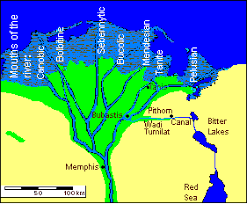 There is an existing record from the time of an Egyptian expedition that sailed into the Red Sea and much later returned through the Mediterranean, having circumnavigated Africa. This is added credibility because it describes the noon Sun as moving to the north of the sky as they passed the equator, something they couldn't have expected without experiencing it.
The Victorian canal did indeed cut travel times to India, making it the lynchpin of the Empire.
Since then the size of ships have grown and grown and grown again. Most of the world's oil is transported in tankers with a capacity of about 1 million tons. Container ships, while much smaller are still enormous. This means that many of them have to take the longer route round Africa.
The great advantage this canal has over the Panama version is that it is through flat land, relatively easy to dig and requiring no locks. As such it should be comparatively simple to expand.
I suggest simply increasing the number of dredgers so that, rather than keeping pace with silting they roll back the canal edges and bottoms. A permanent process but not a particularly complex one.
There have been promises over the years to begin a widening process time after time but not much in the way of action. This says it will start in 1982 and this that it will be completed in 2010.
Looking at the map it seems also possible that the canal could be substantially shortened by cutting through surrounding sea/march lands.
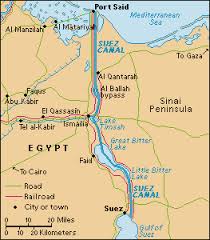
Also worth pointing out that Singapore built its economy on being on a massive world trade route, perfectly located to be a transhipment and warehousing dock. One end or other should be even more perfectly located. Possibly at the Red sea end where the seaways are not being used for other purposes.
It has just been announced that the Chinese are going to finance a new Americas canal through Nicaragua for $40 bn (£24bn) but that is technically orders of magnitude more complex than what I am proposing.
Perhaps now is the time for an international repurchase of the Suez Canal, with satisfactory extraterritoriality guarantees. The Egyptian government have not run it that well; have other things to concentrate on now; definitely need the money; and should appreciate the jobs such a transhipment port could bring.
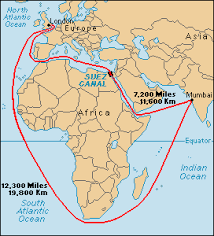
There is an existing record from the time of an Egyptian expedition that sailed into the Red Sea and much later returned through the Mediterranean, having circumnavigated Africa. This is added credibility because it describes the noon Sun as moving to the north of the sky as they passed the equator, something they couldn't have expected without experiencing it.The Victorian canal did indeed cut travel times to India, making it the lynchpin of the Empire.
Since then the size of ships have grown and grown and grown again. Most of the world's oil is transported in tankers with a capacity of about 1 million tons. Container ships, while much smaller are still enormous. This means that many of them have to take the longer route round Africa.
The great advantage this canal has over the Panama version is that it is through flat land, relatively easy to dig and requiring no locks. As such it should be comparatively simple to expand.
I suggest simply increasing the number of dredgers so that, rather than keeping pace with silting they roll back the canal edges and bottoms. A permanent process but not a particularly complex one.
There have been promises over the years to begin a widening process time after time but not much in the way of action. This says it will start in 1982 and this that it will be completed in 2010.
Looking at the map it seems also possible that the canal could be substantially shortened by cutting through surrounding sea/march lands.
Also worth pointing out that Singapore built its economy on being on a massive world trade route, perfectly located to be a transhipment and warehousing dock. One end or other should be even more perfectly located. Possibly at the Red sea end where the seaways are not being used for other purposes.
It has just been announced that the Chinese are going to finance a new Americas canal through Nicaragua for $40 bn (£24bn) but that is technically orders of magnitude more complex than what I am proposing.
Perhaps now is the time for an international repurchase of the Suez Canal, with satisfactory extraterritoriality guarantees. The Egyptian government have not run it that well; have other things to concentrate on now; definitely need the money; and should appreciate the jobs such a transhipment port could bring.
Labels: Big Engineering, International politics, Science/technology
Thursday, January 02, 2014
Big Engineering 58 - Mobile Cubesats
Again - not in any way my idea but cubesats are devices 10cm (4") on a side designed to be released by up to thousands, in orbit. The basic point is that, over the decades, technology has improved so much (Moore's law) that capacity which once required tons of satellite can now be fitted in such cubes. That and a similar principle to the way shipping containers revolutionised shipping - prepacking thousands of items together massively reduces handling costs.
There are also plans to produce even smaller cubes.
Cubes are only this useful for handling data - moving man sized material is going to keep needing something approaching man size - but data is an awful lot of what we do.
Then there was this on Next Big Future.
A tiny sunlight and water powered rocket is being designed which will be able to fly a cubesat from Earth orbit to Mars or Europa, which also means the asteroids and anywhere in interesting bits of the solar system, for $1 million.
That makes examination and therefore raising money for commercial development, very much a commercial rather than governmental project.
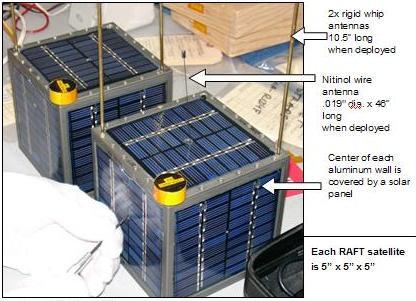

Incidentally Scots, indeed largely Glasgow firms are in the forefront of the cubesat industry, with up to 40% of the world's cubesats being made or partly worked on here. Theoretically that is potentially comparable to the time at the beginning of the 20thC when 90% of all the world's metal hulled shipping tonnage had been built on Britain and 90% on the Clyde. That was when such shipping was at the technological cutting edge.
Glasgow space links:
http://www.sdi.co.uk/sectors/aerospace-defence-marine/adm-sub-sectors/space/space-key-facts.aspx
and
http://www.sdi.co.uk/news/2012/06/adm-newsletter/scotland-space-industry.aspx
and
http://frontiersmagazine.org/scotlands-satellite-heading-for-lift-off/
and
There are also plans to produce even smaller cubes.
Cubes are only this useful for handling data - moving man sized material is going to keep needing something approaching man size - but data is an awful lot of what we do.
Then there was this on Next Big Future.
A tiny sunlight and water powered rocket is being designed which will be able to fly a cubesat from Earth orbit to Mars or Europa, which also means the asteroids and anywhere in interesting bits of the solar system, for $1 million.
That makes examination and therefore raising money for commercial development, very much a commercial rather than governmental project.
Incidentally Scots, indeed largely Glasgow firms are in the forefront of the cubesat industry, with up to 40% of the world's cubesats being made or partly worked on here. Theoretically that is potentially comparable to the time at the beginning of the 20thC when 90% of all the world's metal hulled shipping tonnage had been built on Britain and 90% on the Clyde. That was when such shipping was at the technological cutting edge.
Glasgow space links:
http://www.sdi.co.uk/sectors/aerospace-defence-marine/adm-sub-sectors/space/space-key-facts.aspx
and
http://www.sdi.co.uk/news/2012/06/adm-newsletter/scotland-space-industry.aspx
and
http://frontiersmagazine.org/scotlands-satellite-heading-for-lift-off/
and
Labels: Big Engineering, Glasgow, space
Monday, December 09, 2013
Big Engineering 57 Prospecting Asteroids
This comes from a comment I tossed off on Next Big Future. Brian Wang had written of the possibility of hundreds or indeed thousands of Cubesats being sent to soft land on asteroids, thereby establishing some claim to ownership.
"Interplanetary missions as secondary payloads
"Conference calls on the Scottish Parliament to offer a prize of 20 million pounds to the first Scottish group to soft land a vehicle on an asteroid beyond the orbit of Mars by 2050"
Except that I was obviously hopelessly pessimistic about timescale, cost and numbers. That'll show me.
--------------------
Since then we have had Cubesats (vehicles 10 cm on a side which can be added to conventional launches for thousands rather than millions of £s and because of Moore's Law and miniaturisation can carry far more processing capacity than enormous satellites of decades ago).
And at least in theory, can be flown around the solar system as easily as large ones since they can have the same power to weight ratio.
My idea is that when an asteroid has landed all it needs to do is to send out sonic waves through the rock. That and a lot of patience. Recording the sonar at various frequencies would, over several years, allow computer modelling of the structure of the asteroid in great detail. Not just size but how the asteroid is built up and of what materials, where.
Whatever the legal benefits of having put your flag on an asteroid (and they are by no means certain, space law on individual property being almost non-existent) the commercial advantages of knowing in advance what asteroids contained valuables, what they were, how much there was going to be and where exactly on the asteroid they were located would be beyond value.
Nobody without such information could hope to compete by conventional prospecting (ie going there and digging).
Moreover this information would allow the owner to raise investment capital.
In the long term it would affect futures prices of all these materials. Just knowing that there is 1,000 tons of gold and platinum which could be brought to Earth in 5-10 years would change the market in those materials and in the industries which use half of the gold mined and almost all of the platinum. We would have new industries springing up to use these even before they had reached Earth, perhaps before they were mined.
I think this is very viable even without any state funding. However it never does any harm, so long as the state doesn't start micromanaging anything beyond setting up prize conditions.
On the other hand extra money never does any harm, except that after it works you will have statists saying they always supported the idea and were integral to it working (which, in certain circumstances, could be a significant disadvantage).
I suggest that we go back to the total of £20 million but divide it into a number of segments - 1st cubesat to move beyond the Moon under its own power; 1st to Mars; 1st demonstration of sonar scanning to necessary level etc. The actual landing would probably only need a token prize because the project, once working, is so lucrative.
"Interplanetary missions as secondary payloads
Many sizes of small satellites can be included in unused launch space" (with pictures and links) http://nextbigfuture.com/2013/11/interplanetary-missions-as-secondary.html#comment-1145167585
"Conference calls on the Scottish Parliament to offer a prize of 20 million pounds to the first Scottish group to soft land a vehicle on an asteroid beyond the orbit of Mars by 2050"
Except that I was obviously hopelessly pessimistic about timescale, cost and numbers. That'll show me.
--------------------
Since then we have had Cubesats (vehicles 10 cm on a side which can be added to conventional launches for thousands rather than millions of £s and because of Moore's Law and miniaturisation can carry far more processing capacity than enormous satellites of decades ago).
And at least in theory, can be flown around the solar system as easily as large ones since they can have the same power to weight ratio.
My idea is that when an asteroid has landed all it needs to do is to send out sonic waves through the rock. That and a lot of patience. Recording the sonar at various frequencies would, over several years, allow computer modelling of the structure of the asteroid in great detail. Not just size but how the asteroid is built up and of what materials, where.
Whatever the legal benefits of having put your flag on an asteroid (and they are by no means certain, space law on individual property being almost non-existent) the commercial advantages of knowing in advance what asteroids contained valuables, what they were, how much there was going to be and where exactly on the asteroid they were located would be beyond value.
Nobody without such information could hope to compete by conventional prospecting (ie going there and digging).
Moreover this information would allow the owner to raise investment capital.
In the long term it would affect futures prices of all these materials. Just knowing that there is 1,000 tons of gold and platinum which could be brought to Earth in 5-10 years would change the market in those materials and in the industries which use half of the gold mined and almost all of the platinum. We would have new industries springing up to use these even before they had reached Earth, perhaps before they were mined.
I think this is very viable even without any state funding. However it never does any harm, so long as the state doesn't start micromanaging anything beyond setting up prize conditions.
On the other hand extra money never does any harm, except that after it works you will have statists saying they always supported the idea and were integral to it working (which, in certain circumstances, could be a significant disadvantage).
I suggest that we go back to the total of £20 million but divide it into a number of segments - 1st cubesat to move beyond the Moon under its own power; 1st to Mars; 1st demonstration of sonar scanning to necessary level etc. The actual landing would probably only need a token prize because the project, once working, is so lucrative.
Labels: Big Engineering, Science/technology, space
Thursday, November 28, 2013
Big Engineering 56 Thorium Reactors
I am not convinced that reactors using thorium are going to answer all the alleged problems of current nuclear reactors. Still less am I going to say that "environmentalists" who now say nice words about thorium reactors would do so if they were ready to deploy.
On the other hand thorium is 4 times more common than uranium and reactors produce less plutonium, a matter of importance in a world where proliferation is a fear and appears to be considerably easier to design passive safety systems for.
"Thorium reactors would be cheap. The primary cost in nuclear reactors traditionally is the huge safety requirements. Regarding meltdown in a thorium reactor, Rubbia writes, “Both the EA and MF can be effectively protected against military diversions and exhibit an extreme robustness against any conceivable accident, always with benign consequences. In particular the [beta]-decay heat is comparable in both cases and such that it can be passively dissipated in the environment, thus eliminating the risks of “melt-down”. Thorium reactors can breed uranium-233, which can theoretically be used for nuclear weapons. However, denaturing thorium with its isotope, ionium, eliminates the proliferation threat.
Like any nuclear reactor, thorium reactors will be hot and radioactive, necessitating shielding. The amount of radioactivity scales with the size of the plant. It so happens that thorium itself is an excellent radiation shield, but lead and depleted uranium are also suitable. Smaller plants (100 megawatts), such as the Department of Energy’s small, sealed, transportable, autonomous reactor (SSTAR) will be 15 meters tall, 3 meters wide and weigh 500 tonnes, using only a few cm of shielding."
Note the admission that most nuclear costs are regulatory rather than engineering.
I am actively not saying that we should hold back deployment of the reactors we can currently build by one day to push these on but we don't have to.
Designing thorium reactors should pose no insuperable difficulties, after all
"The liquid-fluoride thorium reactor, developed at Oak Ridge National Laboratory in Tennessee during the late 1960s, ran successfully for five years before being axed by the Nixon administration. The reason for its cancellation: it produced too little plutonium for making nuclear weapons. Today, that would be seen as a distinct advantage. Without the Cold War, the thorium reactor might well have been the power plant of choice for utilities everywhere."
If it could be done 50 years ago when world computer capacity was less than one good laptop today, it can easily be done now.
I have previously suggested building a factory to mass produce small reactors. Such could easily be retooled to build thorium ones when available (or perhaps better, a second assembly line built alongside). Reactors described above as 3m wide (width of a shipping container) and 15m long are road transportable (or by airship) and could be sold for immediate turnkey operation. If they do not produce plutonium they could be sold to virtually anybody which would help make the entire world wealthy (and the country churning out such reactors on a production line, distinctly rich).

On the other hand thorium is 4 times more common than uranium and reactors produce less plutonium, a matter of importance in a world where proliferation is a fear and appears to be considerably easier to design passive safety systems for.
"Thorium reactors would be cheap. The primary cost in nuclear reactors traditionally is the huge safety requirements. Regarding meltdown in a thorium reactor, Rubbia writes, “Both the EA and MF can be effectively protected against military diversions and exhibit an extreme robustness against any conceivable accident, always with benign consequences. In particular the [beta]-decay heat is comparable in both cases and such that it can be passively dissipated in the environment, thus eliminating the risks of “melt-down”. Thorium reactors can breed uranium-233, which can theoretically be used for nuclear weapons. However, denaturing thorium with its isotope, ionium, eliminates the proliferation threat.
Like any nuclear reactor, thorium reactors will be hot and radioactive, necessitating shielding. The amount of radioactivity scales with the size of the plant. It so happens that thorium itself is an excellent radiation shield, but lead and depleted uranium are also suitable. Smaller plants (100 megawatts), such as the Department of Energy’s small, sealed, transportable, autonomous reactor (SSTAR) will be 15 meters tall, 3 meters wide and weigh 500 tonnes, using only a few cm of shielding."
Note the admission that most nuclear costs are regulatory rather than engineering.
I am actively not saying that we should hold back deployment of the reactors we can currently build by one day to push these on but we don't have to.
Designing thorium reactors should pose no insuperable difficulties, after all
"The liquid-fluoride thorium reactor, developed at Oak Ridge National Laboratory in Tennessee during the late 1960s, ran successfully for five years before being axed by the Nixon administration. The reason for its cancellation: it produced too little plutonium for making nuclear weapons. Today, that would be seen as a distinct advantage. Without the Cold War, the thorium reactor might well have been the power plant of choice for utilities everywhere."
If it could be done 50 years ago when world computer capacity was less than one good laptop today, it can easily be done now.
I have previously suggested building a factory to mass produce small reactors. Such could easily be retooled to build thorium ones when available (or perhaps better, a second assembly line built alongside). Reactors described above as 3m wide (width of a shipping container) and 15m long are road transportable (or by airship) and could be sold for immediate turnkey operation. If they do not produce plutonium they could be sold to virtually anybody which would help make the entire world wealthy (and the country churning out such reactors on a production line, distinctly rich).
)
Labels: Big Engineering, nuclear, Science/technology
Wednesday, November 20, 2013
Big Engineering 55 Rail Braking
The latest PR for HS2 is concentrating on how crowded the south of England's railways are and how being able to go to Leeds at speed will, in some inexplicable way, reduce this.
The previous arguments that it made economic sense were ludicrous and have had to be dropped. At about £80 bn, if it had to make a 10% return on capital as is normally expected that would cost £300 per ticket plus the natural running cost - this clearly does not make economic sense.
So back to overcrowding.
Rail's problem is that while road vehicles only have to stay a couple of car lengths apart, trains have to be about a mile apart. This is because the stopping distances are so much longer - rails being slipier than tarmac and carriages much heavier. For a long time John Redwood has been saying rail should learn from bus technology and build much lighter vehicles. This is also obviously far more fuel efficient. He is right on that . I also think we should be building automated rail which, by allowing single carriage units running 24/7 would increase capacity.
But here is another idea. A new magnetic braking system:
Here is a summary of the changes needed:
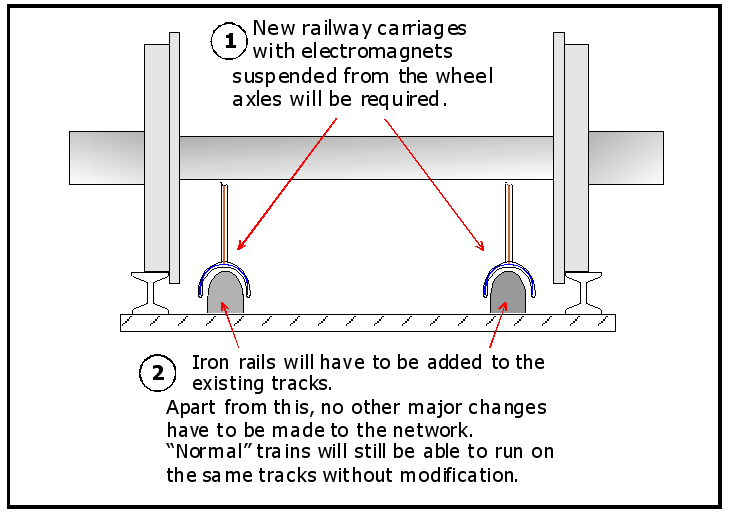
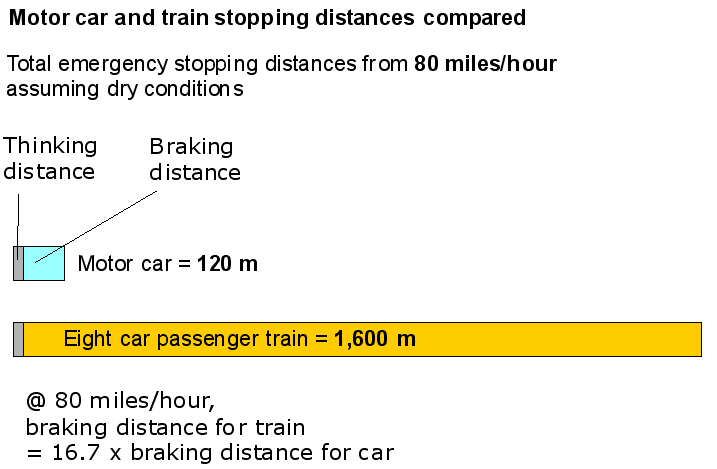
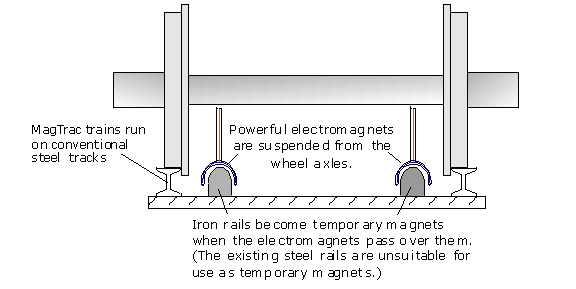
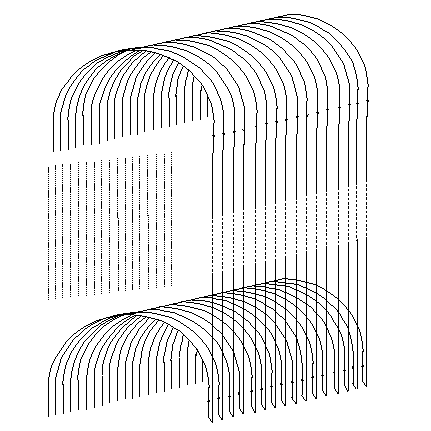
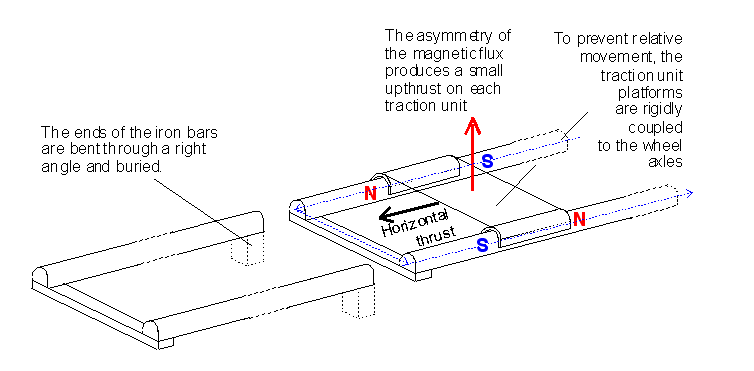
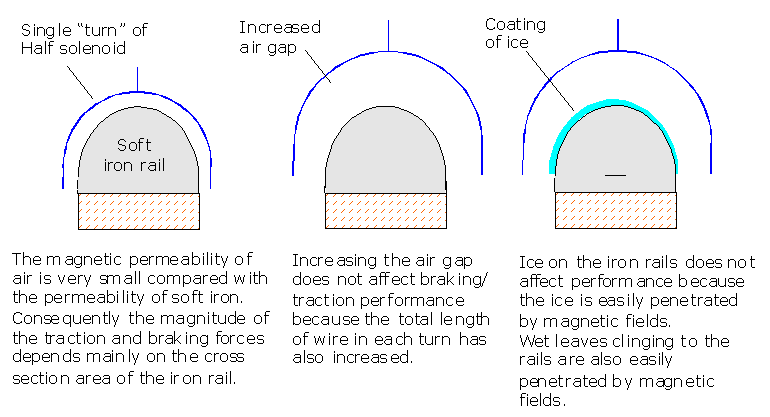
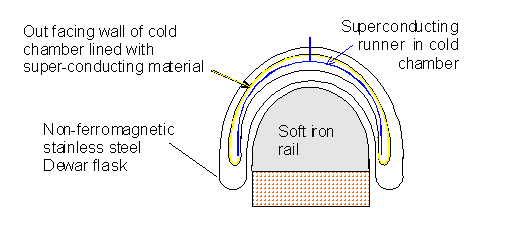
To prevent the outer faces of the Dewar flasks icing up in winter they can be fitted with heating elements to keep their temperature just above 0oC.
The previous arguments that it made economic sense were ludicrous and have had to be dropped. At about £80 bn, if it had to make a 10% return on capital as is normally expected that would cost £300 per ticket plus the natural running cost - this clearly does not make economic sense.
So back to overcrowding.
Rail's problem is that while road vehicles only have to stay a couple of car lengths apart, trains have to be about a mile apart. This is because the stopping distances are so much longer - rails being slipier than tarmac and carriages much heavier. For a long time John Redwood has been saying rail should learn from bus technology and build much lighter vehicles. This is also obviously far more fuel efficient. He is right on that . I also think we should be building automated rail which, by allowing single carriage units running 24/7 would increase capacity.
But here is another idea. A new magnetic braking system:
Here is a summary of the changes needed:
The problem with existing railways-poor grip when braking
Railway train wheels have a poor grip on steel tracks, compared with rubber tyres on roads. This severely reduces the ability of trains to climb inclines, accelerate or brake rapidly.
The minimum safe time interval between high speed trains using the same length of track is about 3 minutes, but for a car travelling at the same speed it is only a few seconds.
The minimum safe time interval between high speed trains using the same length of track is about 3 minutes, but for a car travelling at the same speed it is only a few seconds.
A solutionWe propose an electromagnetic traction and braking system for trains. Ina addition to significantly reducing braking distances, it will eliminate nuisance traction problems caused by "leaves on the lines".
Maglev trains are hover trains. They were invented in Britain in the 1960’s by Professor Eric Laithwaite and are now running in China.
They offer several advantages: Wear on the track is minimal and acceleration, braking and fuel economy all improve,
but these benefits are outweighed by the high track building costs.
They offer several advantages: Wear on the track is minimal and acceleration, braking and fuel economy all improve,
but these benefits are outweighed by the high track building costs.
Magtrac is simpler and cheaper than Maglev.
Our breakthrough:We reduce costs by mounting the electromagnets on the trains instead of the tracks.
The electromagnets are suspended under the train and interact with soft iron rails mounted on the existing railway track sleepers.
The braking and acceleration benefits of Maglev are maintained, but Magtrc’s levitation effect is not sufficient to support the weight of the train.
The braking and acceleration benefits of Maglev are maintained, but Magtrc’s levitation effect is not sufficient to support the weight of the train.
Figure 2, Magtrac.
Q. Why are iron rails required?
A. Iron rails are better at amplifying the strength of the electromagnets but they rapidly lose their magnetism when the train passes. This eliminates the problem of steel cans and other ferromagnetic junk sticking to the rails.
A. Iron rails are better at amplifying the strength of the electromagnets but they rapidly lose their magnetism when the train passes. This eliminates the problem of steel cans and other ferromagnetic junk sticking to the rails.
1 HOW IT WORKS
We will build the Magtrac principle up in stages
1.1 The key concept
First we consider what happens when an electric current is passed through two solenoids resting on a soft iron bar.
[A solenoid is a cylindrical coil of wire that acts as a magnet when an electric current passes through it. The magnetic effect is weak if the interior of the solenoid is filled with air, but strong if the air is replaced by iron.]
We will build the Magtrac principle up in stages
1.1 The key concept
First we consider what happens when an electric current is passed through two solenoids resting on a soft iron bar.
[A solenoid is a cylindrical coil of wire that acts as a magnet when an electric current passes through it. The magnetic effect is weak if the interior of the solenoid is filled with air, but strong if the air is replaced by iron.]
The solenoids become electromagnets and either mutually attract or repel, depending on their polarities.
Figure 3. In addition to attraction or repulsion between the two solenoids, each solenoid experiences a repulsive force between itself and the enclosed soft iron bar. This provides a small levitation effect.
The law of conservation of energy has to be respected so we do not get "free" energy out of either of these arrangements. For example in Fig. 3 (a), after the solenoids have moved together, work has to be done against the magnetic attraction, to restore the magnets to their original positions.
We can't cheat nature by switching the magnets off and then moving them apart because when we switch the magnets back on again work has to be done against the back EMFs as the magnetic fields are rebuilt.
We can't cheat nature by switching the magnets off and then moving them apart because when we switch the magnets back on again work has to be done against the back EMFs as the magnetic fields are rebuilt.
1.2 A load carrying platform
Plan view:
Figure 4. To move a lightweight platform along a short length of track, the soft iron bar needs to be bent into a U shape.
1.3 A practical traction unit
For the platform to move along a track of indefinite length:
(i) A long chain of U shaped iron bars is required.
(ii) “Half solenoids” that can “jump” from one iron bar to the next are used.
(ii) “Half solenoids” that can “jump” from one iron bar to the next are used.
Figure 5. The platform and supporting half solenoids can move along an indefinite length of track
Figure 6. This is a “half solenoid”, with all of the windings connected in parallel. When an electric current flows through the windings, a magnetic field similar to a full solenoid is produced. But its asymmetry results in a net upward force when it rests on a soft iron bar.
Figure 7. An alternative, series winding. The neutralising effect of the upper half solenoid is minimal, because of its greater distance from the soft iron rail.
Figure 8. Further details of the electromagnetic coupling.
The up thrust is a useful bonus but it cannot be relied upon to support the weight of the train because it varies with the current passing through the half solenoids.
The up thrust on the train produces an equal and opposite down thrust on the iron rails. This improves the friction grip between the rails and underlying sleepers.
The up thrust is a useful bonus but it cannot be relied upon to support the weight of the train because it varies with the current passing through the half solenoids.
The up thrust on the train produces an equal and opposite down thrust on the iron rails. This improves the friction grip between the rails and underlying sleepers.
We will refer to the activated half solenoids as runners and the lengths of soft iron tracks as stators.
It is not necessary for the runners to be in close contact with the stators and large clearances between them are possible to avoid fouling by small items of debris. (Large clearance gaps require large diameter half solenoids. So the total length of conducting wires generating the magnetic flux increases, compensating for the larger air gap.)
Large clearances will allow wipers to be added, to periodically clean the under surfaces of the runners.
The conducting wires can be made from superconducting material and the half solenoids immersed in very cold chambers protected by Dewar insulation.
Skilled engineers will recognise that some technical details relating to back EMFs, current changes and the fate of kinetic energy lost during emergency Magtrac braking have been omitted. Nor has the configuration for regenerative Magtrac braking been revealed.
This is for intellectual property protection reasons.
This is for intellectual property protection reasons.
1.4 Explanation: Why the size of the air gap, ice and leaves on the rails do not affect performance
Figure 9. Icing of the iron rails will be a rare event because Magtrac has a built in de-icing mechanism.
When an iron rail goes through a magnetisation-demagnetisation cycle, a small amount of heat is generated. (Hysteresis loss.) This will help to melt any ice or snow in winter.
When an iron rail goes through a magnetisation-demagnetisation cycle, a small amount of heat is generated. (Hysteresis loss.) This will help to melt any ice or snow in winter.
The only downside of a large air gap is that the half solenoids are slightly bulkier, heavier and more expensive to build.
Q. How effective will Magtrac braking be?
A. Braking and traction increase with the total number of turns in all of the half solenoids, the currents passing through the wires and the cross section area of the iron rails. In principle, Magtrac braking could be as efficient as the braking on a Formula One racing car. In reality, a far more modest braking system should meet commercial, safety and customer needs.
2 Reducing stray magnetic fields
Stray magnetic fields can attract ferromagnetic debris such as nuts, bolts and nails. A number of steps can be taken to design this problem out of the system.
2.1 Superconducting shieldsFor superconducting systems the runners are lodged in cold chambers. Magnetic flux cannot penetrate a sheet of superconducting material, so by lining the out facing walls of the cold chambers with superconducting material, magnetic flux shields can be created.
2.1 Superconducting shieldsFor superconducting systems the runners are lodged in cold chambers. Magnetic flux cannot penetrate a sheet of superconducting material, so by lining the out facing walls of the cold chambers with superconducting material, magnetic flux shields can be created.
Figure 10. Superconducting shielding.
To prevent the outer faces of the Dewar flasks icing up in winter they can be fitted with heating elements to keep their temperature just above 0oC.
2.2 Bury the poles of the soft iron magnets
Figure 11. A vertical cross section at track level.
2.3Additional measures to prevent damage by small items of debris include mounting miniature "cattle fenders" and scavenging electromagnets ahead of each item of rolling stock.
3 Keeping the runners and flux shields cold
Runners and flux shields can be chilled using liquefied gases or dedicated refrigerators. A combined system may be best.
New designs of cryocoolers (low temperature refrigerators) created for use with rolling stock are published on our superconductors and cryocoolers web page.
New designs of cryocoolers (low temperature refrigerators) created for use with rolling stock are published on our superconductors and cryocoolers web page.
4 Powering Magtrac trains
Don't get can carried away with the idea of a free ride. If the electromagnets are superconducting there are no heat losses but energy still has to be expended driving the electric currents against the back EMFs produced as the train moves.
Electrification is one option, but burning hydrogen is preferred because the fuel can be used twice. First in liquid form, as a superconducting temperature coolant; then as a fuel to generate electricity.
To burn the hydrogen fuel efficiently onboard we propose using our Latent Power Turbines.
5 The copper alternative to superconducting windings
The argument in favour of superconducting windings is that they eliminate electrical resistance (Joule) heating losses. Copper is not a superconductor at liquid hydrogen temperatures but its resistivity is les than 5% of its value at UK average temperatures. If copper is used for the windings there will still be some Joule heating losses at low temperatures but the thermal energy can be used for warming the hydrogen prior to its use as a fuel.
Copper is easy to handle when manufacturing the half solenoids and has the safety bonus that it can still be used for effective braking, even if the hydrogen cooling system fails.
Copper is easy to handle when manufacturing the half solenoids and has the safety bonus that it can still be used for effective braking, even if the hydrogen cooling system fails.
6 "Belt and braces" braking systems
6.1 Friction brakes would still be used as a backup and to prevent stationary trains rolling down hills.
6.2 Each carriage would have wheel axles coupled to motor/generators, to provide regenerative braking during normal journeys. This energy could be stored in lithium batteries.
6.3 Each carriage would also be fitted with its own Magtrac electromagnets. In the event of the principle Magtrac power supply failing, power from the batteries would be used as a backup.
6.4 Remote braking On the approaches to potential accident spots such as railway crossings, active Magtrac rails can be installed. These would include externally powered solenoids that converted attraction into repulsion. This would allow remote braking by an external operator or an intelligent CCTV system.
Figure 12. Active Magtrac rails include current carrying solenoids that can be switched on remotely. These instantly convert traction power into braking power.
Braking solenoid off: Axle mounted N attracts second 1/2solenoid axle mounted S. Traction power is generated.
Braking solenoid on: Axle mounted N repelled by Magtrac rail mounted N. Braking power is generated.
Braking solenoid on: Axle mounted N repelled by Magtrac rail mounted N. Braking power is generated.
If the track based system detects that the trains half solenoid currents have been changed to initiate braking, the track solenoid current can be switched off.
The UK mainline Health and Safety report for 2012 records four pedestrian and five car deaths on level crossings.
Protection for maintenance staff Portable half solenoid versions of the the remote braking system could be installed on lengths of track where maintainable work is being carried out while the track is still in use.
7 PointsThere would be no Magtrac iron rail in close proximity to points. If necessary, the axle coupled motors would be used to shift stationary trains away from these sections.
8 Noise reduction bonus
The elimination of friction as the primary source of braking, combined with the reduced wheel on track loading, thanks to the Magtrac up-thrust, will significantly reduce train noise.
Magtrac eliminates the squealing of friction brakes and the vibrations caused by uneven wear on the steel tyres resulting from friction braking.
The elimination of friction as the primary source of braking, combined with the reduced wheel on track loading, thanks to the Magtrac up-thrust, will significantly reduce train noise.
Magtrac eliminates the squealing of friction brakes and the vibrations caused by uneven wear on the steel tyres resulting from friction braking.
---------------------------------------------
Braking "like a Formula One car" is indeed unnecessary but if it were even equal to normal road transport, 10 times faster than currently, the capacity of the rail system would increase massively. Presumably not 10 fold because the new bottleneck would be the size of stations (which could be expanded) but easily enough to increase rail traffic several fold which would work for the foreseeable future.
This would be far cheaper and installed far faster than HS2 and would improve rail transport for the entire country.
I recently described shale gas as being an example of the second generation of technological breakthroughs stifled by politics (nuclear being the first) and this is the 2nd (or perhaps 3rd) generation of technological progress in rail transport (lighter vehicles and automation being the first two).
Once again we see we have non unsolvable, or even particularly difficult problems except getting rid of the government parasites whose continuing power depends on keeping us fearful and eager to be led by making the problems seem worse.
Labels: Big Engineering, British politics, Government parasitism, Science/technology

If you liked this article, please give it a quick review on ycombinator or StumbleUpon. Thanks
This is not a million miles from my early proposal, in 2002, that Scotland should offer a £20 million X-Prize for the first satellite, if Scots, to soft land on an asteroid within 50 years. Dismissed laughingly by the LudDims as impossibly optimistic.